




Engraved Metal Tray
An engraved metal tray brings intricate pattern and tactile weight to a room, ranging from Victorian silver plate to Middle Eastern brass.
Engraved Metal Tray
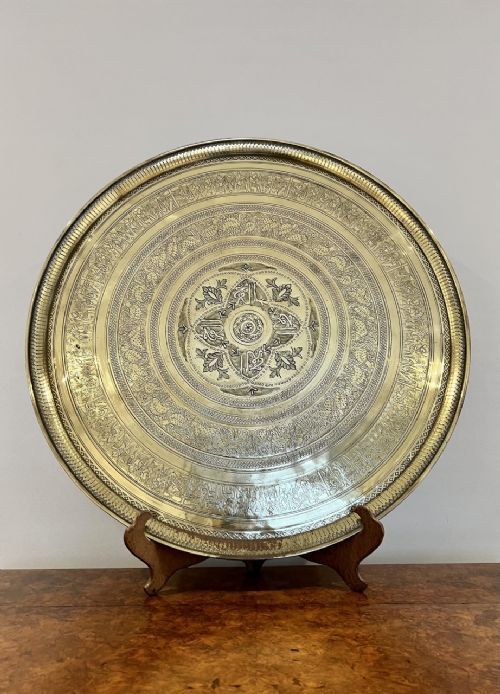
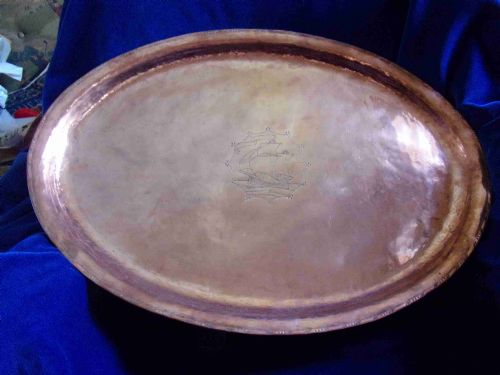
An engraved metal tray serves as a functional serving piece or a decorative charger, appearing in forms such as circular platters, tea trays, and occasional table tops. These pieces span from the nineteenth century into the twentieth century, reflecting diverse regional aesthetics.
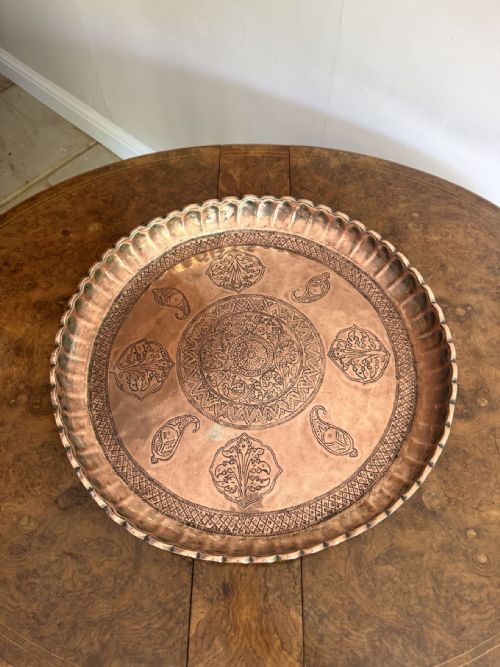
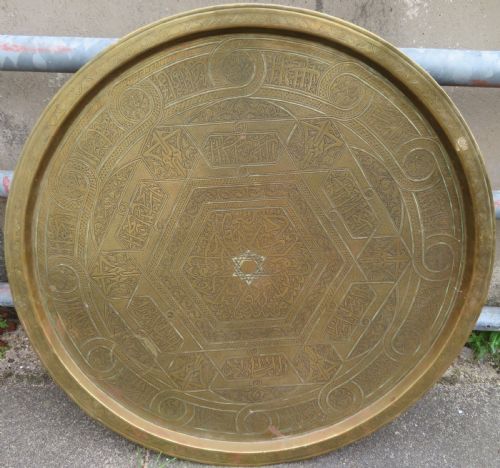
The version most commonly met on this page is the circular brass or copper tray, frequently bearing Middle Eastern, Persian, or Anglo-Indian ornamentation. Alongside these, British silver-plated salvers from the Victorian and Edwardian eras offer formal geometric and floral engraving.
Makers and workshops across different continents utilised base metals, copper, and mixed metals to create these surfaces. Buyers encounter both utilitarian serving trays and heavier decorative plates meant for display on stands or walls.
What varies in quality
Quality rests in the depth and precision of the hand engraving rather than mere surface stamping. Crisp, deliberate lines and complex floral or geometric schemes separate superior examples from simpler production pieces.
The weight of the metal and the integrity of the plating or patination dictate the durability and visual richness of the object. Heavier gauges of brass, copper, and mixed metal maintain their form and detail over decades of handling.
The archive includes Japanese mixed metal work alongside Middle Eastern and British production.
Hugh Wallis·Padley Parkin·Fenton Russel·Elkington·J.H. Potter·Masayoshi
The Engraved Metal Tray Glossary
- Repousse
- A metalworking technique where the artisan hammers the metal from the reverse side to form a raised design in relief on the front. This method adds significant tactile depth to copper and brass chargers.
- Salver
- A tray used for serving food or drinks, or for presenting items such as calling cards. In nineteenth-century British silver plate, these often feature raised, detailed rims and engraved centres.
- Cairoware
- A term applied to nineteenth and early twentieth-century metalwork originating from Egypt, typically featuring brass inlaid with silver and copper in Islamic geometric patterns. These pieces are heavily engraved.
- Old Sheffield Plate
- An early method of fusing a thin layer of silver onto a thicker copper base before rolling them into sheets. This technique predates modern electroplating and leaves a characteristic edge where copper is visible.
- Mixed Metal
- An alloy combination or the artistic grouping of different metals such as copper, brass, and silver within a single object. Makers utilised this to create contrasting colour tones across the engraved surface.
Engraved Metal Tray: Frequently Asked Questions
Can I use these trays for serving food?
Many silver-plated trays and salvers were originally designed for afternoon tea or beverage service and remain suitable for dry foods. However, older copper and brass pieces with dark patination or inlay are better suited for decorative display.
Acidic foods and liquids can react with base metals and historic plating, so use liners or restrict older pieces to decorative uses.
How do I tell Victorian silver plate from later pieces?
Victorian silver-plated trays often exhibit heavy gauge bases, hand-engraved borders, and specific maker marks or Old Sheffield techniques. The weight is typically substantial compared to lighter mid-century variations.
Examining the wear patterns and the quality of the engraved detailing helps distinguish nineteenth-century examples from later twentieth-century productions.
What is an Anglo-Indian tray?
Anglo-Indian trays are metal pieces produced in India during the British colonial period, combining traditional local engraving styles with British serving forms. They frequently feature dense floral, animal, or geometric motifs on brass or copper.
These trays were brought back by travellers or imported for Western homes, reflecting a distinct cross-cultural aesthetic.