




Engraved Lead Crystal Glasses
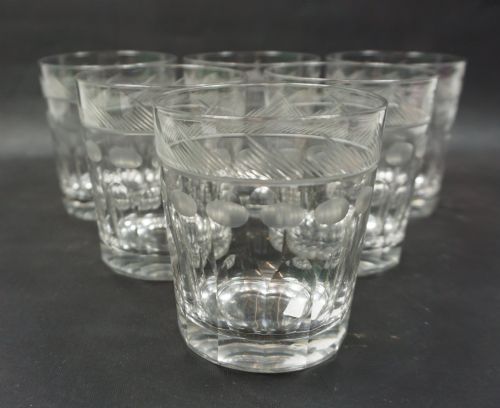
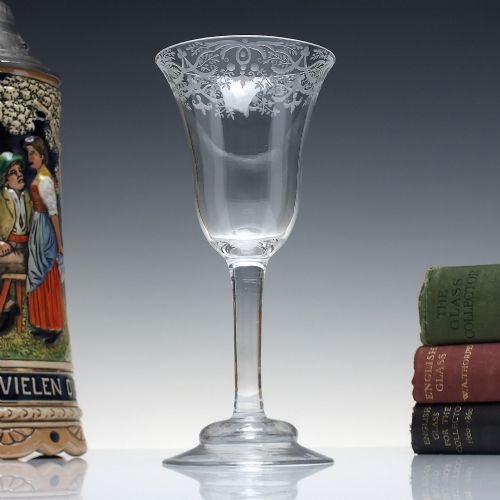
Engraved lead crystal glasses bring weight and intricate wheel-carved detail to the table, spanning heavy Georgian rummers and slender Regency stems.
Engraved Lead Crystal Glasses
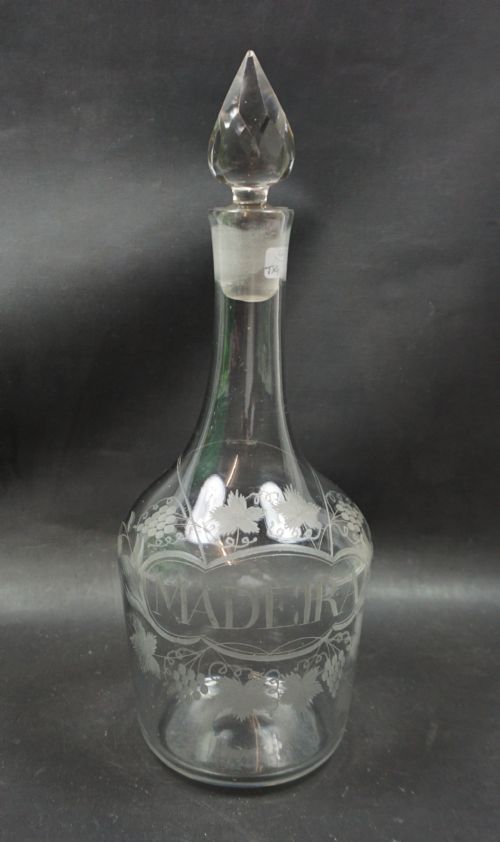
When you search for engraved lead crystal glasses, you encounter drinking vessels and serving pieces shaped from heavy glass compounds designed to hold light and liquor alike. The selection centres heavily upon Georgian and eighteenth-century forms, alongside nineteenth-century Victorian and Edwardian examples.
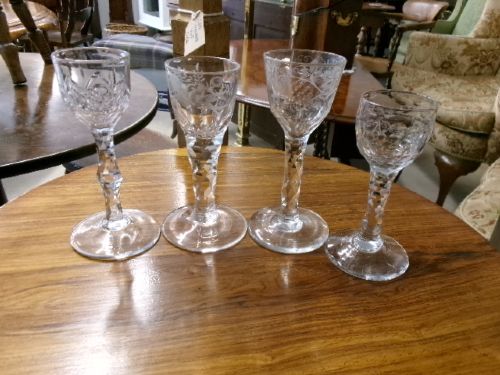
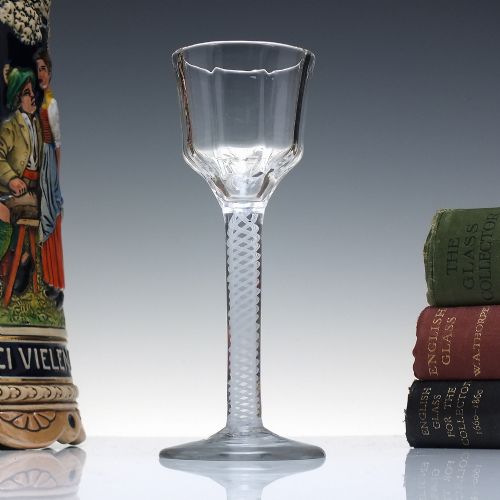
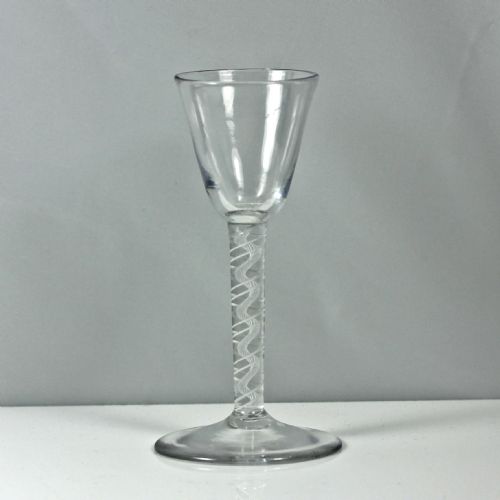
The most common formats you will meet on this page include robust rummers, decanters, ale flutes, and wine glasses featuring decorated bowls. These range from plain-stemmed goblets to facet-cut and air-twist stems.
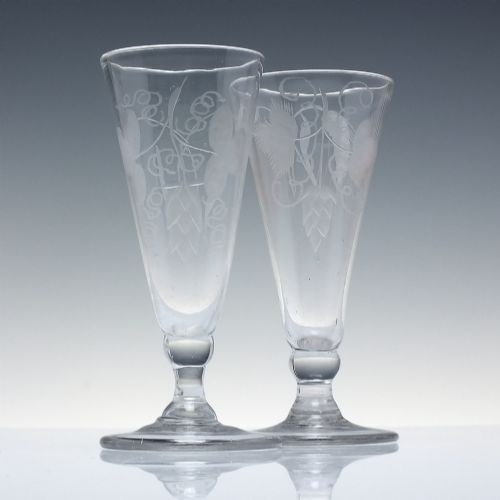
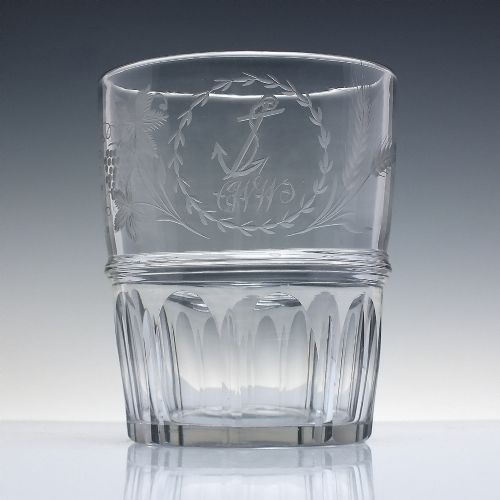
Origins across the pieces are predominantly English, encompassing regional workshops and commemorative tavernware carrying hop, barley, armorial, or political motifs.
How they were made
The material foundation rests on lead glass, flint glass, and clear glass formulas that allowed master blowers to gather heavy metal into luminous blanks. These vessels were then shaped using optical blowing or moulded methods before cooling.
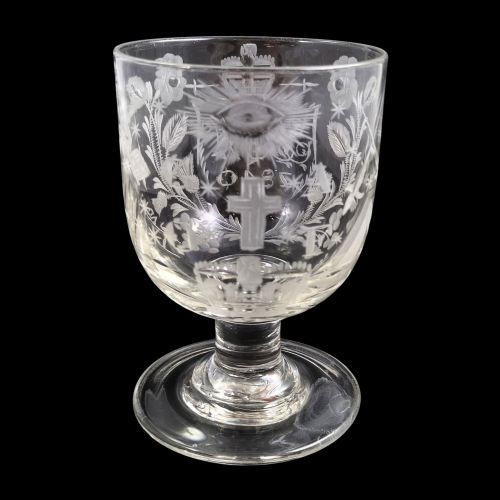
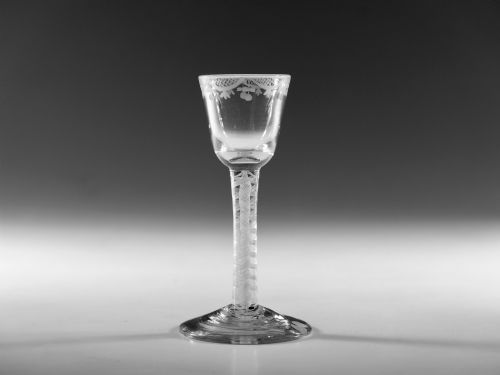
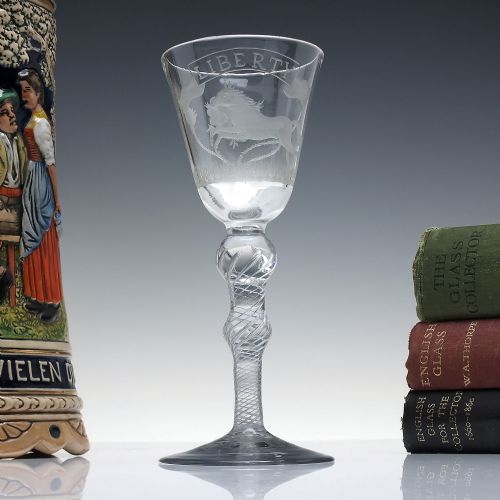
Decoration relied on the hand of the engraver, who utilised abrasive wheels and diamond points to carve hops, barley, ships, and monograms directly into the surface. Twist stems were formed inside the hot glass by stretching air bubbles or opaque enamel threads during the drawing process.
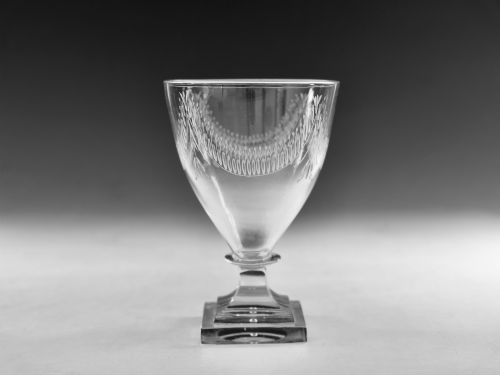
Some rummers feature square lemon squeezer feet, ensuring your ale stays firmly rooted even after a particularly rousing toast to the local bridge.
What varies in quality
Quality reveals itself in the clarity of the metal and the depth of the wheel-cut engraving, where crisp, confident lines show superior hand control over shallow, hesitant surface scratching. The weight and balance of the piece, particularly in the foot and stem, distinguish masterwork vessels from simpler production items.
The complexity of the internal stem structure, such as multi-spiral air twists or single-series opaque threads, separates standard domestic glass from collector-grade cabinet pieces. Historic association also elevates certain specimens, such as documented Jacobite or Masonic symbols carved with distinct contemporary intent.
James Powell
The Engraved Lead Crystal Glasses Glossary
- Rummer
- A large, sturdy drinking glass designed for ale, beer, or punch during the Georgian and Victorian eras. These often feature thick bowls and short, heavy stems.
- Air twist
- A decorative stem enclosing spiral threads of trapped air created by drawing twisted bubbles within the molten glass. This technique was popular in eighteenth-century drinking vessels.
- Flint glass
- An early British term for high-quality lead glass formulated with calcined flints to increase brilliance and refractive index. It provides the heavy feel characteristic of antique crystal.
- Lemon squeezer base
- A square, pressed glass foot with sloping sides resembling a kitchen juicer, found primarily on heavy Georgian rummers and decanters. It added stability to larger serving pieces.
- Intaglio
- A technique where the design is carved into the surface of the glass rather than raised in relief, creating a sunken frosted pattern when viewed from the front.
Engraved Lead Crystal Glasses: Frequently Asked Questions
How do I identify Georgian engraved glass?
Georgian pieces generally show darker metal with minor surface wear, pontil marks on the underside of the foot, and hand-cut engraving depicting motifs like hops and barley or armorial crests.
The stems often utilise older techniques such as air twists or plain lead stems, contrasting with the later machine-pressed uniformity of the Victorian era.
Were these glasses used daily?
Many sturdy rummers and decanters were built for active tavern or dining room use, handling heavy pours of ale, wine, and spirits.
More delicate air-twist wine glasses were reserved for polite society, toasts, and toasts of political sympathy rather than heavy-handed everyday dining.
What is the difference between flint glass and lead crystal?
Flint glass is the historic forerunner to modern lead crystal, developed in England to increase the refractive qualities and weight of tableware.
Both terms refer to heavy, clear glass formulations, though flint glass specifically denotes earlier British manufacturing recipes.