
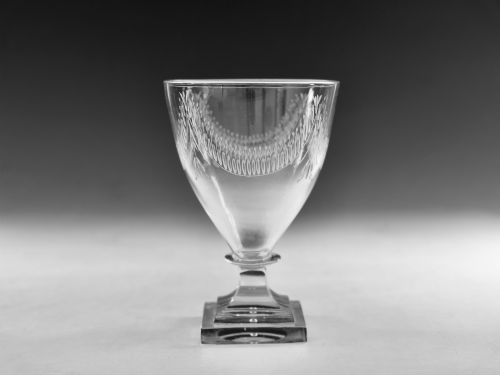
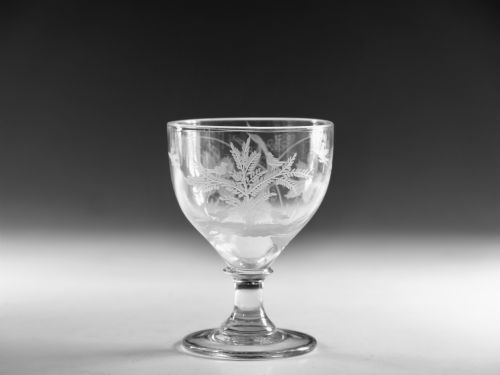
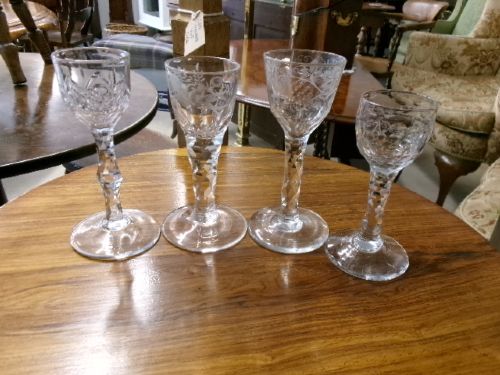
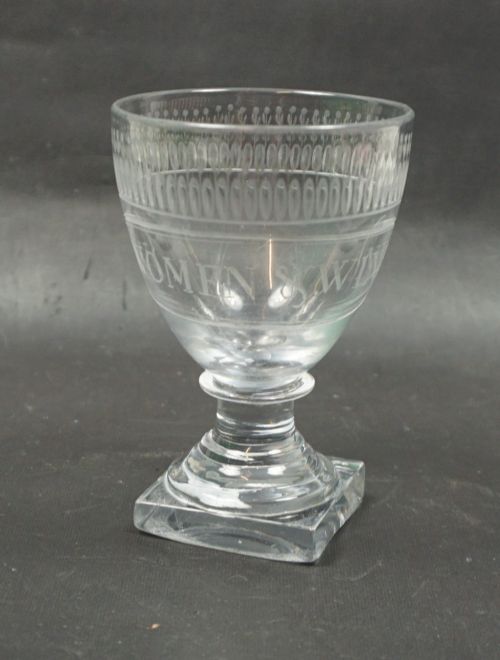
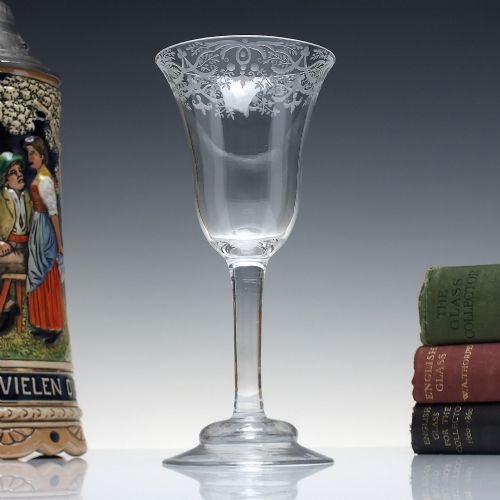
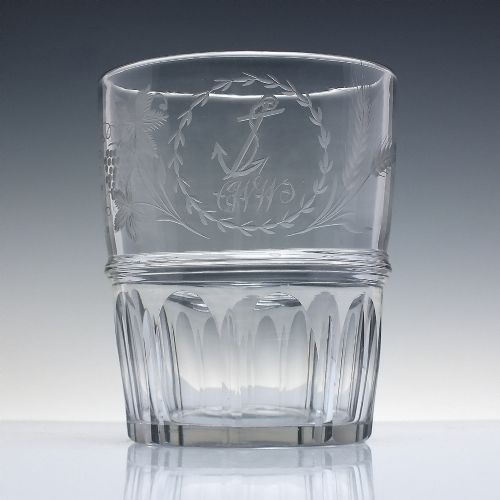
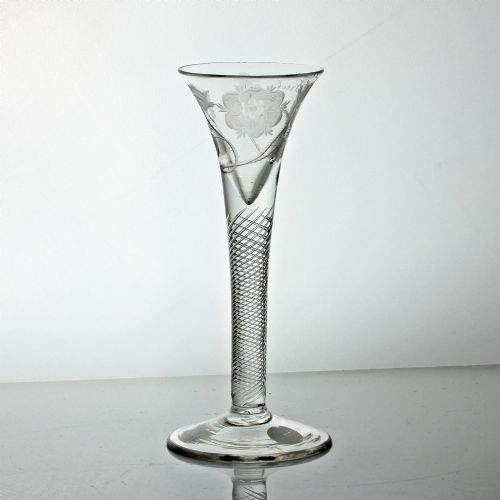

Engraved Georgian Drinking Glass
An engraved georgian drinking glass holds centuries of social history within clear lead crystal, offering a tactile connection to eighteenth-century toast and tavern.
Engraved Georgian Drinking Glass
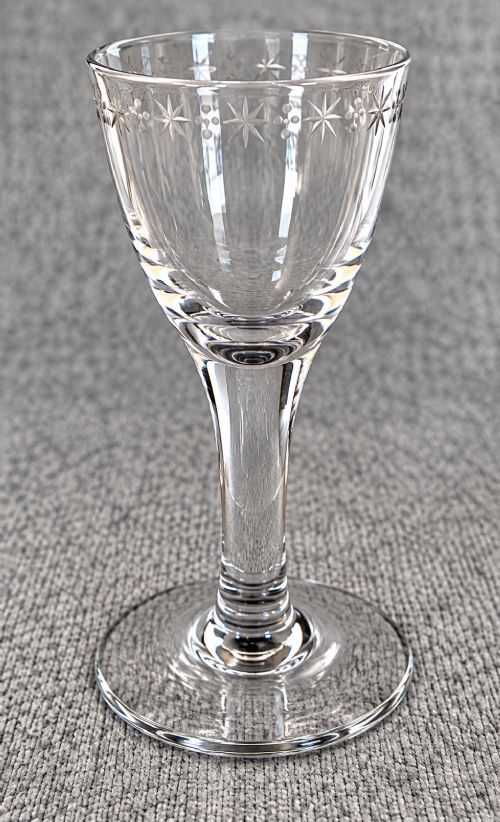
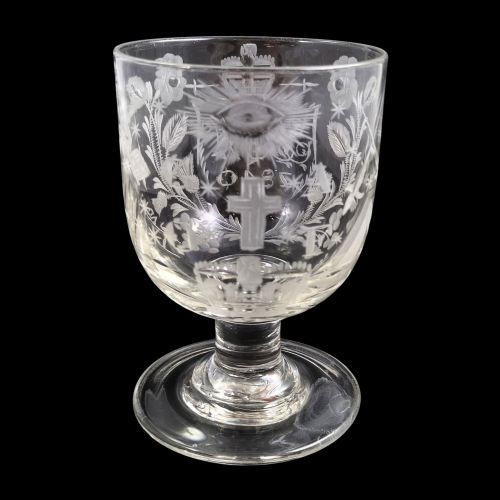
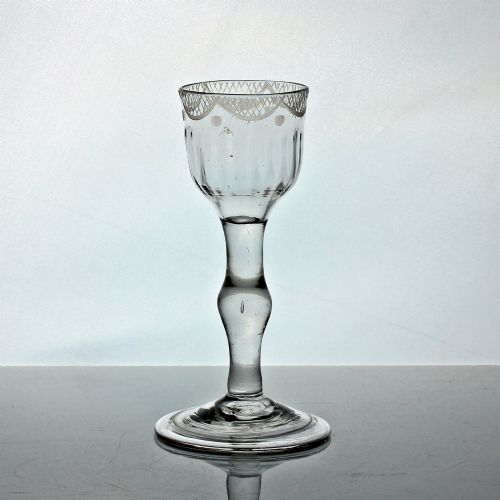
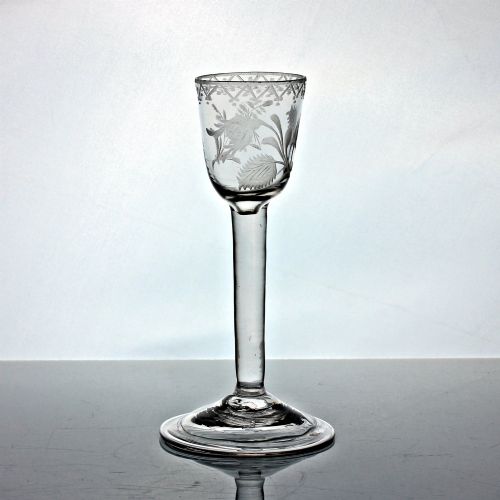
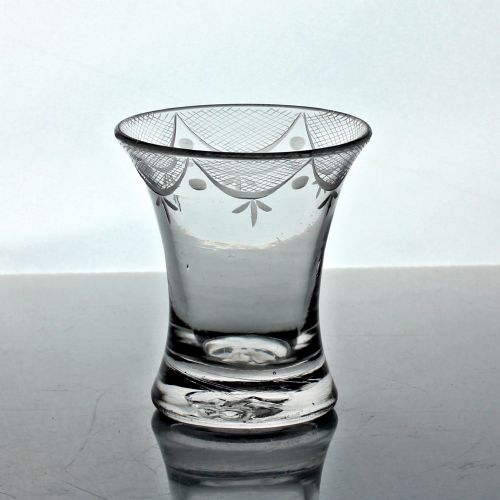
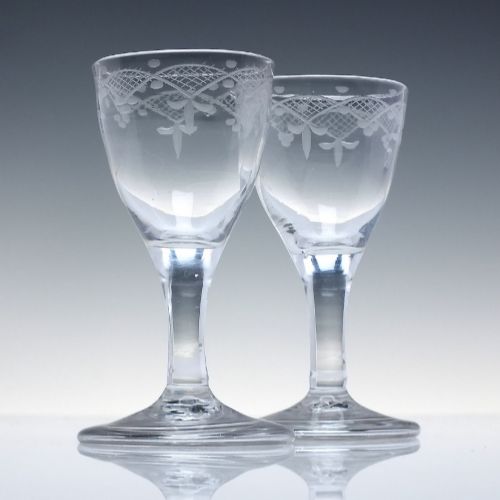
When you search for an engraved georgian drinking glass, you are examining vessels produced primarily during the eighteenth and early nineteenth centuries, spanning eras from 1735 to 1830. These pieces include dram glasses, rummers, wine glasses, goblets, and ale flutes used for daily dining and celebratory toasts.
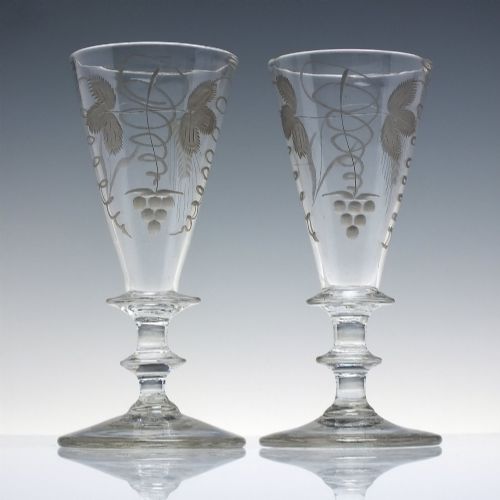
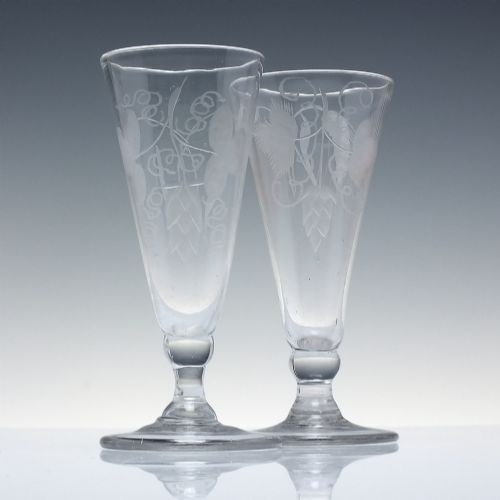
The specimens met on this page range from plain stem wine glasses to facet cut stem ale flutes and heavy square base rummer goblets. Many feature specific decorative motifs such as hop and barley, swag and tail designs, or armorial engravings.
Origins remain distinctly English, with specific pieces linked to regional traditions like North-East English glassmaking or Newcastle light balusters. Forms alter according to function, serving specific drinks like beer, wine, gin, or whisky.
How they were made
Makers utilised lead glass, lead crystal, flint glass, and clear glass to achieve brilliance and weight in each vessel. Enamel and enamel glass also appear where polychrome decoration supplements wheel-engraving.
Techniques involve free-blowing, moulding, and wheel-engraving to apply detailed patterns onto bowls and stems. Twist stems incorporate air or opaque white glass threads spun within the molten metal during formation.
Listings feature lead crystal, clear glass, and flint glass across eighteenth and nineteenth-century forms.
What varies in quality
The clarity and weight of the metal set the foundation for quality, with heavy lead crystal pieces offering superior resonance and light refraction compared to standard clear glass. The skill of the wheel-engraver determines the crispness and depth of motifs like hop and barley sprays or armorial crests.
Proportion and form dictate desirability, where balanced baluster stems, folded feet, or crisp facet-cutting elevate a simple drinking vessel into a masterwork of English glassmaking.
The Engraved Georgian Drinking Glass Glossary
- Lead crystal
- Glass containing lead oxide which increases weight, clarity, and refractive index. This material allowed eighteenth-century makers to produce vessels with deep brilliance.
- Air twist
- A stem containing elongated internal air bubbles drawn into spirals. Makers created this effect by manipulating molten glass rods before pulling and twisting.
- Opaque twist
- A stem enclosing white or coloured enamel glass threads in spiral formations. These threads create intricate opaque patterns inside clear glass.
- Rummer
- A heavy drinking glass or goblet popular in the late eighteenth and early nineteenth centuries. They typically sat on a plain or square lemon squeezer foot.
- Firing glass
- A small, thick-based glass designed for tavern use. The heavy foot absorbed the impact when slammed onto wooden tables during toasts.
Engraved Georgian Drinking Glass: Frequently Asked Questions
How do I identify a jacobite glass?
Jacobite glasses display clandestine symbols like roses, oak leaves, or specific portraits used by supporters of the exiled Stuart dynasty.
Examine the engraving closely for hidden political messages rather than standard floral decoration.
What is the difference between a rummer and a wine glass?
Rummers are substantially heavier and larger vessels intended for ale, wine, or punch during nineteenth-century dining. Wine glasses feature more delicate stems and smaller bowls suited for lighter drinking.
Check the base and overall weight to distinguish between the two forms.
Were these glasses used daily?
Many sturdy forms like firing glasses and heavy rummers saw regular use in homes and taverns. Finer twisted stem wine glasses were reserved for formal dining and toasts.
Signs of wear often indicate genuine historical handling.
How do twist stems differ?
Air twists contain spiralling channels of trapped air inside the glass stem. Opaque twists incorporate white or coloured enamel glass threads within the clear metal.
Inspect the stem under good light to trace the internal glass threads.