

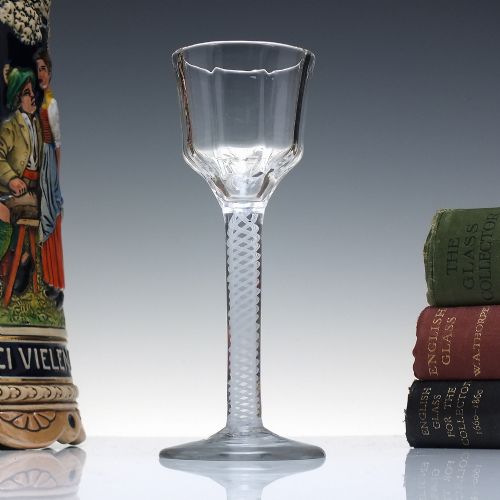


Lead Glass Vessel
A lead glass vessel holds centuries of refined British and European craftsmanship, offering collectors tactile connections to Georgian, Victorian, and Edwardian drinking and display traditions.
Lead Glass Vessel
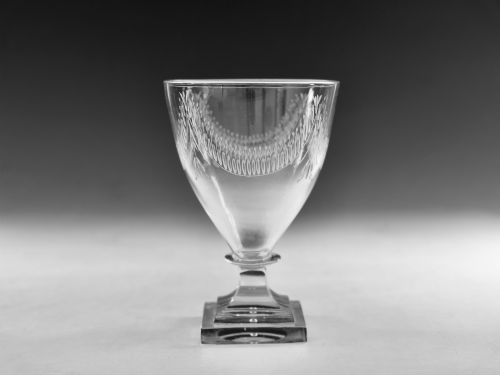
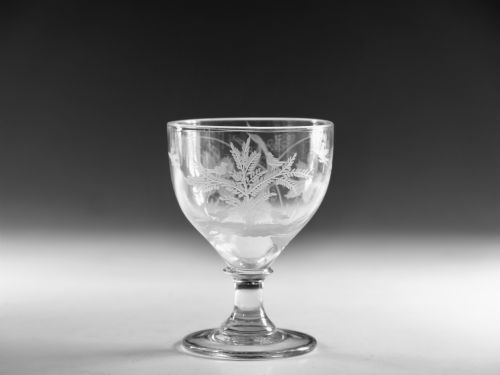
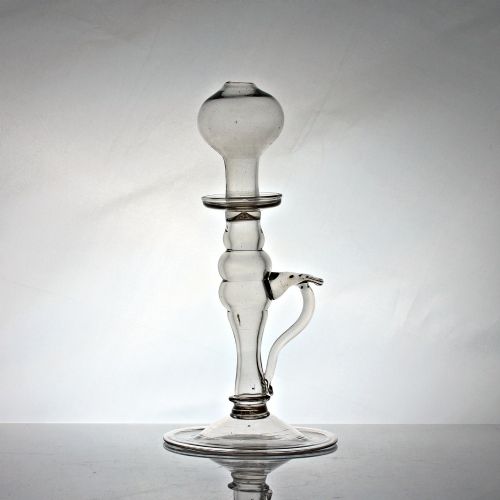
A lead glass vessel encompasses diverse utilitarian and decorative forms, ranging from eighteenth-century wine glasses and dram glasses to nineteenth-century decanters, rummers, and celery vases. Buyers exploring this category encounter numerous examples spanning the Georgian, Regency, Victorian, and Edwardian periods.
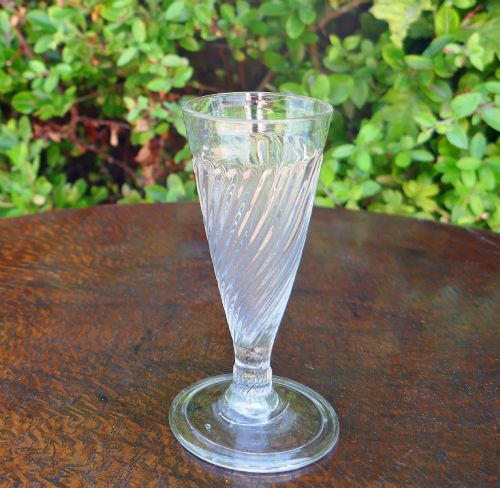
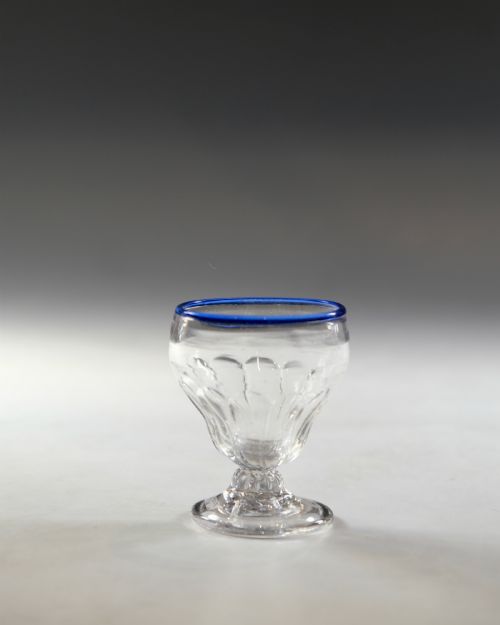
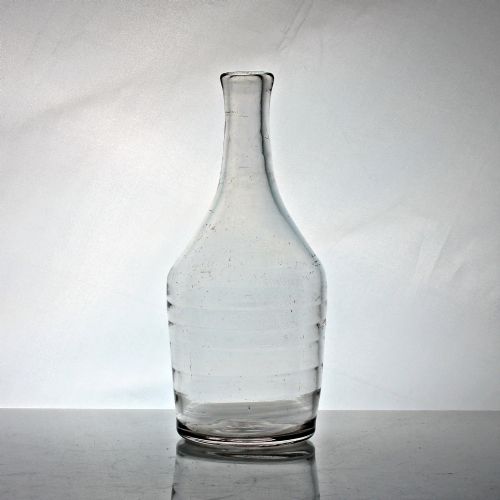
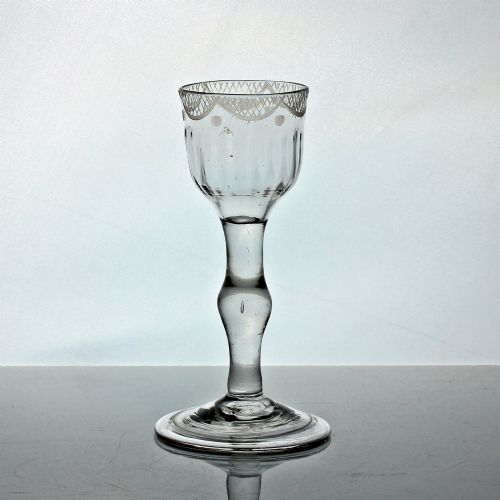
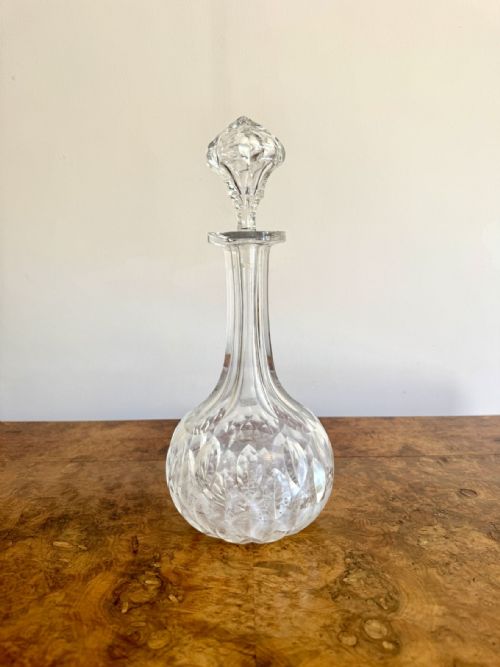
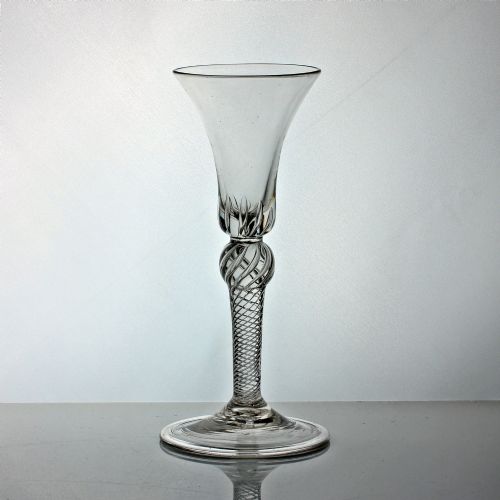
The selections on this page lean heavily toward eighteenth-century drinking vessels featuring air twists, opaque twists, and baluster stems alongside later cut glass decanters and cased glass vases. Forms such as bonnet glasses, jelly glasses, and shoulder carafes illustrate the breadth of domestic glassware historically produced in England and continental Europe.
Materials and methods
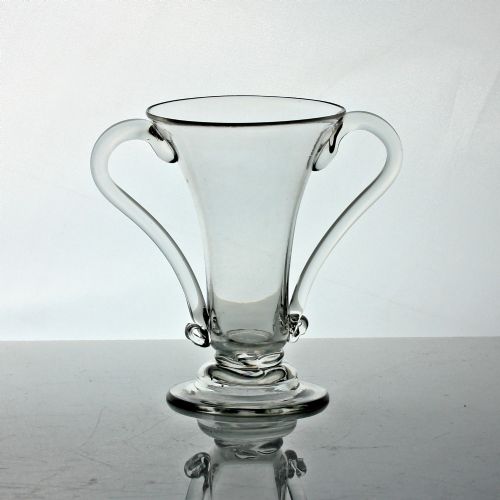
These items rely on heavy formulations of lead glass, lead crystal, and flint glass, which provide the material with high refractive indices and substantial weight. Artisans shaped these molten substances using blowing techniques, often applying handles, folded feet, or ribbed moulds while the material remained pliable.
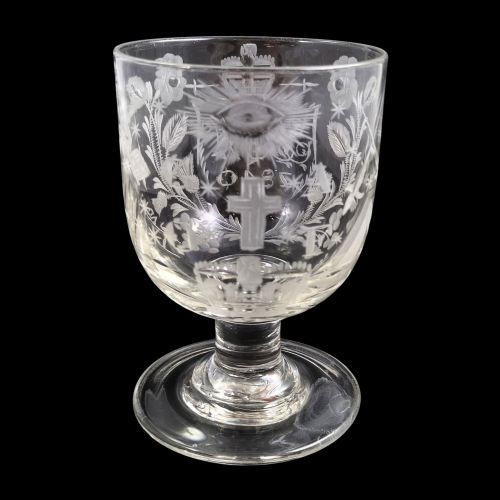
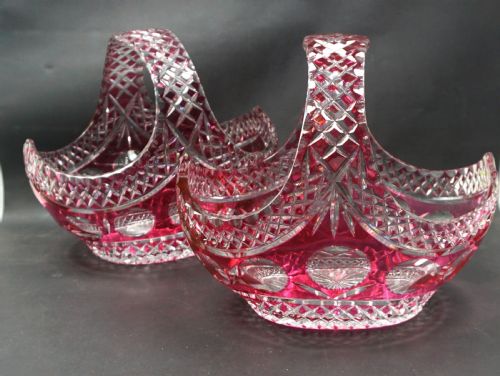
Decoration involved intricate wheel-cutting, intaglio engraving, and cased glass overlay methods where coloured layers were cut away to reveal clear crystal beneath. Internal optical effects were achieved through air twists and opaque twists formed by trapping air or white enamel rods within the stem structure.
Listings feature lead glass vessel forms ranging from 18th-century baluster dram glasses to 1930s cased glass vases from Belgium.
Assessing quality and execution
The standard of a lead glass vessel depends upon the clarity of the metal, the crispness of the wheel-cut facets, and the symmetry of optical elements like air or opaque twists. Superior pieces display harmonious proportions and precise execution in engraved motifs such as hop and barley or masonic emblems.
Makers and regional workshops achieved distinction through heavier metal weight, sophisticated stem knops, and complex cased colour applications that demonstrate advanced pyrotechnic control during manufacturing.
Asprey & Co.·Val St. Lambert·Charles Graffart
The Lead Glass Vessel Glossary
- Rummer
- A heavy drinking goblet popular during the Georgian and Regency periods. These typically feature capacious bowls set upon short stems and sturdy feet.
- Air twist
- A stem formation containing elongated spiral channels of trapped air inside the glass. This technique creates a delicate internal pattern visible through clear metal.
- Opaque twist
- A stem decoration formed by drawing white or coloured enamel glass rods into threads within the molten metal. These threads are then twisted during pulling to create striking interior designs.
- Cased glass
- A method where a layer of coloured glass is fused over a clear crystal body. Artisans then cut through the outer layer to expose the contrasting colour underneath.
- Balustroid
- A stem style imitating seventeenth-century architectural balusters, featuring knops and swelling profiles beneath the bowl. These appear frequently on mid-eighteenth-century English drinking vessels.
Lead Glass Vessel: Frequently Asked Questions
What is a lead glass vessel?
A lead glass vessel is a historical item made from glass containing lead oxide, which increases brilliance, weight, and workability for cutting and engraving.
Such items include functional tableware and decorative pieces spanning several centuries of European glassmaking.
How do I date a Georgian glass?
Dating involves examining the manufacturing techniques, such as pontil marks, stem formations, bowl shapes, and foot styles.
Characteristics like air twists, folded feet, and facet-cut stems help assign specific decades within the eighteenth and early nineteenth centuries.
What is cased glass?
Cased glass consists of two or more distinct layers of glass fused together during production, often combining a coloured exterior with a clear crystal interior.
This technique allowed makers to cut decorative windows through the top layer to reveal the contrasting glass beneath.
How were air twist stems made?
Glassmakers formed air twists by pricking bubbles inside a small gather of molten glass and drawing the metal out while twisting it.
This imprisoned air inside the stem, creating continuous helical channels visible in the finished piece.