


Engraved Brass Mounts
Engraved brass mounts transform utilitarian furniture, timepieces and firearms into decorative statements through disciplined metalwork.
Engraved Brass Mounts
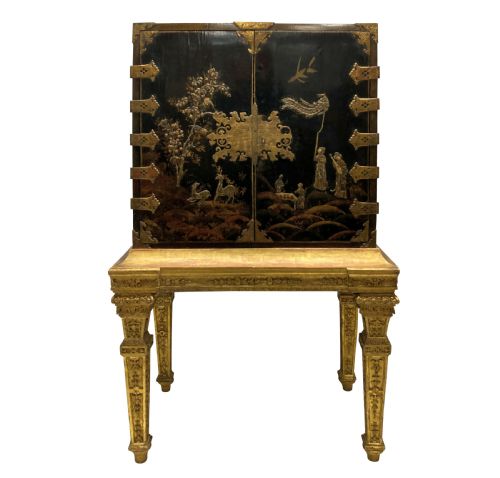
Engraved brass mounts appear across a diverse range of functional objects from several centuries, including firearms, cabinetry, timepieces and stationery boxes. Buyers searching for engraved brass mounts encounter everything from seventeenth-century flintlock pistols and lacquer cabinets on stands to Victorian walnut writing boxes and decorative bookends.
The objects carrying these mounts span multiple design movements, notably the Georgian, Regency and Victorian eras, along with Ottoman Balkan weaponry and William and Mary case furniture. Surviving examples demonstrate how makers integrated decorative metalwork into everyday utility and luxury goods alike.
Materials and technique
Craftsmen utilised cast and sheet brass, applying hand-chiselled and engraved surface patterns using gravers and burins directly onto the metal. These mounts were then secured to structural timbers, leather, glass or iron using small brass pins or screws.
The underlying objects employ timber substrates such as mahogany, walnut, coromandel, oak and pollard oak, occasionally enhanced with mother-of-pearl, silver inlay, glass or malachite to complement the polished brass elements.
Object forms documented in the archive include antique firearms, cabinets on stand, barometers, bookends, mantel clocks and stationery boxes.
What varies in quality
Quality rests principally in the crispness and depth of the metal engraving, where confident, fluid lines executed by a skilled hand distinguish superior work from shallow, mechanical scoring. The integration of the mount into the surrounding material also matters, showing precise fitting flush with the timber or firearm stock.
The selection of the primary medium dictates the overall tier of the piece, with dense exotic hardwoods, intricate lacquerwork or sophisticated firearm mechanisms elevating the object far beyond plain utilitarian containers.
Thomas Henshaw·I Parr·Budgen Croydon·Diehl Paris
The Engraved Brass Mounts Glossary
- Brass
- An alloy of copper and zinc favoured for its bright golden appearance and malleability in decorative hardware. It takes fine engraving lines cleanly while offering durability against handling.
- Mount
- A decorative or structural metal fitting attached to the exterior of a box, furniture piece or firearm. Mounts reinforce corners, frame keyholes or simply add visual ornamentation.
- Snaphaunce
- An early type of flintlock firearm mechanism utilising a flint held in a cock to strike a separate steel pan cover. It represents an important technological stage in historical weaponry.
- Stationery box
- A desk accessory designed to hold writing paper, envelopes and correspondence, often fitted with compartments and secured with locks. These boxes frequently display elaborate brass straps and hinges.
- Fusee
- A conical pulley used in clockmaking to maintain even tension on the mainspring as it unwinds. It ensures consistent timekeeping across the duration of the clock run.
Engraved Brass Mounts: Frequently Asked Questions
What objects have engraved brass mounts?
Engraved brass mounts appear on a wide variety of items ranging from seventeenth-century flintlock holster pistols to nineteenth-century coromandel stationery boxes and walnut game chests.
They also accent larger pieces of furniture such as cabinets on stands, barometers and mantel clocks, serving both decorative and structural purposes.
How do I care for antique brass mounts?
Antique brass benefits from minimal intervention, requiring only occasional dusting with a soft, dry cloth to prevent the accumulation of grime.
Avoid abrasive metal polishes that can wear away the fine hand-engraved lines and remove the natural historical patina accumulated over centuries.
Are these brass mounts original to the pieces?
Original mounts align closely with the period and style of the underlying object, showing consistent wear patterns and appropriate fastening techniques for their era.
Examining the fit against the timber and the style of the hand-engraving helps confirm whether the hardware belongs to the initial manufacture.
How are different periods identified?
Periods are determined by evaluating the structural joinery, the timber species utilised, and the overarching stylistic vocabulary of the object itself.
For example, Ottoman firearms display distinct regional lock mechanisms, while Victorian boxes often feature heavier exotic veneers and more complex internal compartments.