
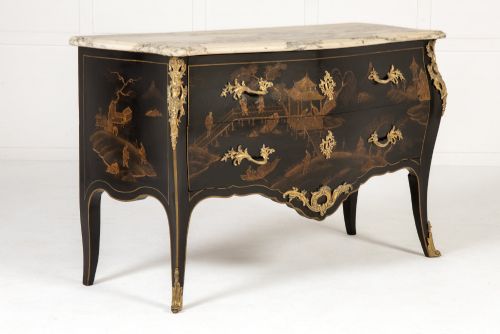


Black Japanned Chest
A black japanned chest brings deep monochrome lacquer and raised metallic detail into a room, offering both historic storage and striking visual depth.
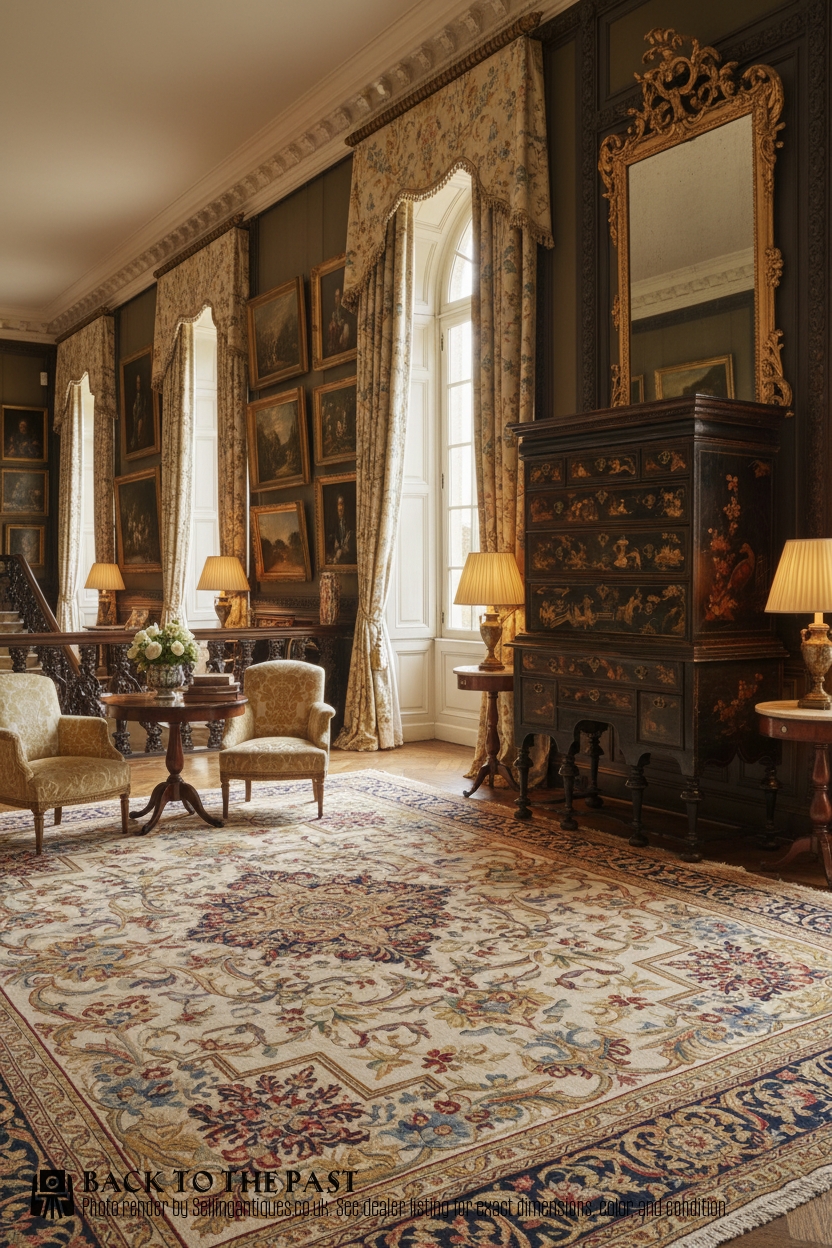
Black Japanned Chest
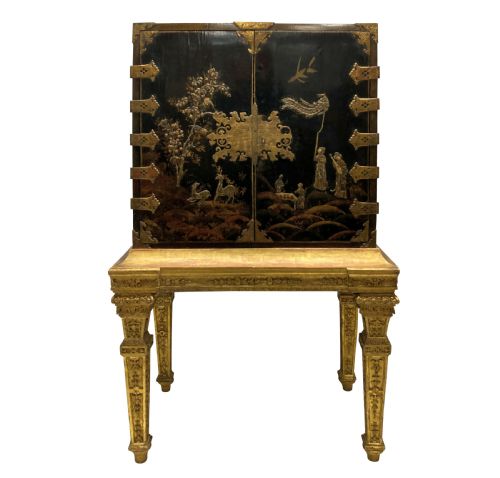
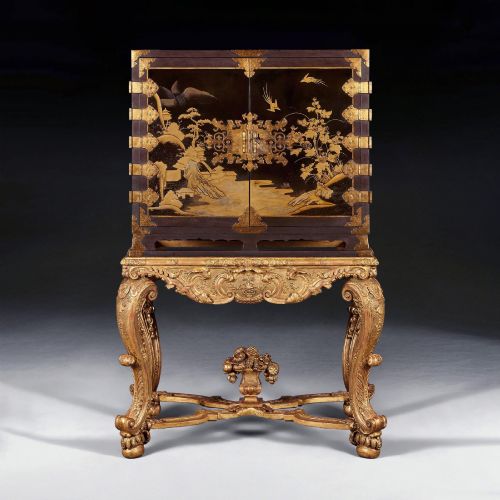
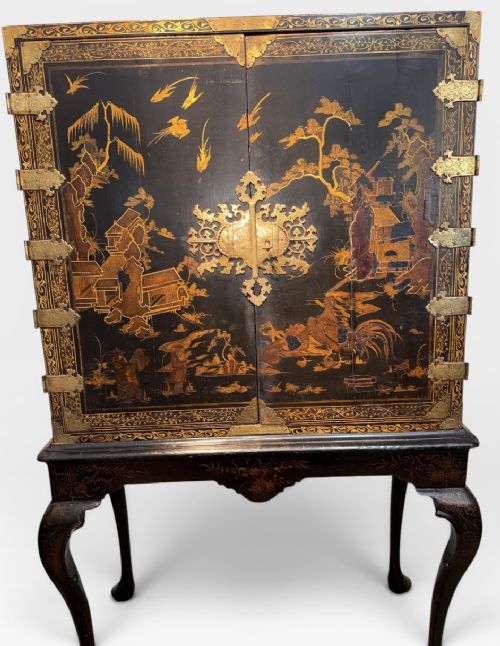
A black japanned chest typically presents as a cabinet on stand, a commode, or a small tabletop box finished in imitation oriental lacquer. These pieces span from the seventeenth century through the Georgian and Regency periods up to the early twentieth century.
The form often follows high style eras such as William and Mary or Queen Anne, featuring structured proportions elevated on carved or straight supports. Buyers frequently encounter cabinets on stands alongside smaller tea caddies and storage boxes decorated with traditional motifs.
Materials and construction methods
Construction relies upon timber foundations coated in dark lacquer layers, built up and polished to create a deep reflective surface. Artisans then applied gold leaf, gilt, and engraved brass hardware to articulate the doors, hinges, and mounts.
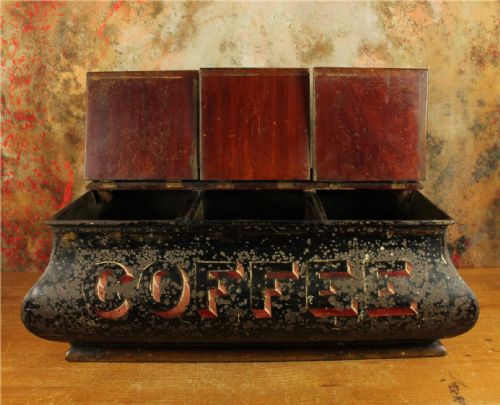
Decoration draws heavily on Chinoiserie and Japanese export traditions, where figures, landscapes, and floral scenes are built up in relief upon the dark ground. Penwork and specialised toleware techniques also appear on smaller boxes and tea caddies.
Materials across the listings include lacquer, wood, brass, gold leaf, and giltwood applied across Chinoiserie, William and Mary, and Regency styles.
Distinctions in quality
The sophistication of the raised lacquer work and the crispness of the gilt detailing dictate the visual strength of a piece. Earlier examples from the seventeenth and eighteenth centuries demonstrate meticulous hand-applied layering and intricate pictorial composition.
Proportion and the integration of the stand with the upper chest determine structural harmony. Finer pieces maintain original hardware, engraved brass hinges, and undisturbed surface patination accumulated over centuries.
The Black Japanned Chest Glossary
- Japanning
- European imitation of East Asian lacquerwork, created by applying successive coats of varnish and resin hardened by heat. This technique produced glossy dark surfaces decorated with raised gold designs.
- Chinoiserie
- European interpretation of Chinese and East Asian artistic styles, popular in decorative arts and furniture. It emphasises whimsical landscapes, exotic figures, and pavilions.
- Cabinet on stand
- A freestanding storage cabinet raised on a separate support frame or table base. This form elevates the primary storage compartment to display decorative surfaces at eye level.
- Toleware
- Metalware painted and lacquered, often in black or dark grounds with gilt highlights. It includes household items such as spice boxes, tea containers, and log bins.
Black Japanned Chest: Frequently Asked Questions
What is a japanned chest?
A japanned chest is a storage piece finished with European lacquer that mimics Asian techniques, usually featuring dark grounds and raised gold decoration.
These pieces range from tall cabinets on stands to smaller commodes and table boxes created across several centuries.
How do I care for lacquer furniture?
Lacquer surfaces require stable indoor humidity and protection from direct sunlight to prevent drying and cracking.
Dust gently with a soft dry cloth and avoid chemical polishes or abrasive cleaners that can damage the finish.
Are all black japanned chests antique?
The selection includes pieces spanning from the seventeenth century through the Georgian and Regency eras up to early twentieth-century interpretations.
Construction details, timber types, and the method of lacquer application help determine the specific period of manufacture.
What is Chinoiserie decoration?
Chinoiserie is a European decorative style that borrows motifs from Chinese art, depicting imaginary landscapes, pagodas, and figures.
On these chests, the designs are typically rendered in raised gold leaf or gilt paint against the black lacquer background.