

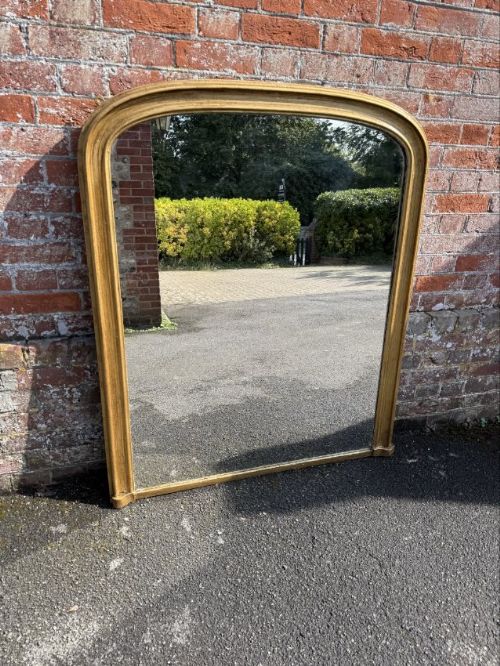
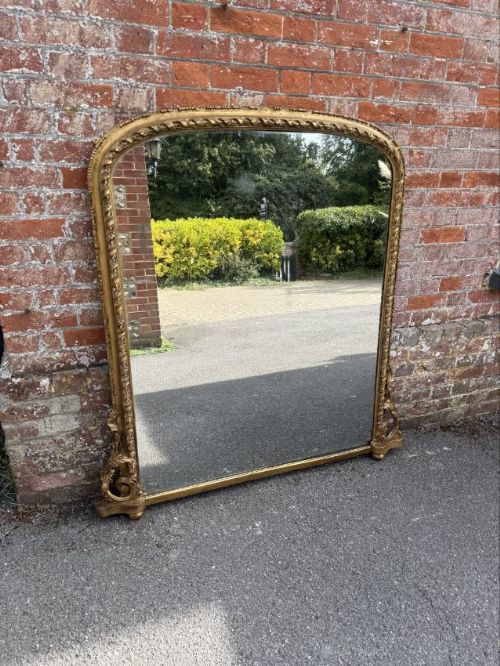
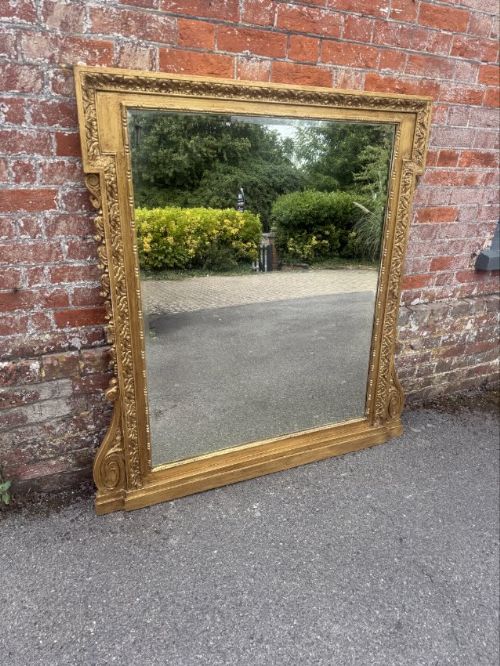
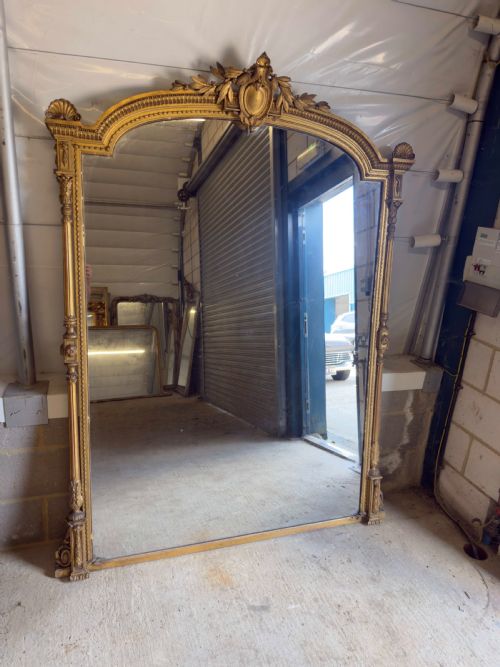
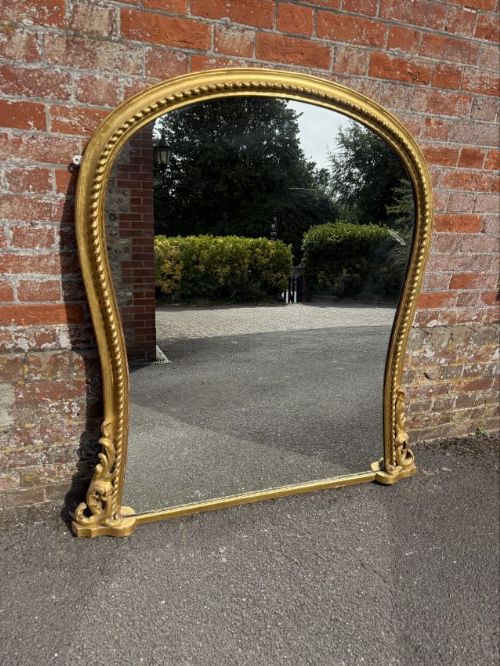
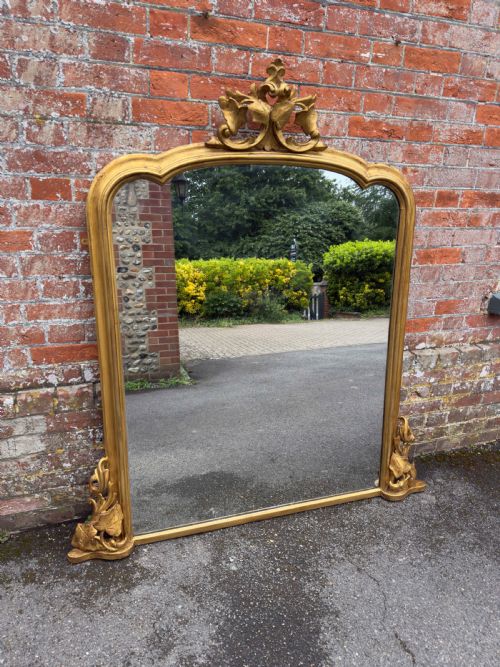
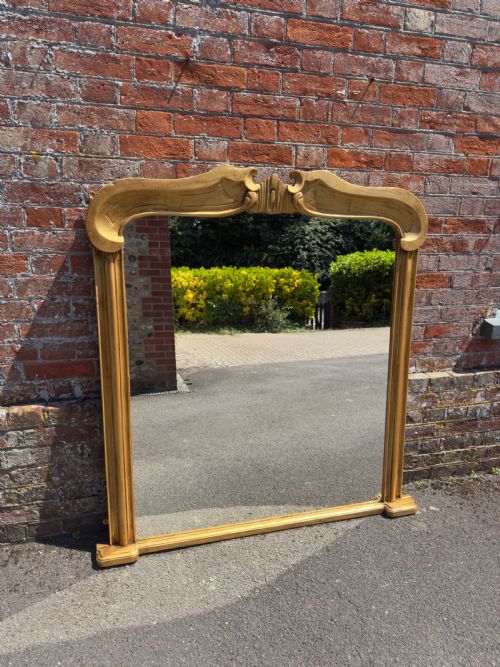


English Victorian Chimney Mirror
An English Victorian chimney mirror brings architectural presence to a room, designed to sit grandly above a fireplace.
English Victorian Chimney Mirror
An English Victorian chimney mirror functions as a substantial overmantel piece designed to anchor the hearth within nineteenth-century domestic interiors.
The pieces on this page appear predominantly from the decades between eighteen-fifty and eighteen-ninety, reflecting Victorian, Classical Revival, and Rococo Revival design vocabularies.
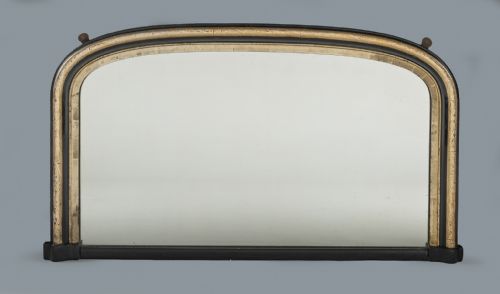
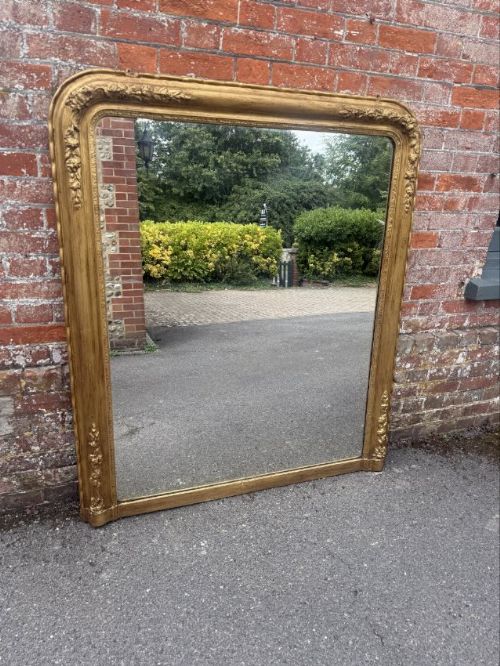
Most examples survive as large wall mirrors shaped with arched or shaped tops, constructed to reflect light and expand the visual scale of a Victorian reception room.
Materials and construction methods
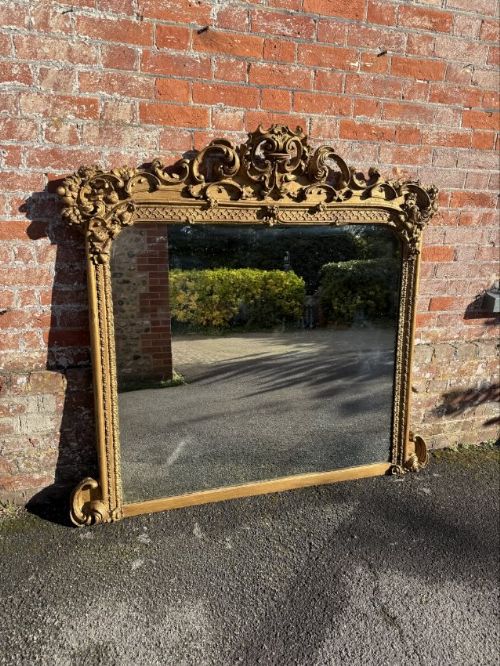
Carved wood provides the structural frame for these mirrors, frequently layered with gesso to receive intricate surface ornamentation.
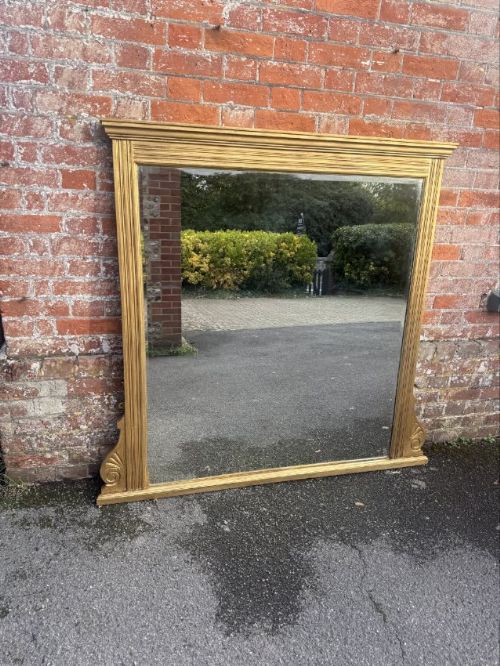
Giltwood, gold leaf, and parcel-gilt finishes impart the characteristic metallic brilliance found across the majority of these nineteenth-century frames.
Alternative treatments include painted surfaces and ebonised finishes paired with silver gilt, alongside specialist mirror glass set within.
English Victorian Chimney Mirror Retail Price Guide 2026
Typical asking prices for english victorian chimney mirror among the pieces listed under this phrase on Sellingantiques today, from the lower quarter to the upper quarter. They describe what is for sale here now, not the wider market.
Materials documented across the inventory include carved wood, gesso, gold leaf, giltwood, paint, and mirrored glass.
Distinctions in quality
The depth and crispness of the carved wood and gesso ornamentation dictate the sculptural fidelity of the frame, separating standard production from finer workmanship.
The preservation of original gilding and painted finishes determines the historical integrity of the piece, as surface alterations diminish authenticity.
Proportion and scale play significant roles, where balanced framing contours and well-integrated arched or shaped tops elevate the architectural harmony of the mirror.
The English Victorian Chimney Mirror Glossary
- Overmantel mirror
- A large mirror specifically designed to hang or rest on the mantelpiece above a fireplace. These pieces often span the width of the hearth to enhance spatial depth.
- Gesso
- A plaster-based material applied to carved wood frames to create a smooth surface for gilding or painting. It allows artisans to model fine decorative reliefs.
- Giltwood
- Timber that has been coated with gold leaf or metallic powder to simulate solid gold. It reflects ambient candlelight and daylight effectively in period interiors.
- Archtop
- A mirror frame featuring a curved upper section that follows a rounded architectural profile. This silhouette softens rigid rectangular wall lines.
- Rope twist
- A carved decorative moulding resembling intertwined strands of rope. It frequently edges the inner or outer borders of Victorian frames.
English Victorian Chimney Mirror: Frequently Asked Questions
Where should an English Victorian chimney mirror be hung?
These mirrors traditionally anchor the space directly above a mantelpiece, where their generous scale engages with the hearth below. Placing them at this height allows the glass to reflect natural light across the room.
They also function effectively on principal walls in high-ceilinged reception rooms. Secure wall fixings are essential due to the substantial weight of the timber and glass.
How do I identify a Victorian overmantel mirror?
Look for characteristic nineteenth-century proportions, heavier wooden frames, and decorative motifs such as classical revival details or rope twist mouldings. The presence of gesso beneath gold leaf or paint is typical of this era.
Dates generally span from the mid to late nineteenth century, encompassing decades like eighteen-seventy and eighteen-eighty. Construction methods typically involve traditional joinery combined with heavy plate glass.
Are these mirrors painted or gilded?
Both finishes appear frequently across the selection, with many examples utilising gold leaf, giltwood, or parcel-gilt highlights over carved wood. Other pieces feature painted surfaces or ebonised woodwork paired with silver gilt.
Original surface treatments contribute significantly to the character of the piece. Finish variations reflect different Victorian stylistic preferences, ranging from ornate revival designs to country house aesthetics.