



Black Gilt Arched Mirror
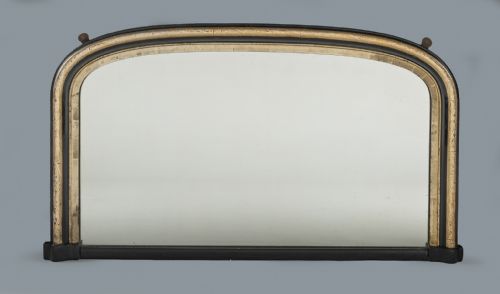
A black gilt arched mirror brings height and a strong dark outline to a room, catching the light across its gold and ebonised surfaces.
Black Gilt Arched Mirror
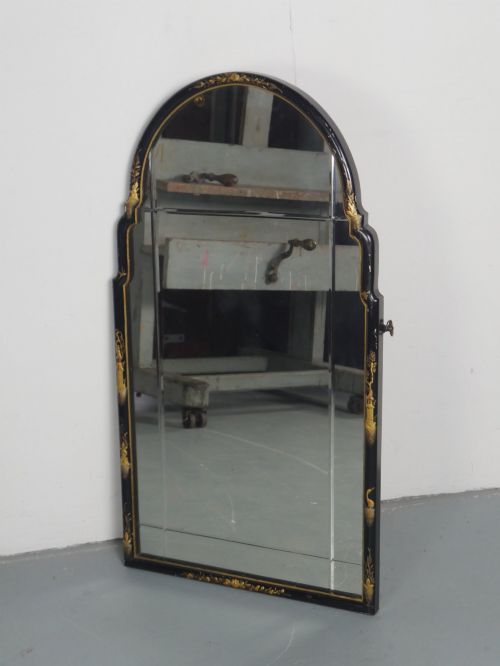
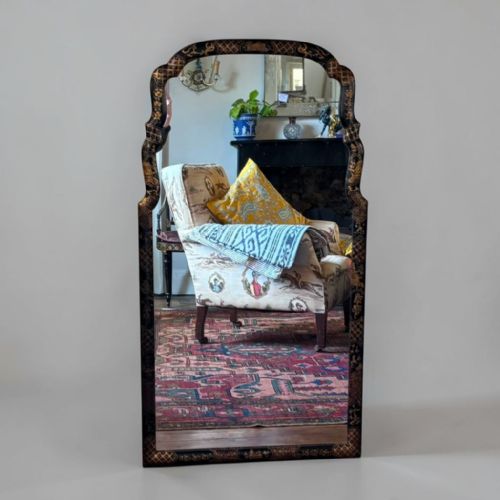
The format ranges from towering nineteenth-century architectural frames to smaller twentieth-century lacquer wall mirrors and Chinoiserie variants. Such items serve to draw the eye upward with their curved tops while the dark frame grounds the reflective glass within the interior scheme.
Materials and construction
Frames are built from solid wood, frequently ebonised to achieve a dense black finish that contrasts sharply against applied metallic leaf. Artisans used gesso laid over timber substrates to build up raised mouldings and decorative reliefs before applying gold leaf or silver gilt.
Mirror glass is set within these heavy wooden structures, sometimes accompanied by lacquer work or hand-carved detailing depending on whether the piece aligns with Victorian or later decorative traditions.
Black Gilt Arched Mirror Retail Price Guide 2026
Typical asking prices for black gilt arched mirror among the pieces listed under this phrase on Sellingantiques today, from the lower quarter to the upper quarter. They describe what is for sale here now, not the wider market.
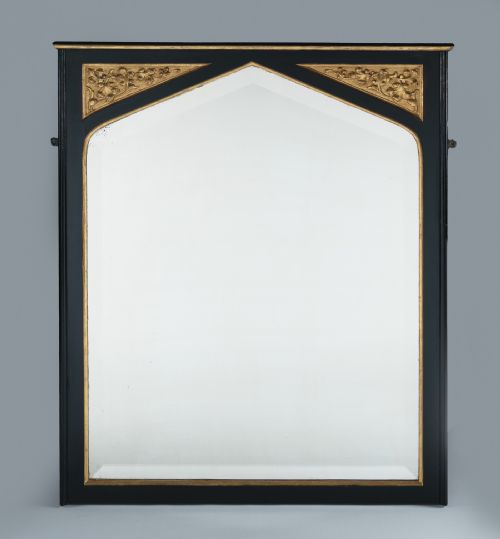
Design styles present in the collection include Victorian Gothic Revival, Aesthetic Movement, and Chinoiserie.
Distinctions in craftsmanship
The standard of a black gilt arched mirror rests upon the crispness of the gesso work and the depth of the ebonised finish. Superior examples display finely hand-carved wooden elements and meticulous application of gold leaf rather than simpler painted alternatives.
Proportion and scale also dictate worth, with larger nineteenth-century overmantel versions demanding precise joinery to support the heavy arched frame without distortion. The integrity of the original mirror glass and the richness of the underlying metallic gilding further separate standard utility pieces from finer decorative works.
The Black Gilt Arched Mirror Glossary
- Ebonised wood
- Timber treated with stain or finish to imitate ebony. This dark surface provides the primary sombre tone for many nineteenth-century frames.
- Gesso
- A plaster-like mixture applied to wood frames and carved. It serves as a smooth base for subsequent gilding.
- Overmantel mirror
- A large glass traditionally hung above a fireplace mantel. These pieces frequently utilise arched tops to echo architectural openings.
- Parcel-gilt
- Woodwork where only specific raised portions or details are gilded. This technique leaves the black ebonised base visible across the rest of the frame.
- Aesthetic Movement
- A late nineteenth-century design style emphasising visual beauty. Pieces from this period often use ebonised surfaces and gilt details to striking effect.
Black Gilt Arched Mirror: Frequently Asked Questions
Where should I hang an arched mirror?
These mirrors are traditionally positioned above a fireplace mantel to reflect light and create a sense of expanded height in a principal room. They also function effectively on large blank walls where the arched top softens linear architectural boundaries.
Because many examples from the nineteenth century possess substantial weight, they require secure wall fixings tied directly into structural studs or masonry.
How do I identify a Victorian mirror?
Victorian examples frequently employ heavy ebonised wood frames combined with gesso relief work and gold or silver leaf. Look for period construction methods in the timber backing and the specific proportions associated with nineteenth-century overmantels.
Stylistic cues such as Aesthetic Movement minimalism or Gothic Revival elements help narrow down the manufacturing decade between eighteen-sixty and eighteen-eighty.
Are these mirrors very heavy?
Yes, traditional overmantel pieces utilise thick wood and heavy mirror glass framed in dense materials. This weight requires careful handling and robust hanging hardware during installation.
The inclusion of carved wood and layered gesso adds considerable mass to the finished object compared to modern decorative frames.
What is the difference between gold leaf and silver gilt?
Gold leaf provides a warm metallic sheen that contrasts strongly against the black ebonised wood of the frame. Silver gilt offers a cooler, brighter tone that reads with a distinct silvery brilliance.
Both finishes were applied over a prepared gesso layer to catch the ambient light within a Victorian interior.