

English Tripod Table
When you search for an english tripod table, you are looking at centuries of clever central-pillar engineering designed to steady a surface on three balanced feet.
English Tripod Table
The english tripod table appears across domestic interiors from the eighteenth century onward, serving primarily as a portable surface for wine, reading, or tea.
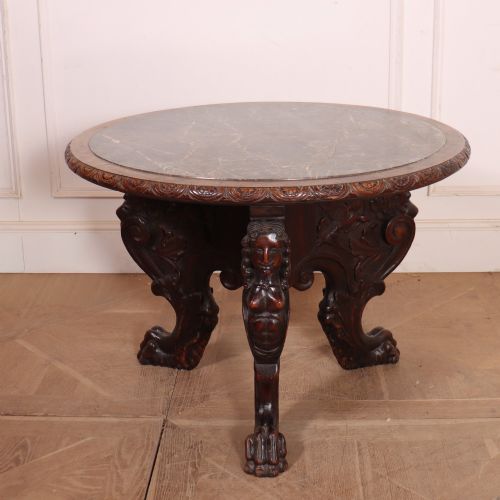
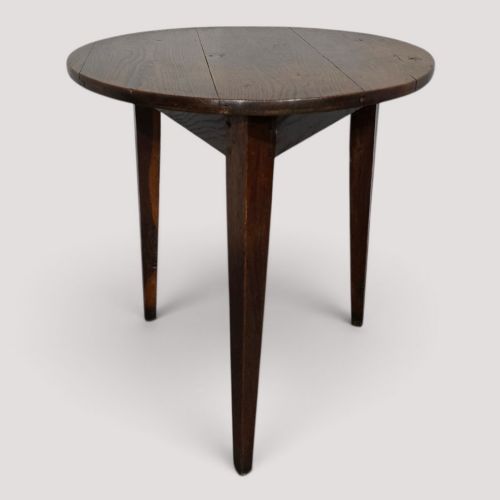
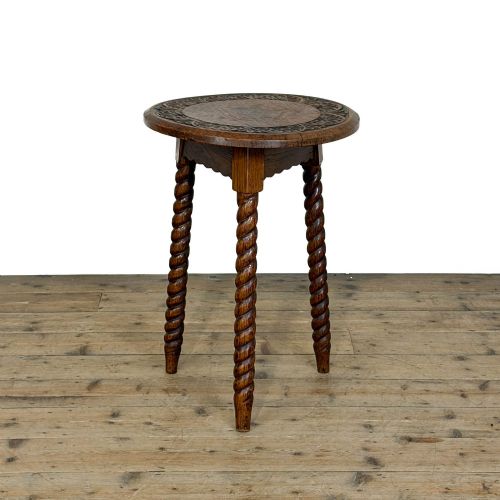
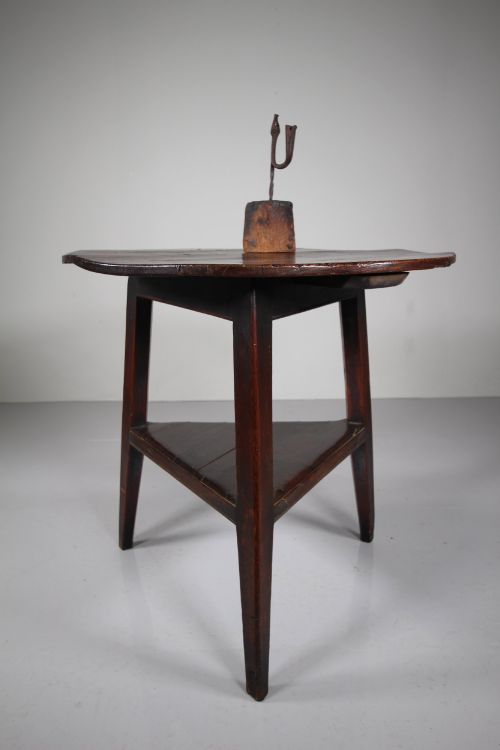
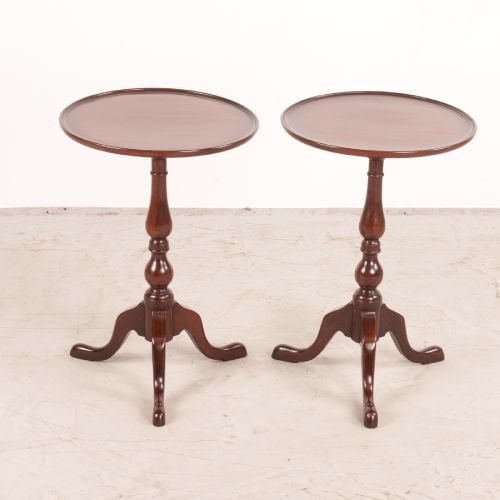
Makers constructed these pieces in various regional and formal idioms, ranging from robust country oak and elm cricket tables to refined mahogany and walnut wine tables.
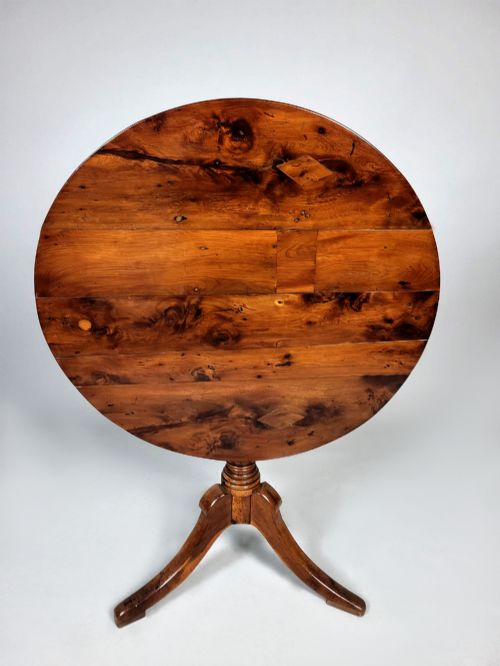
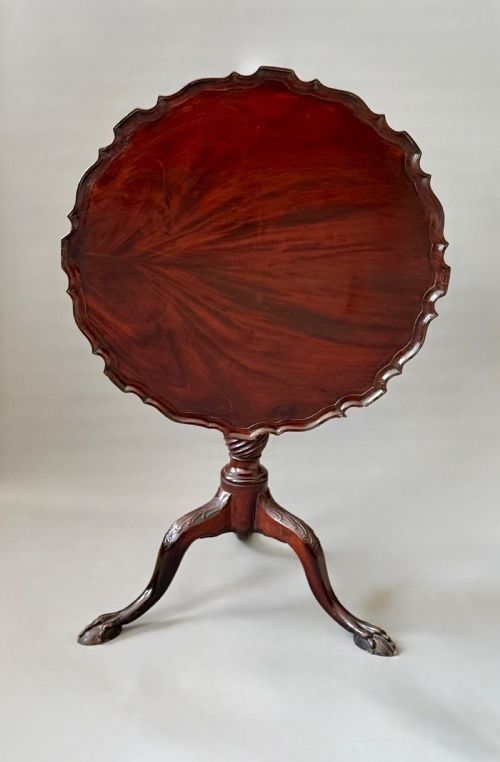
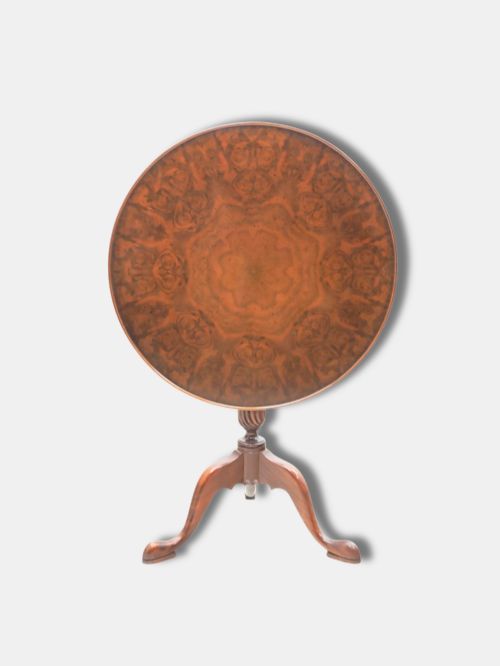
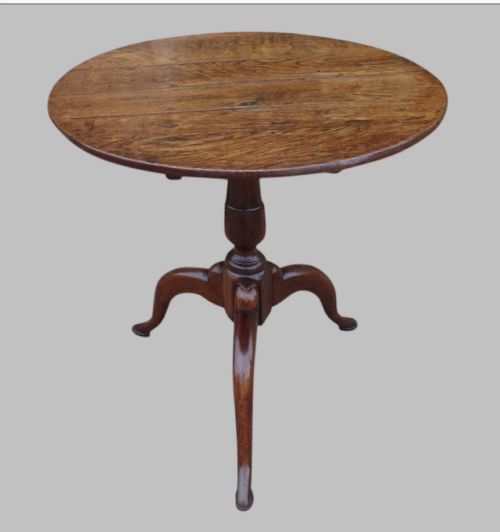
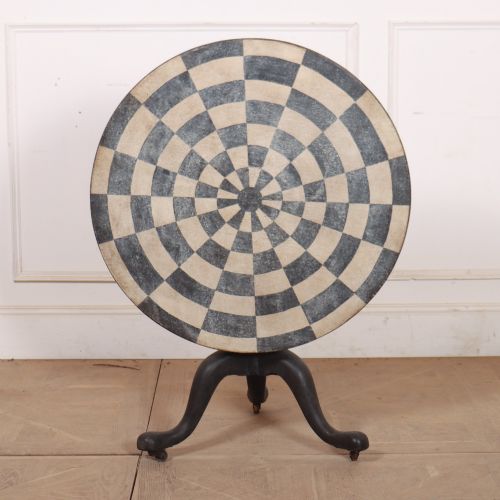
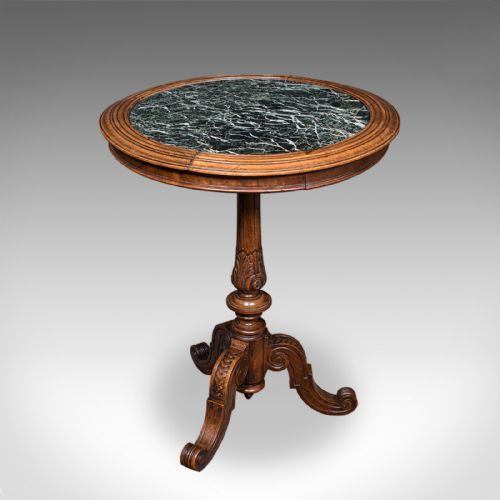
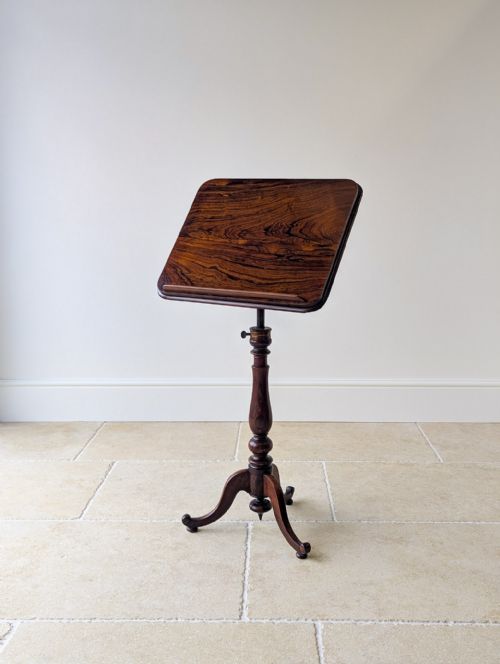
Surviving examples frequently feature circular tops, sometimes hinged for tilting, supported by a turned pedestal above three splayed legs.
Materials and Construction
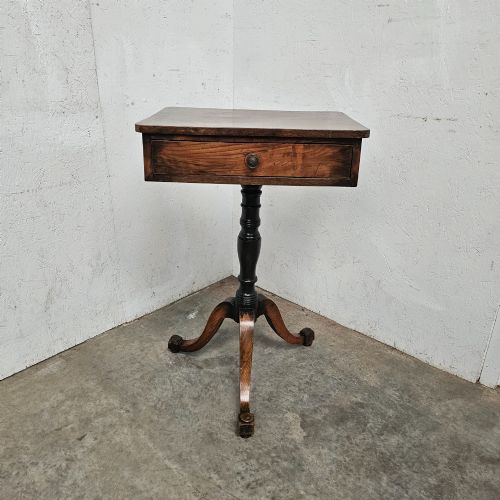
Cabinetmakers utilised native timbers such as oak, fruitwood, elm, and yew alongside imported mahogany and rosewood, often turning the central column on a lathe.
Joiners frequently incorporated a birdcage mechanism beneath the top, allowing the surface to both rotate and tilt when not in use.
The three legs commonly join the central shaft through tenons or dovetails, ensuring stability on uneven floors without relying on four conventional corners.
Listings feature woods spanning mahogany, oak, walnut, yew wood, fruitwood, elm, and burr maple.
Assessing Quality
Quality rests in the harmony of proportions between the top, the turning of the column, and the sweep of the legs.
Superior execution shows crisp carving on the knees or pie crust edges, alongside tight, original joinery in the central block and pillar fixing.
WAS Benson·George Bullock·Gillows
The English Tripod Table Glossary
- Tilt top
- A tabletop mounted on a catch mechanism that allows the surface to fold vertically against the pedestal when stored.
- Birdcage
- A wooden framework beneath the top that permits the table surface to rotate independently of the central column.
- Pie crust
- A decorative raised border carved along the perimeter of a circular tabletop, resembling pastry work.
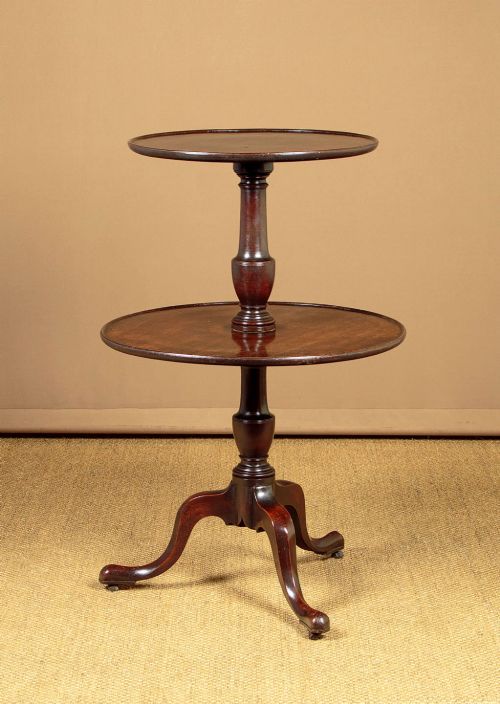
- Dumb waiter
- A multi-tiered serving stand supported by a central pillar and tripod base, used in dining rooms.
English Tripod Table: Frequently Asked Questions
What is an english tripod table used for?
These tables function primarily as versatile occasional furniture, easily moved beside a chair or window to hold drinks, books, or lamps.
Historically, smaller versions served specifically as wine tables or kettlestands during social gatherings in Georgian parlours.
How do I tell an 18th-century table from a later copy?
Early examples display traditional hand-cut joinery, timber shrinkage appropriate to age, and genuine wear patterns around the pillar block.
Later revival pieces often reveal mechanical uniformity and modern fixings hidden beneath the central pivot mechanism.
Why do some tops tilt sideways?
The tilting mechanism allowed servants to tuck the table flat against a wall when not in use, saving valuable floor space in smaller rooms.
This practical feature remains a defining characteristic of antique wine and occasional tables from the Georgian period.
How should I care for a polished wood top?
Maintain the surface by applying natural beeswax sparingly and buffing gently with a soft cloth to protect the historic grain and patina.
Keep the piece away from direct heat sources and strong sunlight to prevent the timber from warping or splitting over time.