
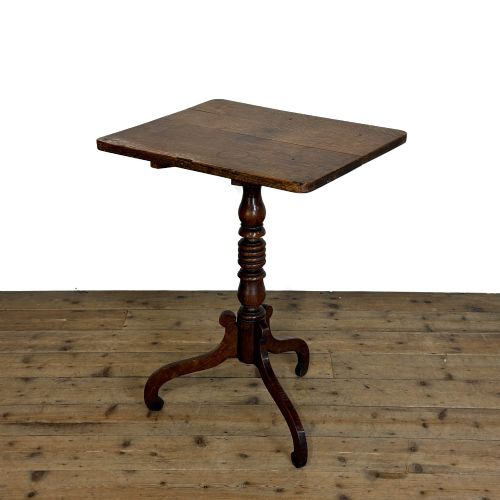
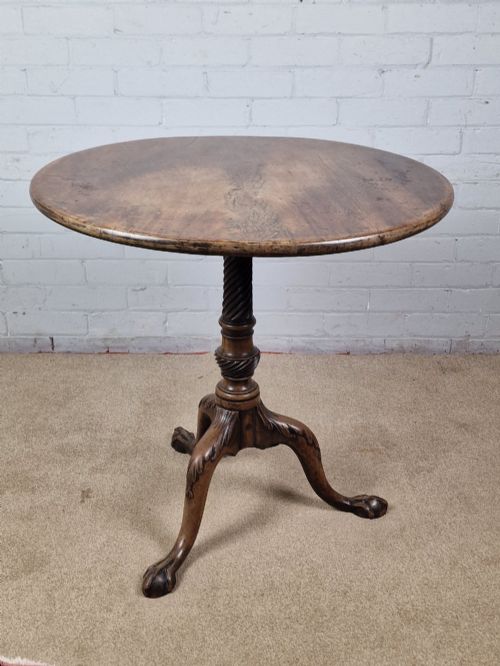
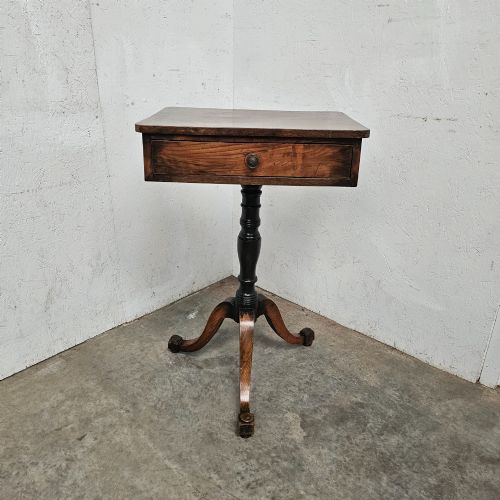
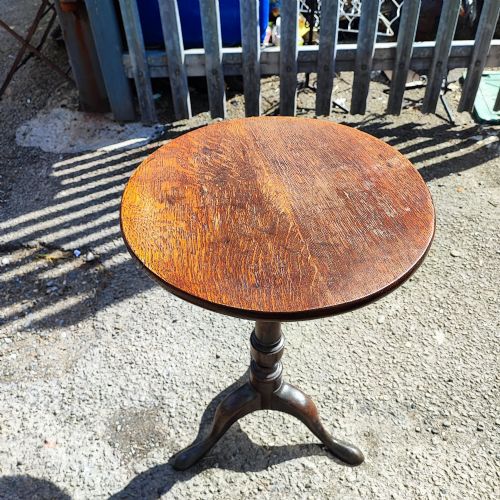
Georgian Tripod Pedestal Table
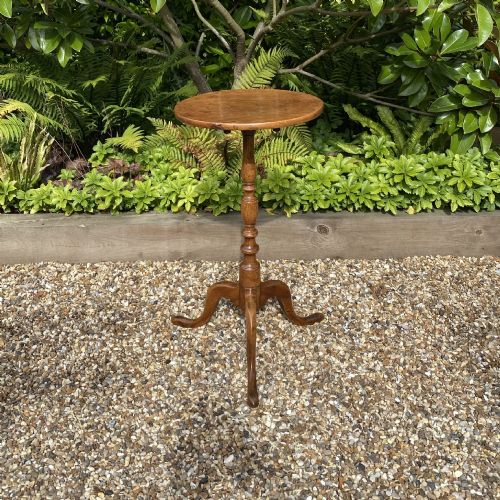
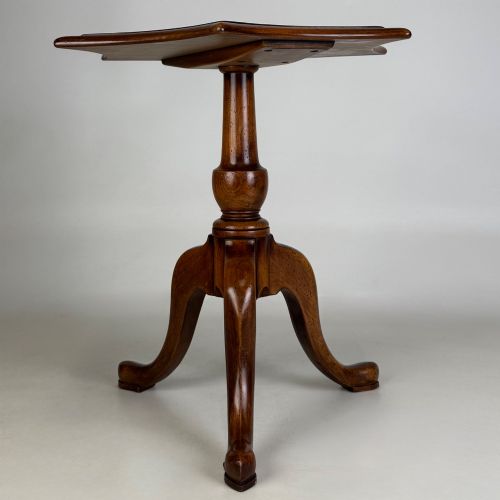
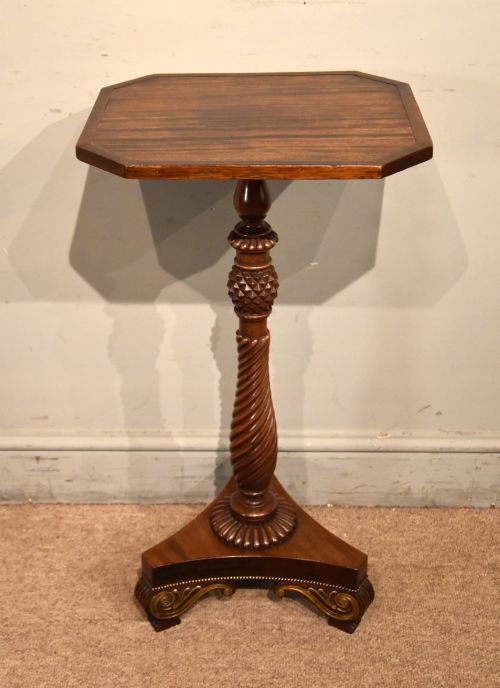
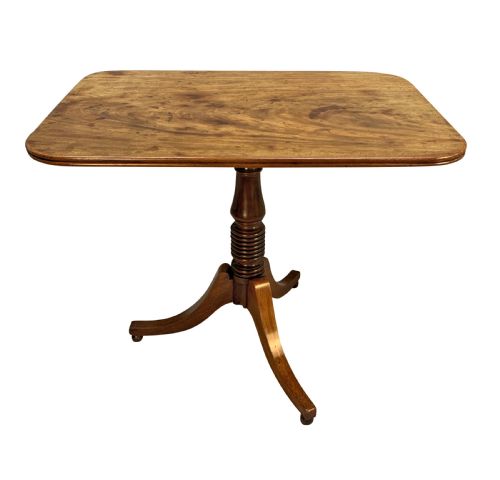
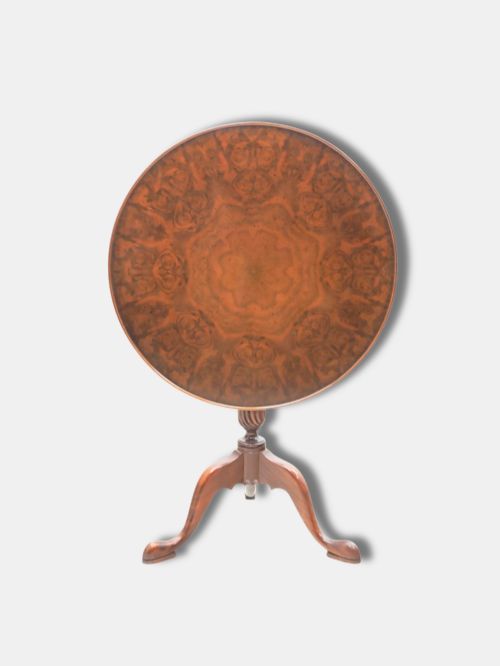
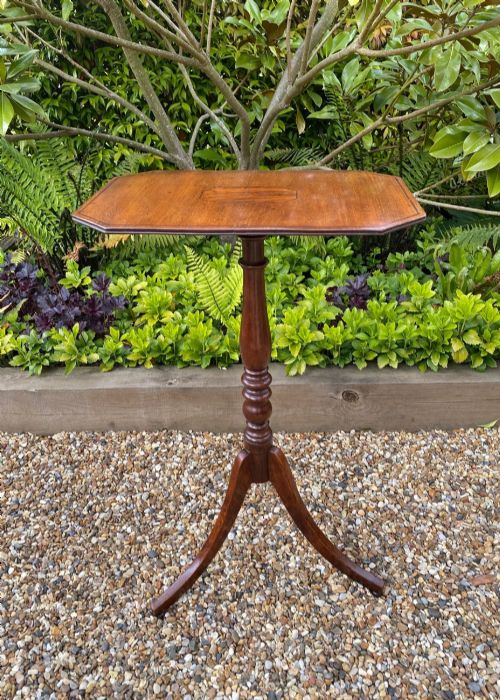
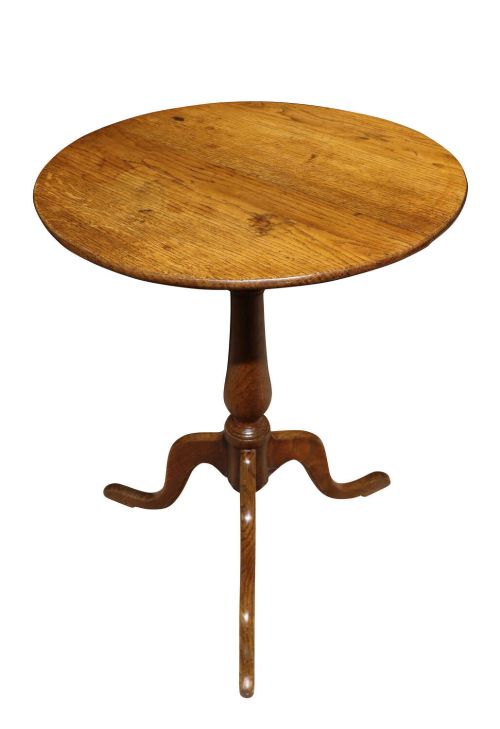
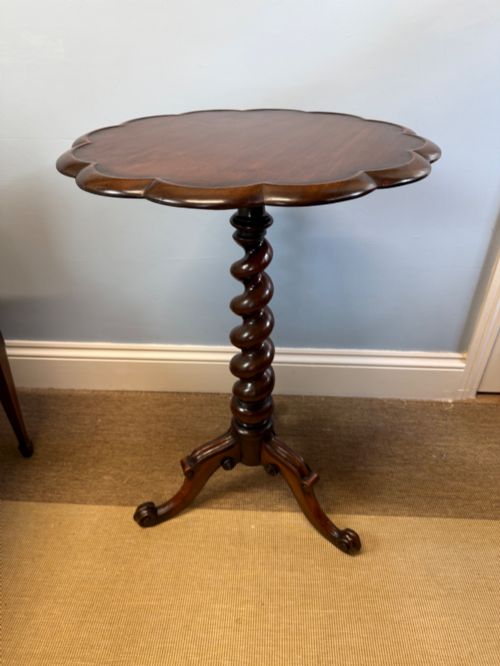
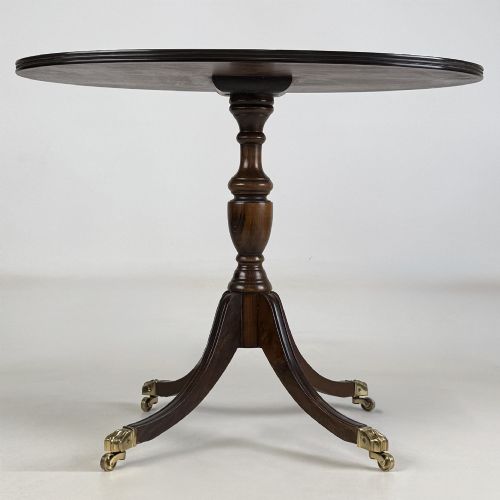
A georgian tripod pedestal table balances a single column on three legs, offering a compact surface suited to any room.
Georgian Tripod Pedestal Table
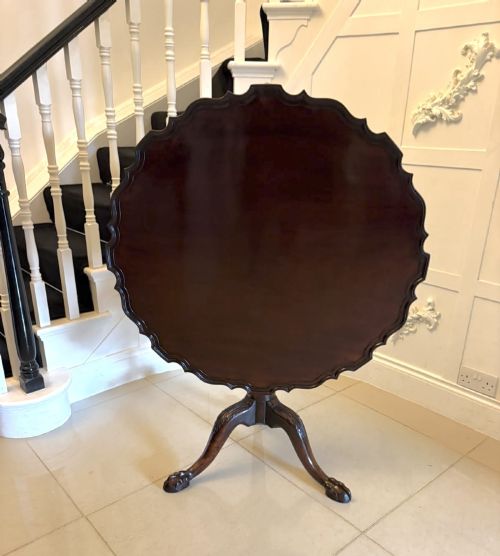
A georgian tripod pedestal table appears in various guises across this selection, most commonly as a compact wine table, occasional table, or tilt-top tea table. These pieces date from the eighteenth and nineteenth centuries, alongside later revival interpretations in walnut and mahogany.
The format relies on a central pillar supported by three splayed legs, creating a stable footprint that slips easily beside a chair or into a corner. Smaller variants served for holding candles or wine glasses, while larger examples functioned for supper or games.
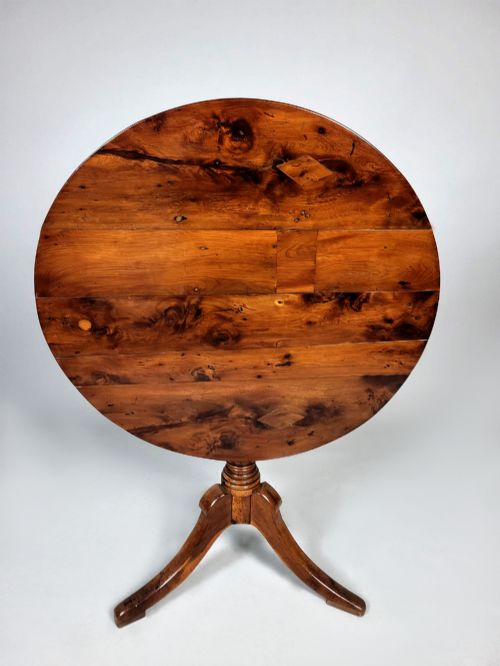
Makers of the period employed timber economically, turning solid pedestals and sawing tabletops from fine planks. Surviving examples often feature clever mechanisms, such as birdcage assemblies or pivoting tops that store flat against the column.
Materials and construction
Cabinetmakers constructed these tables primarily in mahogany, walnut, and oak, occasionally turning to elm, cherry, or fruitwood for provincial pieces. Timber selection dictated the weight and grain movement of the top, which was frequently turned from a single wide board.
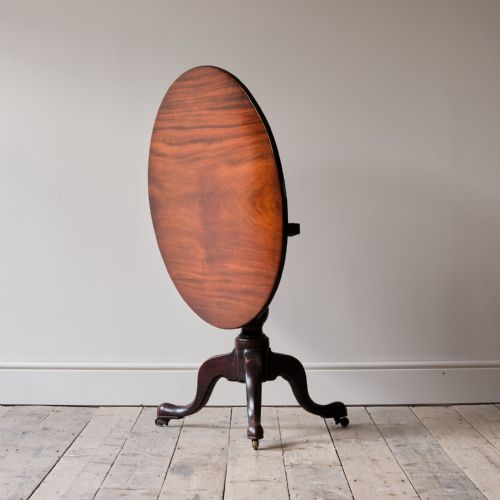
The three-legged base demanded precise joinery, typically uniting the column and legs through solid dovetail or tenon joints. Brass fittings occasionally reinforced the pivot mechanisms on tilt-top designs, allowing the surface to tip upright when not in use.
Mahogany and walnut dominate the listings, alongside occasional examples in oak, elm, and fruitwood.
Evaluating quality
Quality rests in the proportion of the turning and the choice of timber figure, with fiddle-back or Cuban mahogany elevating simpler forms. The crispness of carved details on the knees and feet separates standard production from finer cabinet work.
Structural integrity depends on the tightness of the central block and the alignment of the legs, where repeated movement can cause looseness. Original catches and unwarped circular tops indicate careful preservation over centuries.
Gillow
The Georgian Tripod Pedestal Table Glossary
- Tilt top
- A tabletop mounted on a catch mechanism that allows the surface to swivel vertically for storage. This clever design saved valuable floor space in period drawing rooms.
- Birdcage
- A revolving wooden box beneath the tabletop that permits both rotation and tipping. It represents a more complex and desirable piece of internal engineering.
- Pie crust edge
- A decorative moulded rim carved with undulating curves in imitation of pastrywork. Craftsmen shaped this border directly from the solid timber of the tabletop.
- Tripod base
- A pedestal support terminating in three distinct legs, often ending in pad, snake, or claw-and-ball feet. This configuration provides steady contact on uneven floors.
Georgian Tripod Pedestal Table: Frequently Asked Questions
How do I date an 18th-century table?
Dating relies on examining the timber species, the turning profile of the central pillar, and the construction methods used on the underside.
Earlier pieces often display pegged joints and native hardwoods like oak or walnut, whereas later Regency examples favour imported mahogany.
Where should I place a wine table?
These small surfaces suit placement beside a sofa or armchair as a convenient spot for drinks or a reading lamp.
Their narrow footprint ensures they fit comfortably into tight corners without crowding a room.
Are these tables sturdy?
The three-legged design naturally accommodates uneven floorboards better than a standard four-legged table.
Weight distribution remains centred over the column, provided the leg joints remain tight and well-maintained.