


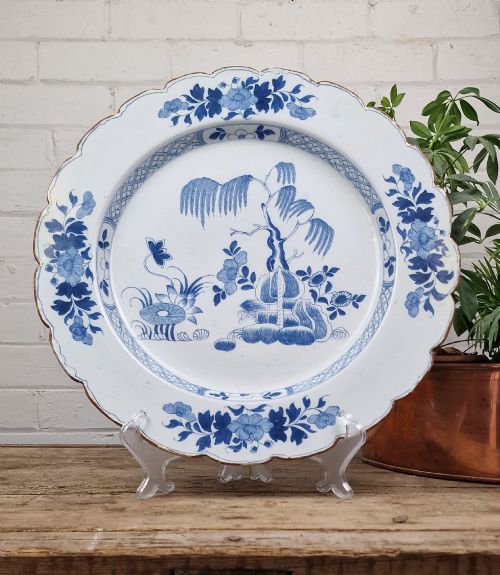


English Tin Glaze Charger
An english tin glaze charger brings centuries of rich colour and hand-painted artistry straight to your wall or dresser.

English Tin Glaze Charger
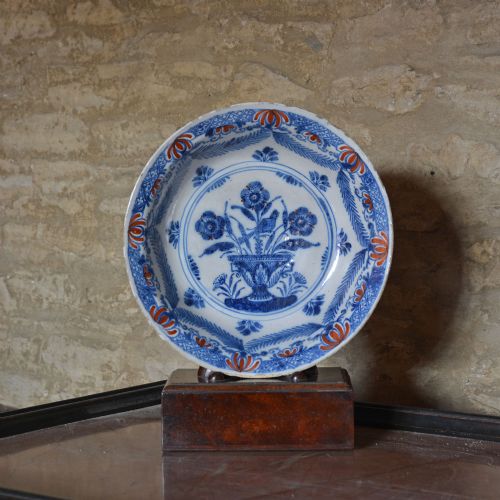
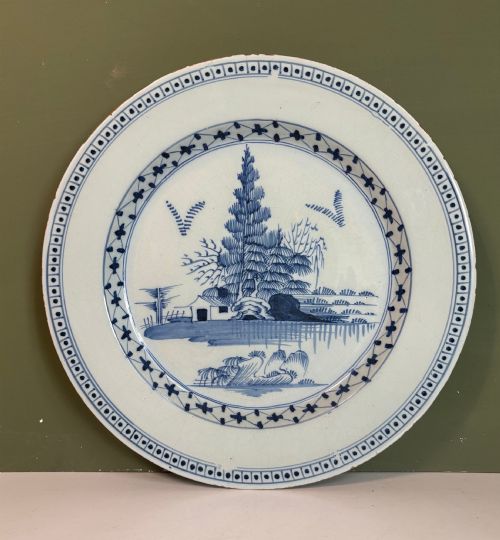
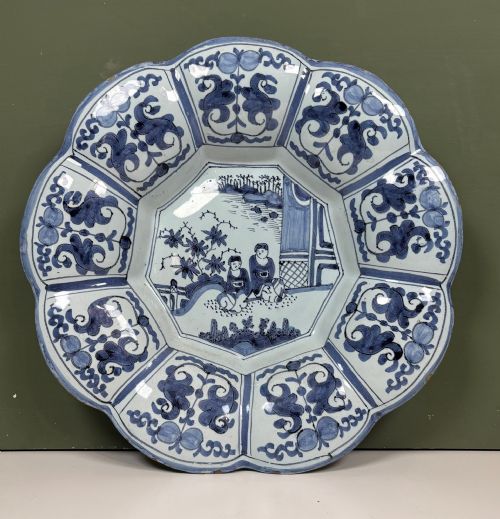
When you search for an english tin glaze charger, you are looking at large earthenware plates and dishes made primarily during the eighteenth century. These pieces encompass styles such as Georgian Chinoiserie and traditional Delftware, originating from English potteries.
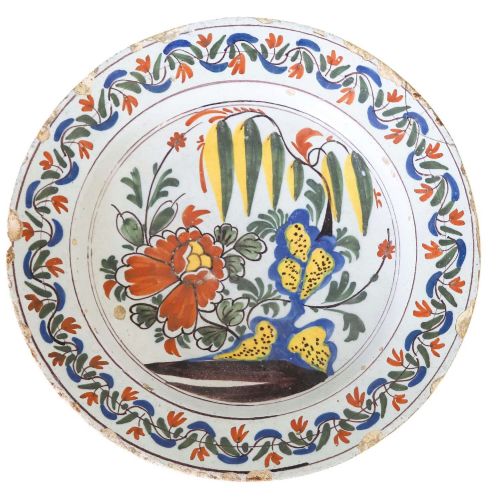
The version you are most likely to meet on this page is a round charger or plate, featuring either blue and white schemes or polychrome painting. They serve primarily as decorative plates, chargers, and shallow bowls rather than everyday tableware.
How they were made
Potters shaped clay into earthenware bodies, which were then coated in a tin-based glaze to produce an opaque white surface. This absorbent glaze provided an ideal canvas for hand-painted decoration.
Makers applied cobalt pigment and other metal oxides directly onto the unfired tin glaze. The pieces were then fired, fusing the pigments into the glossy surface to create permanent patterns.
English Tin Glaze Charger Retail Price Guide 2026
Typical asking prices for english tin glaze charger among the pieces listed under this phrase on Sellingantiques today, from the lower quarter to the upper quarter. They describe what is for sale here now, not the wider market.
What varies in quality
Quality in these ceramics rests heavily on the confidence and crispness of the brushwork. Skilled painters executed floral motifs, figures, and landscapes with fluid, expressive strokes that elevate simple earthenware.
The richness of the palette and the stability of the glaze during firing also distinguish finer examples. Evenness of the tin glaze and clarity of the cobalt pigment separate standard production from more ambitious workshop output.
Bristol·Lambeth
The English Tin Glaze Charger Glossary
- Tin-Glaze
- A ceramic glaze made opaque by the addition of tin oxide. This technique creates a smooth white background suitable for painted decoration.
- Polychrome
- Decoration utilising multiple colours rather than a single hue. On these pieces, it typically involves a palette of yellows, blues, greens, and reds.
- Chinoiserie
- European artistic styles reflecting Chinese motifs and imaginary oriental scenes. This aesthetic appears frequently on eighteenth-century ceramic chargers.
- Earthenware
- Porous pottery fired at relatively low temperatures. It forms the structural body beneath the opaque tin glaze.
English Tin Glaze Charger: Frequently Asked Questions
How do I hang a charger safely?
Use a professionally coated wire hanger designed specifically for heavy ceramic plates, ensuring the springs do not bite into the soft earthenware body.
Check that the wall fixing is secure and capable of supporting the weight of a wide charger before leaving it on display.
Can I use these chargers for food?
Historic tin-glazed earthenware has porous bodies and glazes that can absorb liquids or be damaged by cutlery and modern detergents.
Keep these antique chargers strictly for visual display rather than dining use to protect their fragile surfaces.
Why are some plates called chargers?
The term historically denotes a large dish or platter intended either for serving food at a grand table or for impressive display on a sideboard.
Over time, larger decorative earthenware plates retained this name even when their primary purpose shifted to wall decoration.
How do I tell English delft from Dutch?
English pieces often feature softer clay bodies, distinct blue tones, and specific regional palette choices compared to their continental counterparts.
Examining the foot ring, glaze pooling, and the character of the floral or figurative brushwork helps distinguish English workshops from Delft production.