





English Silver Plated Tray
An english silver plated tray brings domestic ceremony into the room, holding everything from afternoon tea to an evening cocktail.
English Silver Plated Tray
When you search for an english silver plated tray, you encounter pieces designed for hospitality, formal presentation and desk use spanning the Victorian, Edwardian and Art Deco periods.
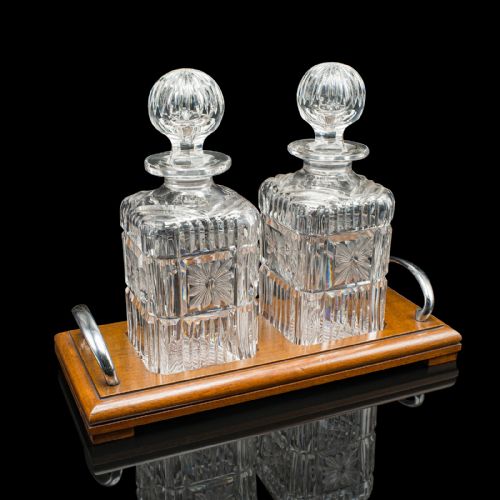
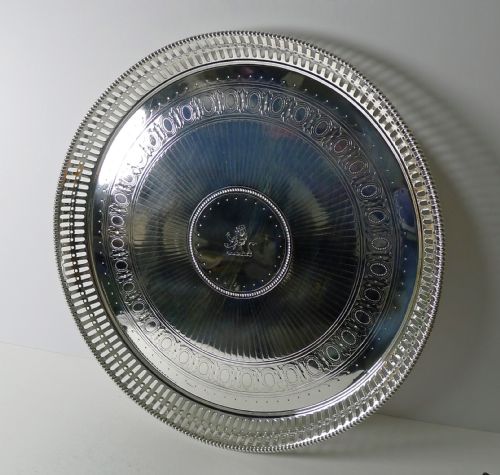
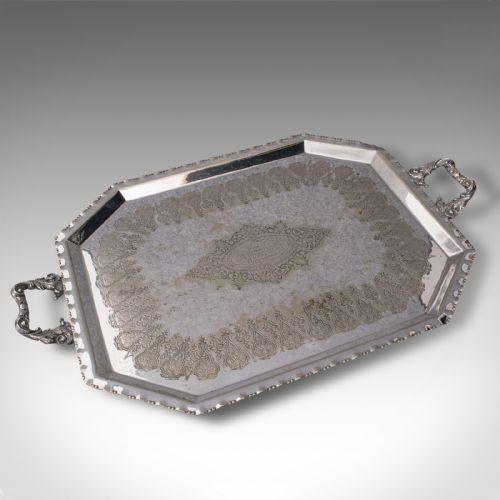
The objects on this page range from large oval gallery trays with oak bases to circular salvers, twin-handled cocktail trays, and specialised service sets for strawberries, asparagus or decanters.
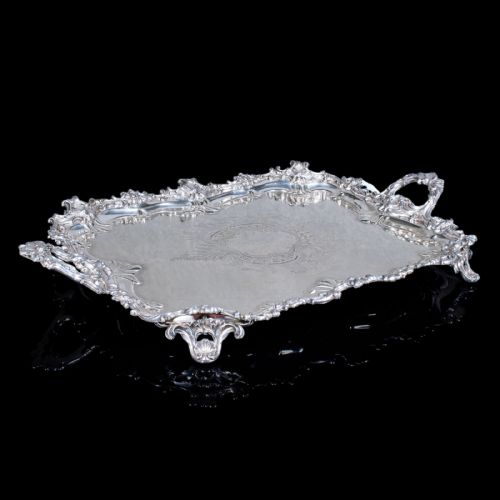
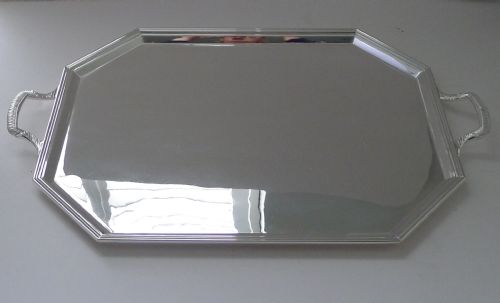
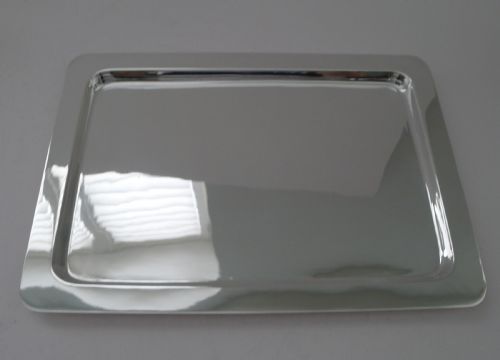
Victorian and Edwardian iterations tend toward heavy ornamentation with pierced rims and engraved details, while later Art Deco and modernist examples favour geometric lines and plain surfaces.
Plate and metal combinations
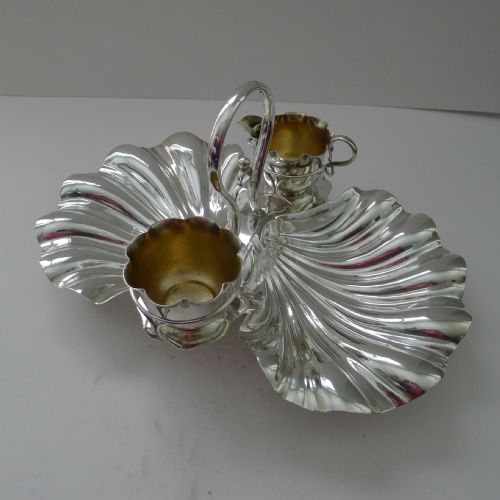
Makers utilised silver plate over base metals such as nickel silver, electroplated nickel silver, and standard copper-alloy foundations, occasionally applying a gold wash to interior compartments.
Many serving trays combine metalwork with timber elements, pairing solid oak or inlaid wood bases with plated mounts, gallery rails and handles.
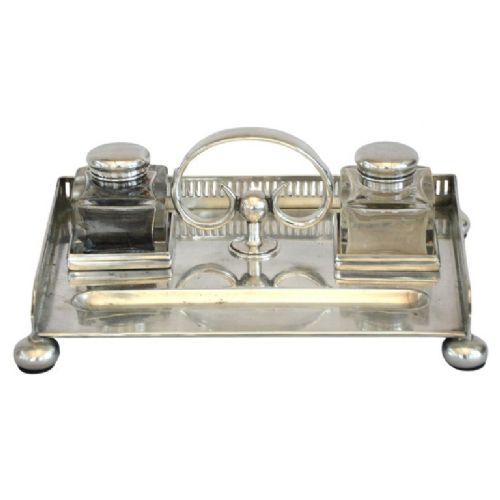
Decorative pieces incorporate cut glass and crystal inserts for decanter sets and fruit dishes, secured within fitted silver plated frames.
Several pieces double as domestic organizers, including specialised asparagus dishes and desk inkstands complete with glass wells.
Substance and signature
Weight and structural thickness separate substantial service pieces from lighter wares, as heavier metal foundations resist denting and warping during daily use.
The clarity of makers' marks and registration stamps indicates the workshop standard, pointing to established houses like Elkington, Mappin and Webb or Walker and Hall.
Quality shows in the execution of the surface engraving, the tightness of gallery joints, and the evenness of the silver deposit over the underlying base metal.
Walker And Hall·Daniel Arter·J B Chatterley And Sons·James Dixon And Sons·John Collyer And Co·Asprey London·Elkington·Atkin Brothers·Roberts And Belk·Lee And Wigfull·J H Potter·Mappin And Webb·Barker Brothers·C W Fletcher·George Richmond Collis·James Deakin·Martin Hall
The English Silver Plated Tray Glossary
- Silver plate
- A thin layer of silver bonded to a base metal such as copper or nickel silver. This process provided the appearance of solid silver at a lower cost.
- EPNS
- Electroplated nickel silver. A common base metal composition used extensively by British makers from the nineteenth century onward.
- Salver
- A flat serving tray, usually circular with a raised rim or footed base. These pieces often feature chased or engraved surface decoration.
- Gallery tray
- A tray featuring an upright pierced or solid metal gallery border around the edge. This railing kept decanters and glasses secure during transport.
- Sheffield plate
- An earlier technique involving the fusion of a silver sheet to a copper ingot before rolling. This method predates modern electroplating.
English Silver Plated Tray: Frequently Asked Questions
How do I clean an antique tray?
Use a soft cloth and a gentle silver cream formulated specifically for plated items. Avoid harsh dips or excessive rubbing that can wear through the thin silver layer to the base metal underneath.
Wash the piece in warm soapy water and dry it immediately with a lint-free cloth to prevent water spots from forming on the polished surface.
Can I use these trays for drinks?
These trays were originally designed for serving afternoon tea, wine, or cocktails, making them suitable for contemporary entertaining. Place coasters on the surface if serving acidic drinks to protect the vintage plate.
Ensure that oak-bottomed or glass-fitted pieces are lifted by their handles rather than the edges to maintain structural integrity during use.
What does EPNS mean?
EPNS stands for electroplated nickel silver, which denotes a base alloy of copper, nickel, and zinc coated with a thin layer of pure silver through an electrical process. This material became standard for British tablewares.
Objects bearing this stamp date from the Victorian period onwards, replacing older fusion methods with more efficient manufacturing techniques.
How do I date a silver plated tray?
Examine the style of the handles, the shape of the gallery, and any stamped maker marks or registry numbers on the underside. Victorian pieces often display ornate foliate engraving, while Edwardian designs lean toward neoclassical pierced borders.
Art Deco items from the 1920s and 1930s present clean geometric profiles, sharp corners, and minimal ornamentation compared to their nineteenth-century predecessors.