


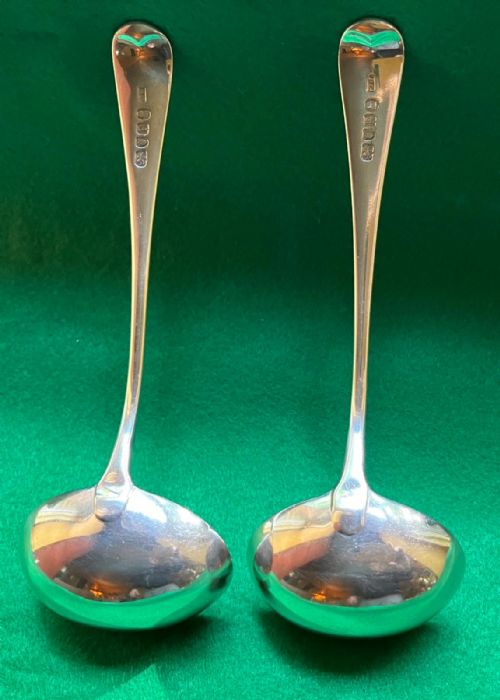


English Silver Ladle
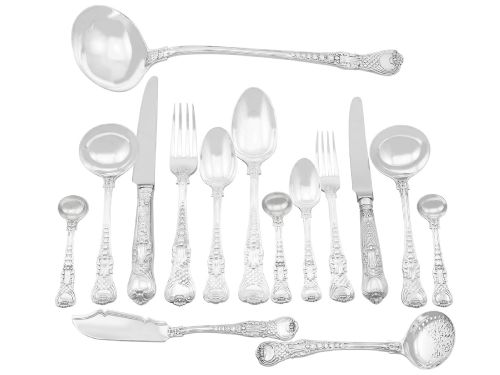
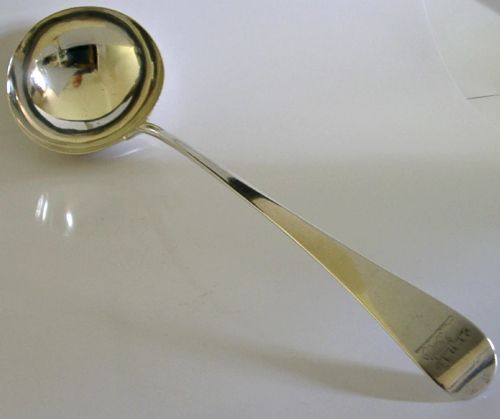
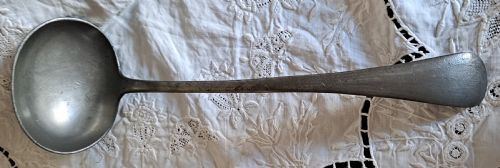
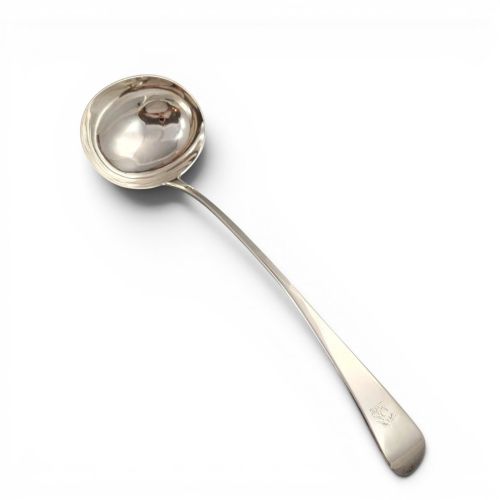
These English silver ladle examples range from small sauce servers to large Georgian soup ladles forged in sterling silver, pewter and silver plate.
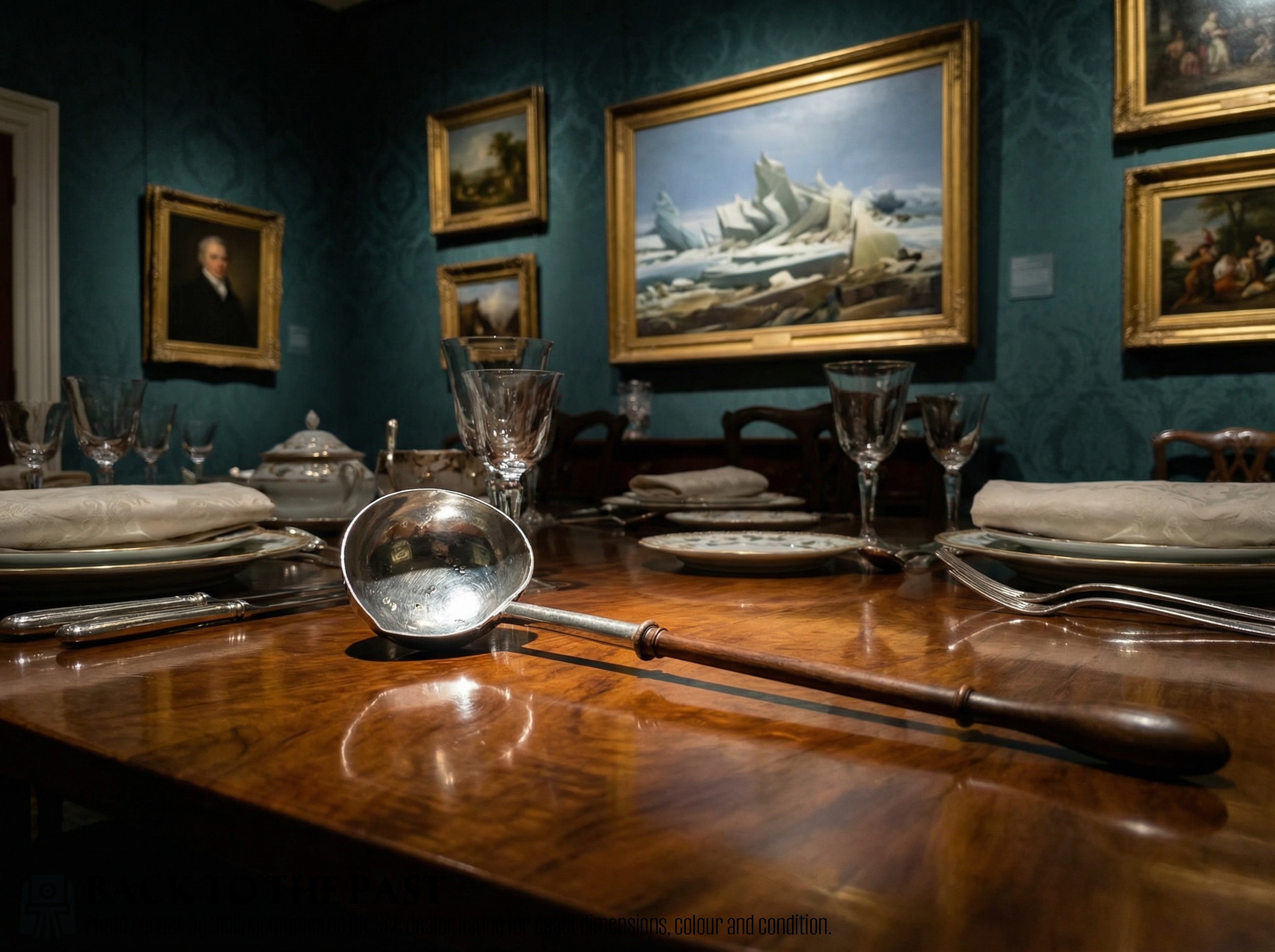
English Silver Ladle
An English silver ladle serves as a specialised utensil designed for portioning liquids, sauces, punch or soup at the table. The form appears in various configurations, including small sauce ladles, toddy ladles with wood handles, and large soup ladles.
The selections span the Georgian and Victorian periods, with pieces appearing in sterling silver, pewter, silver plate and wood. Buyers encounter standard Old English and Fiddle patterns alongside ornate scrollwork and crested designs.
Originating primarily from London workshops and regional makers, these pieces represent domestic tableware accessory production across the eighteenth and nineteenth centuries.
Materials and construction
Silversmiths hammered and shaped sterling silver into bowls and handles, frequently applying hallmarks to designate origin, standard and date. Pewter and silver plate provide alternative metal bodies for basting and serving pieces.
Certain toddy ladles incorporate wood or coquilla nut components joined to metal bowls via silver bands, combining organic materials with forged metalwork.
Some toddy ladles feature twisted whalebone handles designed to keep the warmth of the hot punch from reaching the drinker's fingers.
Quality and execution
Weight and gauge distinguish substantial serving pieces from lighter utensils, with heavier metal providing greater rigidity in large soup and punch ladles. Crispness of hallmarks and clarity of engraved crests or scrollwork reflect the skill of the original silversmith.
Condition of the bowl rim and the structural integrity of the handle junction indicate how thoroughly a piece survived its working life at the table.
Hester Bateman·John Yates·Viner's
The English Silver Ladle Glossary
- Sterling silver
- A silver alloy containing 92.5 percent pure silver and 7.5 percent other metals, usually copper. This standard composition forms the basis of most traditional English flatware.
- Old English pattern
- A traditional flatware design characterised by a rounded handle end turning downwards. It remains a standard style across Georgian and Victorian table service.
- Toddy ladle
- A small drinking vessel spoon featuring a deep bowl and a long handle, often made of wood or twisted whalebone. These were used for ladling hot punch or toddy into glasses.
- Hallmark
- An official stamp applied to precious metals indicating the maker, assay office, standard of purity and year of production. These marks provide precise dating for British pieces.
- Sauce ladle
- A diminutive serving spoon designed specifically for gravy, custard or sauce. They typically measure smaller than soup or punch variants.
English Silver Ladle: Frequently Asked Questions
What is the difference between a sauce ladle and a soup ladle?
A sauce ladle is considerably smaller in scale, designed to fit into a gravy boat or sauce tureen for table service. Its bowl capacity measures for individual portions rather than large servings.
Soup ladles feature deep, wide bowls and long handles intended for reaching into large soup tureens or punch bowls. They require substantial weight to lift liquid cleanly from deep vessels.
How do I identify a Georgian silver ladle?
Georgian pieces carry hallmarks that include duty marks, date letters and town marks corresponding to the reigns of Georges I through IV. Stylistically, they frequently employ the Old English pattern or distinct bright-cut engraving.
The silver gauge on eighteenth-century examples tends to feel substantial yet balanced, reflecting the manual hammering techniques of the period before mechanised rolling mills dominated production.
What materials were used besides sterling silver?
Pewter served as a durable, accessible metal for utilitarian kitchen and basting ladles during the nineteenth century. These pieces offer a duller grey lustre compared to polished silver.
Wood and coquilla nut appear in the handles of toddy ladles, often joined with silver bands and engraved mounts. Silver plate also emerged as an alternative surface treatment over base metals.
How should I clean an antique silver ladle?
Antique silver benefits from gentle washing in warm water with mild soap and immediate drying with a soft cloth. Avoid abrasive pastes that can wear down hallmarks or thin engravings.
If the piece requires tarnish removal, a specialised liquid silver cleaner applied sparingly preserves the underlying metal without stripping away historical patination.