







English Regency Sofa
An english regency sofa brings sculptural classical lines and rich cabinet timbers like rosewood and mahogany directly into a principal reception room.
English Regency Sofa
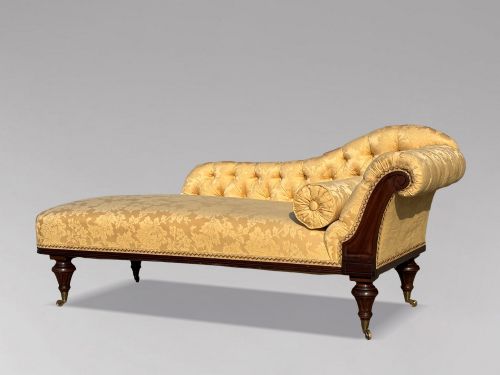
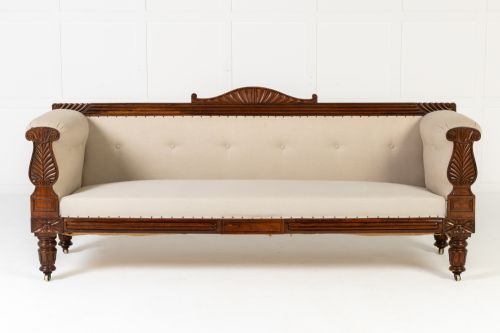
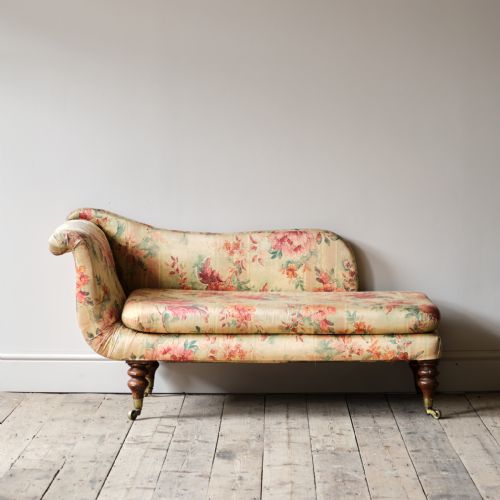
When searching for an english regency sofa, buyers encounter heavy timber frames, scroll ends, and upholstered settees produced during the early nineteenth century. The selection spans grand rosewood and mahogany couches, caned daybeds, and large country house seating sharing classical proportions.
Makers and workshops of the period also turned out related salon forms, including double-ended couches, chaise longues, and wide upholstered settees designed for formal drawing rooms.
Materials and Construction
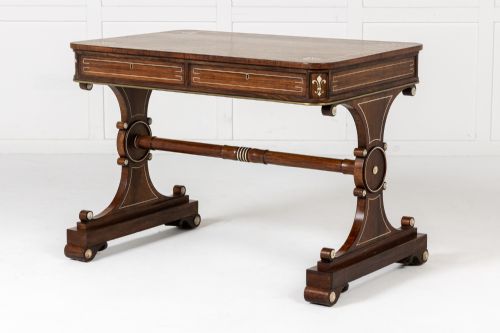
Cabinet makers utilised dense imported timbers such as rosewood and mahogany, frequently accenting surfaces with contrasting brass inlay, giltwood highlights, or pollard oak veneers.
Upholstered versions relied on heavy internal webbing and horsehair stuffing beneath leather, linen, or patterned fabric coverings, supported by show-frames of turned or carved wood.
Several daybed frames retain evidence of vigorous nineteenth-century reading habits through generations of worn mahogany arm rests.
Judging Quality
The distinction between standard commercial output and the finest workshop productions lies in the crispness of the scroll carvings, the symmetry of the brass inlay, and the selection of figured timber veneers.
Superior examples display harmonious proportions across wide spans, integrated show-frames without clumsy joints, and timber selections showing dense grain patterns.
Gillows of Lancaster and London·Williamson
The English Regency Sofa Glossary
- Regency
- A stylistic period spanning the early nineteenth century characterised by classical revival motifs and refined cabinet making. It draws direct inspiration from ancient Greek, Roman, and Egyptian designs.
- Settee
- A small upholstered bench with a back and arms, designed to seat multiple people. These pieces often feature show-frames of mahogany or rosewood.
- Chaise Longue
- An elongated chair for reclining, typically featuring a single raised headrest or scroll end. Versions from this era frequently utilise exposed timber frames and upholstered cushions.
- Giltwood
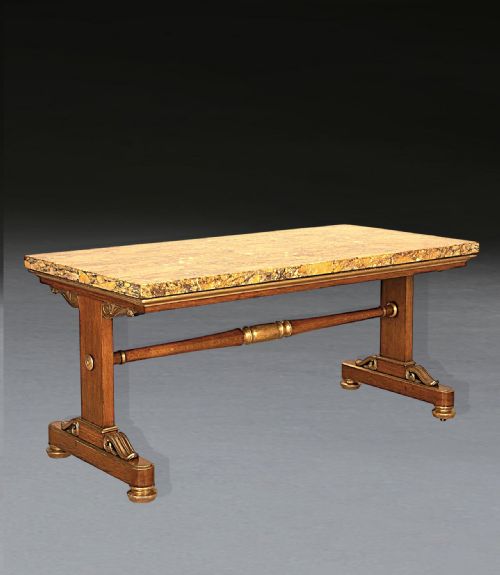
- Wood that has been coated with gold leaf or a gold-coloured metallic finish. This technique highlights carved details on formal console tables and seating frames.
- Rosewood
- A dense, heavily figured timber with dark brown and black grain patterns utilised extensively for luxury tables and cabinet work. Its rich natural colour made it a favourite for prominent pieces.
English Regency Sofa: Frequently Asked Questions
What defines an english regency sofa?
An english regency sofa is defined by its early nineteenth-century classical proportions, scroll ends, and the use of dense cabinet timbers like rosewood and mahogany.
These pieces often incorporate restrained classical ornamentation, such as brass inlay or carved paw feet, reflecting the architectural taste of the period.
How were these sofas used originally?
These pieces served as formal seating in drawing rooms, libraries, and morning rooms of large country houses.
They functioned both as daytime resting places for reading and as prominent decorative furniture for receiving guests.
How do you style a regency sofa today?
A regency sofa acts as a strong focal point in a high-ceilinged reception room or study, pairing well with neutral walls that allow the dark timber to stand out.
Keeping surrounding furniture simple lets the classical lines and figured wood grain command attention.
How do I tell a regency sofa from later copies?
Authentic period pieces show hand-cut joinery, aged patina on the timber, and traditional internal stuffing materials beneath the upholstery.
Examining the density of the mahogany or rosewood and the execution of any brass inlay helps confirm the early nineteenth-century date of manufacture.