


English Regency Candlesticks
English regency candlesticks bring formal neoclassical proportion to a room, cast in brass, bronze, and soft-paste porcelain.
English Regency Candlesticks
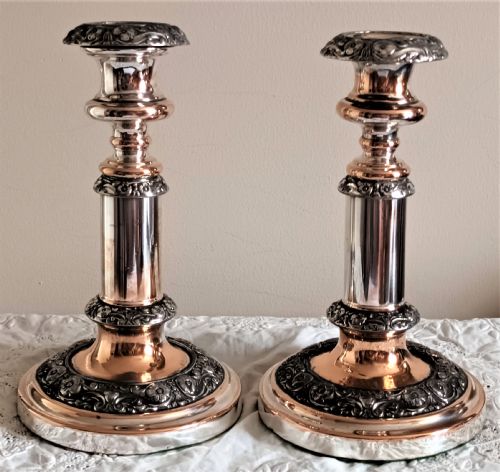
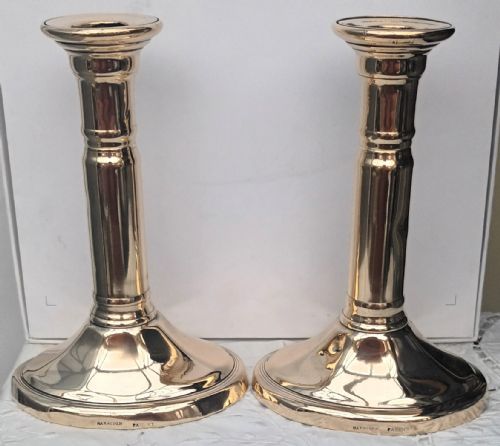
When you search for English regency candlesticks, you find lighting formed during the early nineteenth century and the revival eras that followed. The pieces on this page span the nineteenth, eighteenth, and Victorian periods, taking the form of table lamps, chambersticks, and candelabras.
Most entries here present pairs in brass, porcelain, or patinated and gilt bronze. Alongside standard candlesticks, you will encounter telescopic designs, go-to-bed pieces, and chambersticks painted with foliage or floral patterns.
Materials and methods
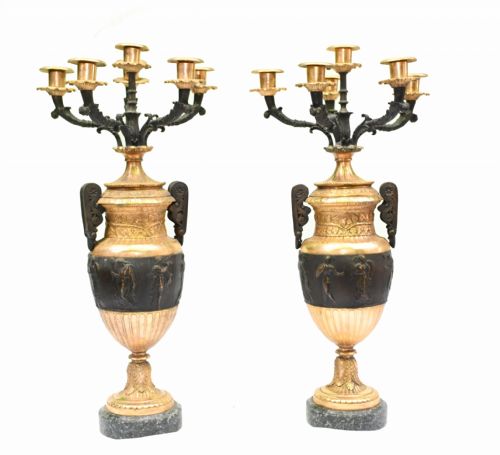
Foundries cast brass and bronze using traditional metalworking techniques, sometimes combining patinated surfaces with fire-gilded ormolu highlights. Makers utilised heavy casts to give slender stems stability on furniture.
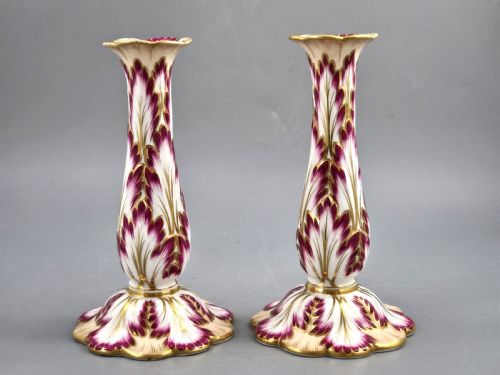
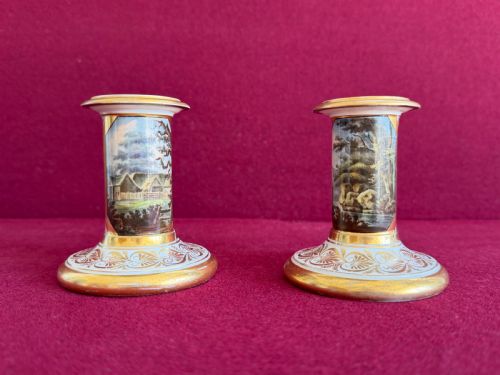
Porcelain examples from factories such as Worcester, Derby, and Spode rely on moulded soft-paste bodies finished with hand-painted enamels and gilding. Glass variants, including Nailsea pieces, utilise hollow-blown stems shaped by hand while hot.
Putti figures hold miniature sockets aloft on tiny go-to-bed sticks designed to light a late journey down dark corridors.
Quality differences
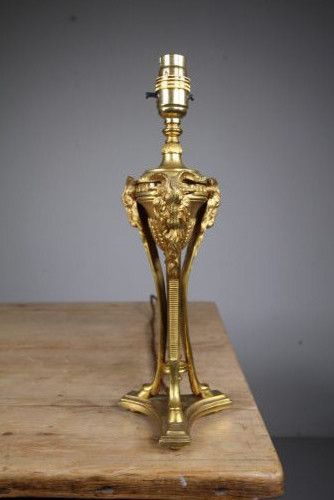
Superior pairs display crispness in the chased ornament of the bronze and ormolu mounts, where animal motifs like rams' heads and griffins are sharply defined. Poorer examples show softening in the cast details and clumsy assembly at the joints.
Porcelain quality rests on the precision of the enamel painting and the crispness of the porcelain mould itself. Early patent mechanisms, such as telescopic brass stems, operate smoothly on better examples without slackness in the sliding tubes.
Ridgway·Barr Flight And Barr·Spode·Derby·Minton·Mason
The English Regency Candlesticks Glossary
- Ormolu
- Finely chopped high-karat gold amalgamated with mercury and fired onto a bronze base. This process creates a durable golden surface characteristic of neoclassical lighting.
- Chamberstick
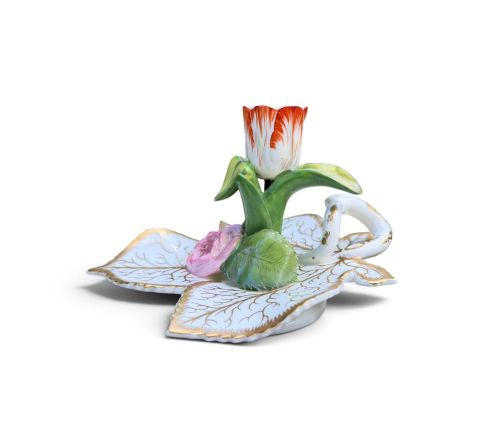
- A low candlestick fitted with a saucer base and a loop handle. People carried these small holders through corridors at night before electric lighting existed.
- Telescopic
- An adjustable shaft containing sliding tubes that alter the height of the nozzle. Harrison patent pieces utilise this mechanical property.
- Go-to-bed
- A diminutive chamberstick designed for night-time use. These small items frequently feature figural supports such as putti.
- Old Sheffield plate
- A composite material formed by fusing a thin sheet of silver to a thicker copper base. Makers used this technique before modern electroplating was invented.
English Regency Candlesticks: Frequently Asked Questions
How do I use chambersticks today?
These small holders suit bedside tables or low sideboards where their saucer bases catch dripping wax safely. They provide ambient low-level light in a room.
Keep the original nozzles free from modern oversized tapers to protect the sockets from splitting or cracking.
How do I distinguish bronze from brass?
Bronze contains copper and tin, yielding a darker, richer metallic tone that makers often patinated to a deep brown or black. Brass is an alloy of copper and zinc with a brighter golden colour.
Neoclassical lighting frequently combined both metals to create tonal contrast between the base and the mountings.
Were these lights made as pairs?
Many fine lighting pieces were produced as matched pairs to flank mirrors, mantelpieces, or side tables in formal rooms. Surviving pairs preserve the symmetry intended by neoclassical interior design.
Single pieces also occur, reflecting losses or original single-point placement on desks and chamber tables.