

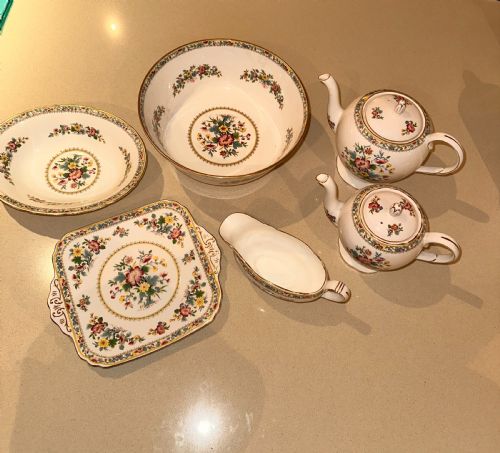


English Porcelain Tea Bowl
An English porcelain tea bowl is a handleless vessel for drinking tea, prized for its delicate form and early ceramic history.
English Porcelain Tea Bowl
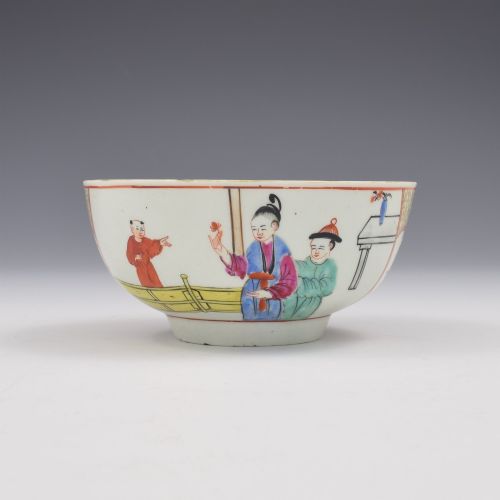
When you examine an english porcelain tea bowl, you are looking at small, handleless drinking vessels shaped by eighteenth and nineteenth-century potteries. These pieces arrived during a time when tea drinking grew as a social ritual among wealthy households.
The versions most common on this page date from the eighteenth century, particularly originating from Worcester. They often appear alongside matched saucers or as part of broader table services.
How they were made
Makers utilised soft-paste porcelain and bone china, shaping the clay bodies on the potter's wheel or in moulds before firing. Early pieces relied on soft-paste porcelain formulations that created a warm, creamy translucent body.
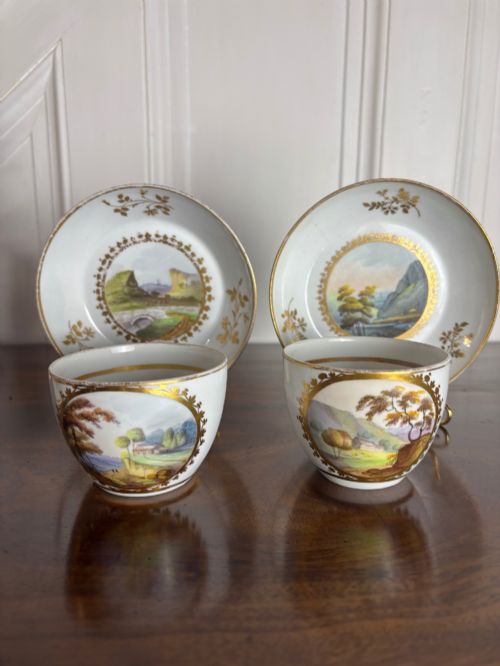
Decoration involved hand-painting with cobalt glaze, enamel colours, and gold leaf gilding. Artisans applied underglaze blue painting or overglaze enamels, often finishing the rims and foot rings with gilt touches.
The listings span the eighteenth and nineteenth centuries, featuring soft-paste porcelain, bone china, and cobalt glaze across tea bowls, saucers, and complete tea services.
What varies in quality
The distinction between ordinary and superior pieces rests on the crispness of the moulding and the skill of the brushwork. Hand-painted motifs executed with precision display greater artistic control than hurried factory production.
Preservation of the glaze and gilding dictates the overall standing of an example. Minimal wear to the gold leaf and enamel surfaces indicates careful historic handling and maintains the visual integrity of the original design.
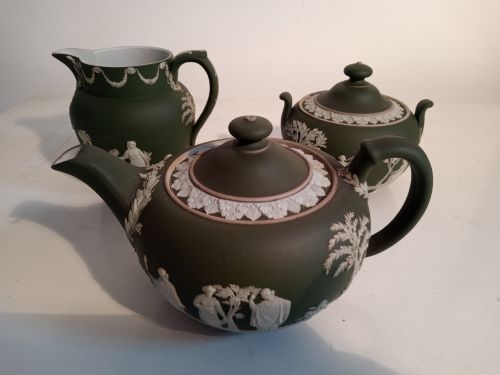
Wedgwood·Worcester·Minton·Spode·Royal Crown Derby·Flight Barr And Barr·Lowestoft·Coalport
The English Porcelain Tea Bowl Glossary
- Tea bowl
- A small, handleless cup designed for drinking tea before the widespread adoption of handled teacups in England. These pieces are characteristic of eighteenth-century ceramics.
- Soft-paste porcelain
- An artificial ceramic paste made from white-firing clay mixed with ground glass and other ingredients. It fires at lower temperatures than hard-paste porcelain and yields a warm, vitrified body.
- Sucrier
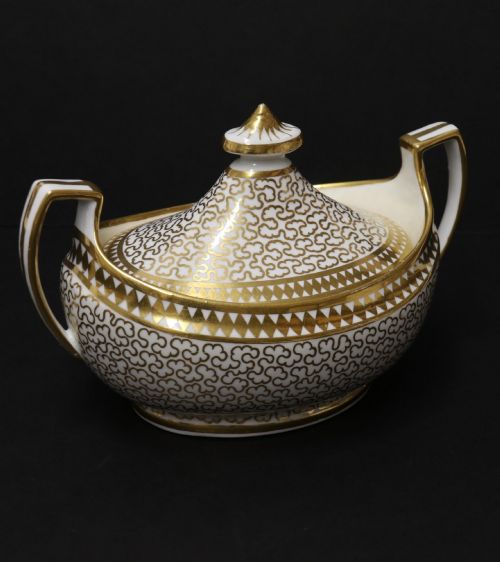
- A covered sugar bowl used alongside teacups and tea bowls in matching tea services. They often feature domed lids and twin handles.
- Slop bowl
- A larger bowl used during tea service to discard the dregs of cold tea before pouring a fresh cup. They match the decorative patterns of the accompanying tea bowls.
- Blue scale
- A dark blue patterned ground applied to porcelain surfaces in overlapping scales, typically enriched with gilt-framed compartments of flowers. This technique is closely associated with eighteenth-century Worcester factories.
English Porcelain Tea Bowl: Frequently Asked Questions
How do I use an english porcelain tea bowl?
These vessels suit display in cabinets or careful use for small portions of tea. Their delicate nature requires gentle hand washing without abrasive materials.
Because they lack handles, hold the bowl gently in the palm of your hand to feel the warmth of the tea. This mirrors the historic manner in which eighteenth-century drinkers enjoyed their beverage.
How can I date an english porcelain tea bowl?
Dating relies on examining the characteristics of the paste, glaze marks, and painting styles. Eighteenth-century examples often feature soft-paste bodies and hand-painted cobalt blue designs without printed factory marks.
Later nineteenth-century pieces frequently display iron-red factory stamps, pattern numbers, or bone china bodies. Comparing the foot ring and potting weight provides further clues to the manufacturing decade.
Did tea bowls always come with saucers?
Many tea bowls were produced alongside matching saucers to form matched pairs or trios. Saucers caught drips and held the bowl when not in direct use.
Over the centuries, pairs often became separated through breakage or dispersal. Finding an intact tea bowl and saucer set from the eighteenth century is a notable occurrence for collectors.
What is the difference between hard-paste and soft-paste porcelain?
Soft-paste porcelain contains glass frit and white clay, fired at lower temperatures to produce a slightly creamy body. Hard-paste porcelain uses true china clay and petuntse fired at much higher heats.
Early English factories relied on soft-paste formulations, which show a translucent warm glow when held to the light. Hard-paste porcelain became more common in English production during the nineteenth century.