



English Porcelain Tableware
English porcelain tableware brings together centuries of painted plates, tureens and tea sets from historic potteries.
English Porcelain Tableware
English porcelain tableware covers a broad spectrum of functional dining pieces, including dinner services, dessert sets, soup plates, sauce boats and tea services created across the eighteenth, nineteenth and early twentieth centuries. These objects range from delicate soft-paste porcelain and bone china to durable ironstone and creamware, reflecting the shifting domestic needs of Georgian, Regency and Victorian households.
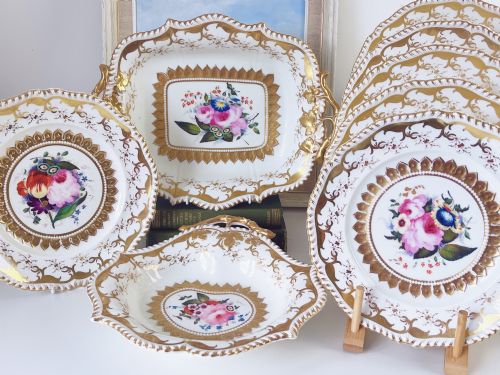
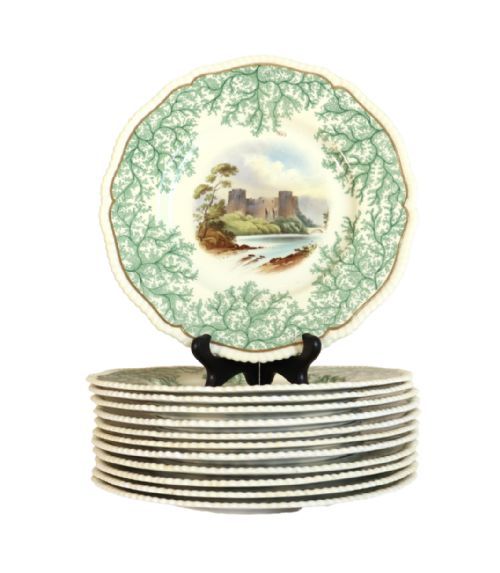
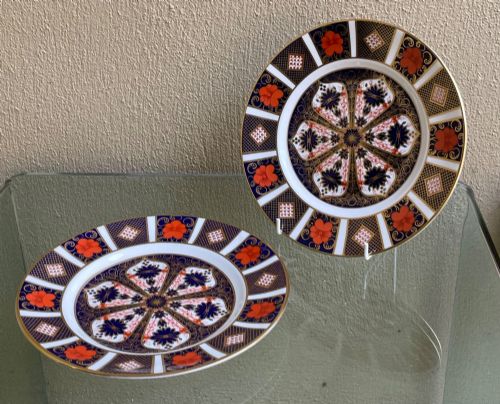
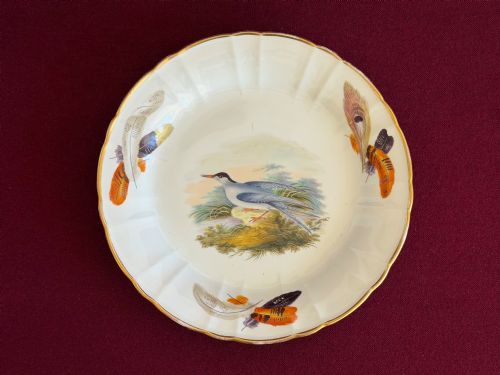
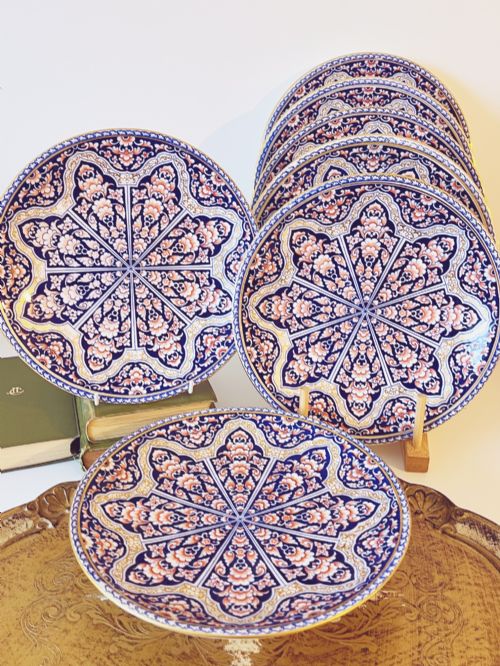
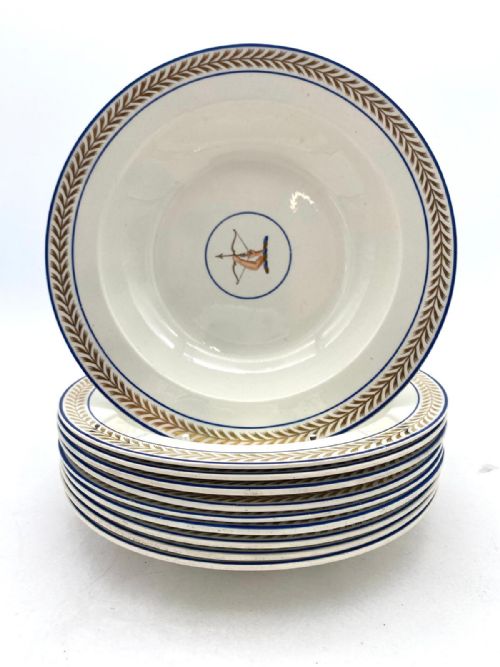
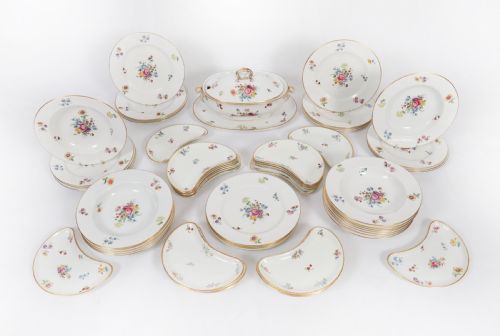
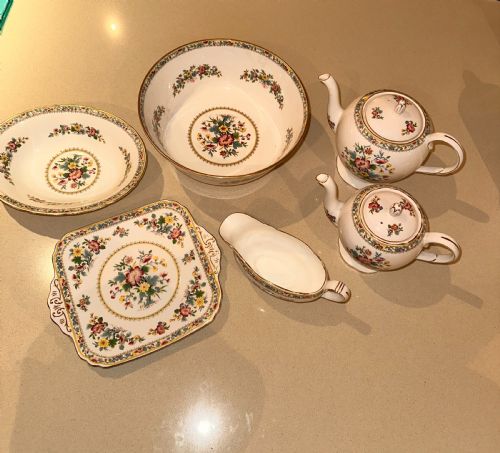
Buyers meeting this selection encounter everything from single armorial soup dishes and chocolate cups to large matched sets comprising dozens of hand-painted plates and serving dishes. Prominent forms include botanical serving dishes, seaweed-bordered dinner plates and Imari-pattern dessert services used for formal dining and entertaining.
How english porcelain tableware was made
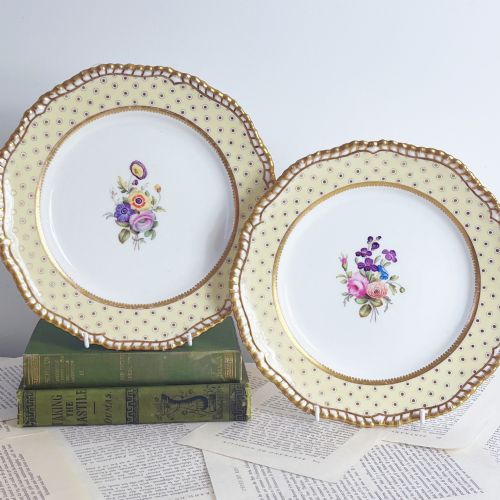
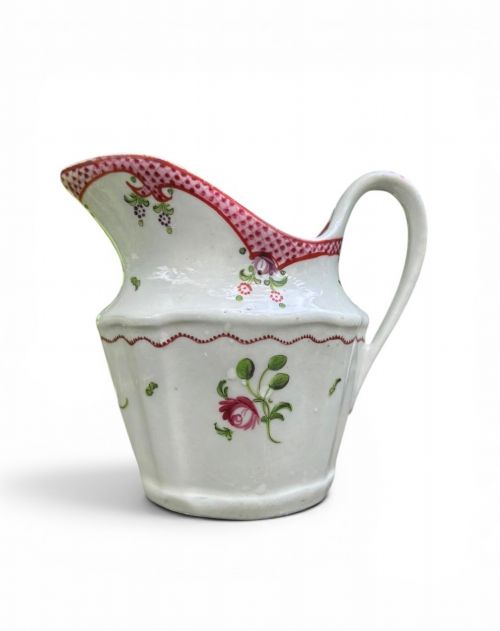
Potters utilised soft-paste porcelain, bone china, ironstone and creamware, shaping pieces on wheels or pressing them into moulds to form tureens, plates and jugs. Artisans then applied glazes and hand-painted botanical motifs, armorial crests, landscapes and oriental figures directly onto the surface before firing.
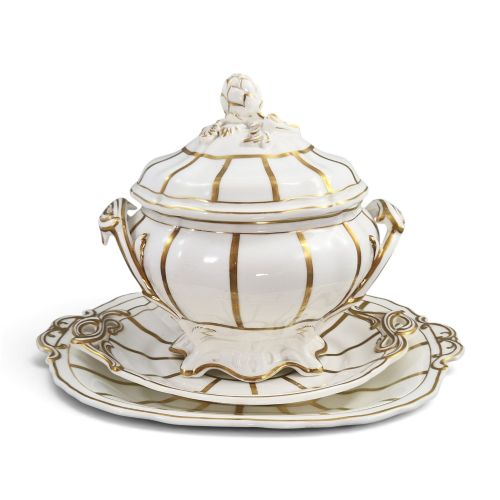
Many items incorporate rich details such as gold leaf, enamel and gilt handles, requiring multiple firings in kiln ovens to set the colours and metallic accents securely onto the ceramic body.
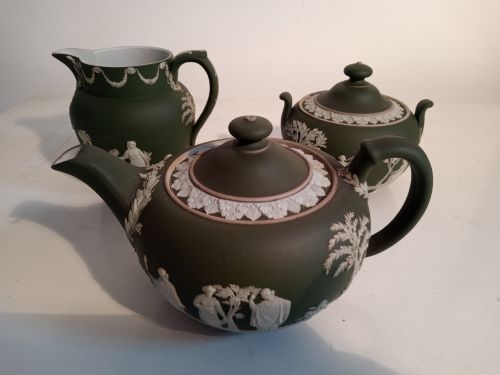
The available inventory includes diverse forms such as chocolate cups, sauce tureens, pudding bowls, loving cups and complete dinner services.
What varies in quality in english porcelain tableware
Quality rests upon the crispness of the porcelain body, the translucency of bone china or soft-paste materials, and the precision of the glaze application. Pieces featuring delicate, hand-painted botanical studies or detailed armorial crests display a higher degree of artisan skill than standard transfer-printed wares.
The sophistication of the gilding, the survival of gold leaf accents, and the complexity of embossed or fluted mouldings distinguish standard utilitarian items from fine exhibition pieces commissioned for wealthy patrons.
Grainger Lee and Co·Spode·Royal Crown Derby·Wedgwood·Davenport·New Hall·Mintons·John Ridgway·Bow Porcelain·Coalport·Chamberlain Worcester·Caughley·Royal Worcester·Flight Barr and Barr·Masons Ironstone·Barr Flight and Barr·Copeland Spode
The English Porcelain Tableware Glossary
- Bone china
- A type of porcelain composed of clay mixed with bone ash, producing a strong, translucent ceramic body.
- Soft-paste porcelain
- An early ceramic mixture containing glass frit and white clay, fired at lower temperatures than hard-paste porcelain.
- Ironstone
- A heavy, durable type of earthenware patented in the nineteenth century to imitate true porcelain.
- Creamware
- A refined, pale yellow-glazed earthenware developed during the eighteenth century for everyday dining.
- Comport
- A raised dish or bowl placed centrally on a dining table to serve fruit or small desserts.
English Porcelain Tableware: Frequently Asked Questions
What pieces belong in a dessert service?
A dessert service typically comprises a central comport accompanied by matching dessert plates and serving dishes. These sets were designed specifically for serving fruit, sweets and small pastries at the conclusion of a formal dinner.
Many surviving nineteenth-century examples feature elaborate hand-painted botanical studies or crests tailored to the dining rooms of the period.
How do I care for antique porcelain plates?
Antique porcelain and bone china require gentle hand washing in warm water using mild soap. Avoid modern dishwashers, abrasive sponges and harsh detergents to protect hand-painted enamels and delicate gold leaf.
Store plates using felt dividers or padded racks to prevent surface scratching and rim chipping over time.
What is the difference between bone china and ironstone?
Bone china is a fine, translucent ceramic created by incorporating bone ash into the clay body. It is valued for its delicate appearance and brightness.
Ironstone is a much heavier, opaque earthenware designed for robust daily use while offering a durable alternative to true porcelain.
How do I identify the period of a porcelain tureen?
Period identification relies upon examining factory marks, pattern numbers, glaze characteristics and the underlying ceramic body. Eighteenth-century pieces often display softer pastes and hand-pencilled blue or polychrome Chinese figures, whereas Victorian pieces frequently utilise denser bone china or ironstone.
Consulting recorded pattern numbers and historical backstamps helps narrow down the exact decade of manufacture.