



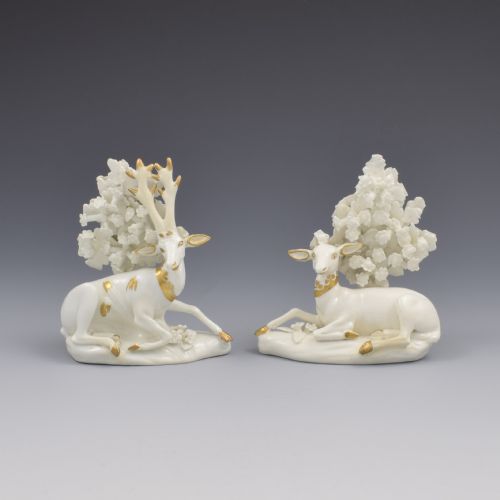


English Porcelain Animals
English porcelain animals are charming ceramic figures capturing domestic and wild creatures, prized by collectors for their character and period craftsmanship.
English Porcelain Animals
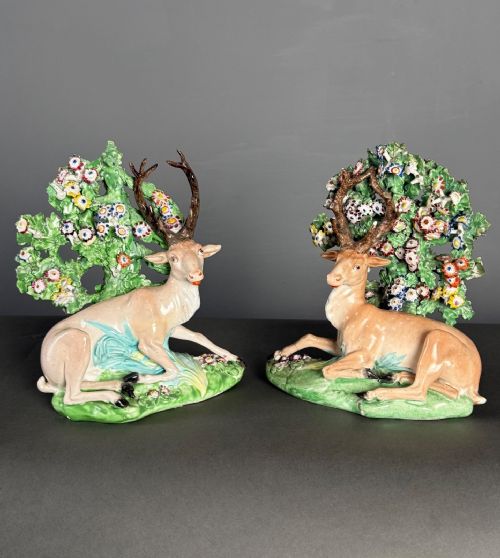
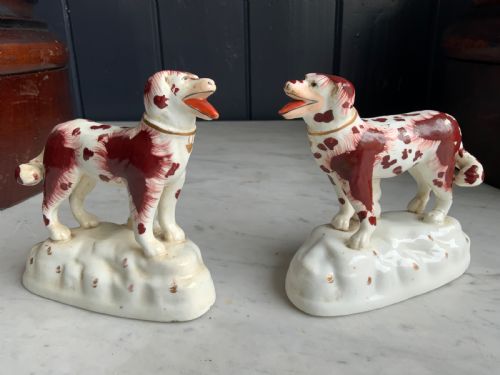
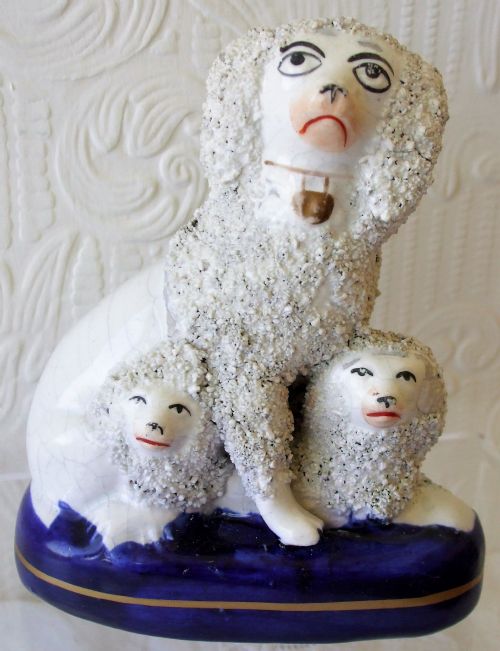
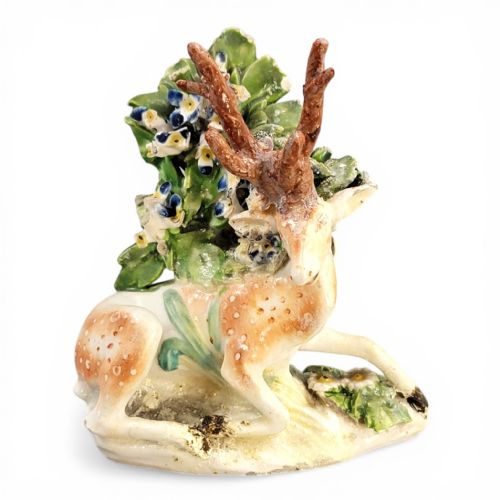
When searching for english porcelain animals, collectors encounter a delightful menagerie spanning the eighteenth and nineteenth centuries. These pieces range from decorative figures and porcelain figurines to centrepieces depicting stags, dogs, sheep, and leopards.
The selection on this page leans heavily toward eighteenth-century Derby figures and nineteenth-century Staffordshire and Minton productions. Examples vary from recumbent stags with bocage to pairs of poodles and gundogs.
Earlier pieces often reflect Georgian and Regency tastes, while later specimens capture Victorian and Edwardian aesthetics. The forms serve purely decorative purposes, designed to animate mantelpieces and drawing rooms.
Judging the work
Quality rests in the crispness of the modelling and the sensitivity of the hand-painted enamels. Superior examples retain fine detail in the fur, facial expressions, and surrounding foliage without blurring.
The completeness of applied elements like bocage and the subtlety of the glaze application distinguish finer pieces from simpler commercial output. Early Derby and Minton models demonstrate particular refinement in form.
Listings feature porcelain, earthenware, and parian ware across the Georgian, Victorian, and Edwardian periods.
Derby·Minton·Royal Dux·Royal Worcester
The English Porcelain Animals Glossary
- Bocage
- An applied background of leaves and branches made of porcelain or clay. This decorative foliage surrounds figures like stags and sheep.
- Soft-Paste Porcelain
- An early ceramic composition fired at lower temperatures than hard-paste porcelain. It produces a warm texture and distinct glaze absorption.
- Parian Ware
- A fine-grained unglazed porcelain resembling marble. Introduced in the nineteenth century, it was frequently utilised for classical and animal figures.
- Pearlware
- A type of earthenware developed in the late eighteenth century featuring a bluish glaze. It provided a whiter surface to mimic Chinese porcelain.
English Porcelain Animals: Frequently Asked Questions
What are english porcelain animals?
These pieces are decorative ceramic figures depicting various animals, produced by historic English factories.
They capture domestic pets, farm animals, and wildlife in poses ranging from recumbent rests to alert stances.
How were english porcelain animals used?
Historic owners placed these figures on mantelpieces, side tables, and dining room centrepieces for visual display.
They functioned purely as decorative ornaments to demonstrate taste and appreciation for nature and craftsmanship.
How do I date an english porcelain animal?
Dating relies on identifying the paste, glaze characteristics, modelling style, and factory marks where present.
Eighteenth-century pieces often feature soft-paste bodies and hand-painted enamel palettes, while nineteenth-century items utilise varied ceramic bodies.
Are these figures fragile?
Porcelain and earthenware figures require careful handling due to their delicate extremities and applied elements like bocage.
Displaying them away from high-traffic areas protects protruding details from accidental damage.