
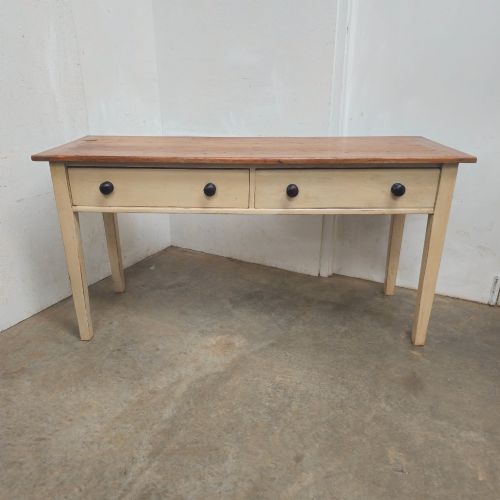
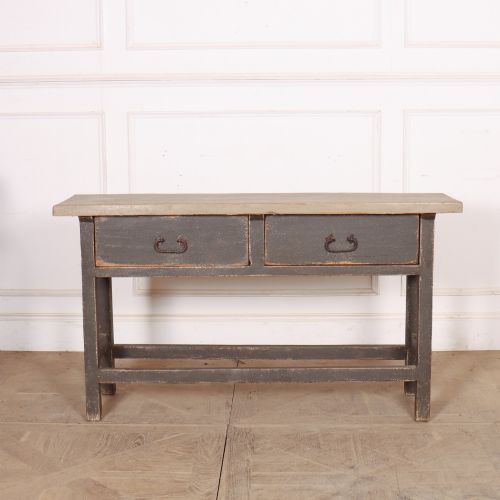
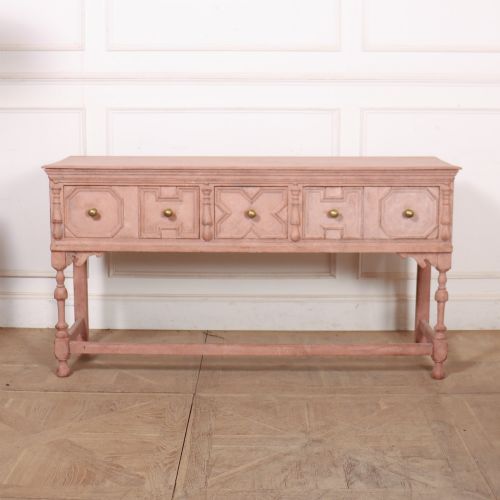
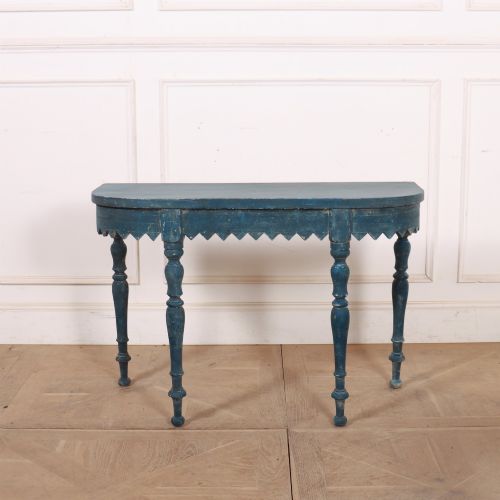





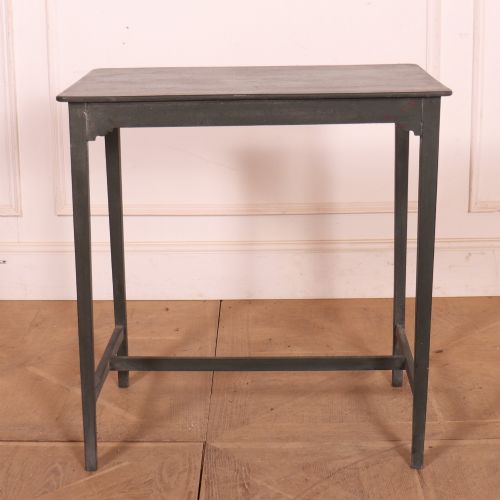

English Painted Console Table
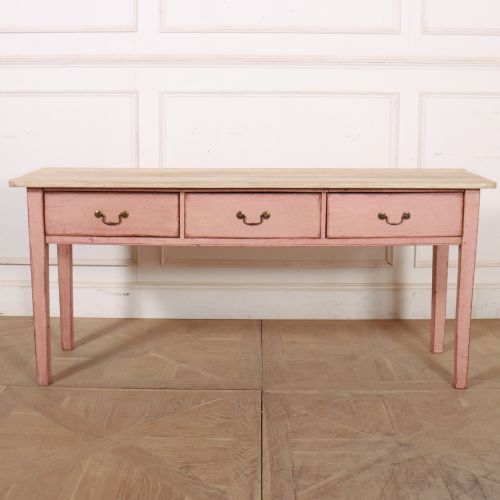
An english painted console table brings architectural presence and utility to a hallway or reception room, bridging centuries of craft.
English Painted Console Table
When you search for an english painted console table, you encounter practical furniture designed for display and service against a wall. The pieces span from the seventeenth century through to the early twentieth century, incorporating periods like the Georgian, Regency and Victorian eras.
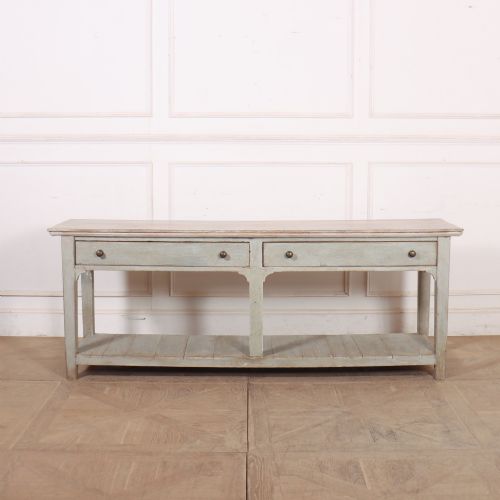
The form frequently overlaps with related serving tables, side tables and dresser bases. You will find rectangular boards, bow ends and demi-lune shapes designed to fit narrow spaces.
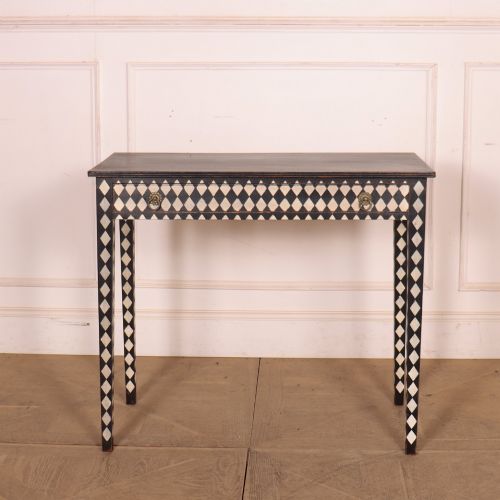
Pine and oak serve as the foundational timbers beneath decorative surfaces. Many examples display country house charm or neoclassical restraint, often with original or later painted finishes.
Materials and construction methods
Joiners built these tables from native softwoods and hardwoods like pine, beech and oak, employing traditional frame and panel techniques. Surfaces received layers of lead-based or oil paints, sometimes finished with faux graining or marble effects.
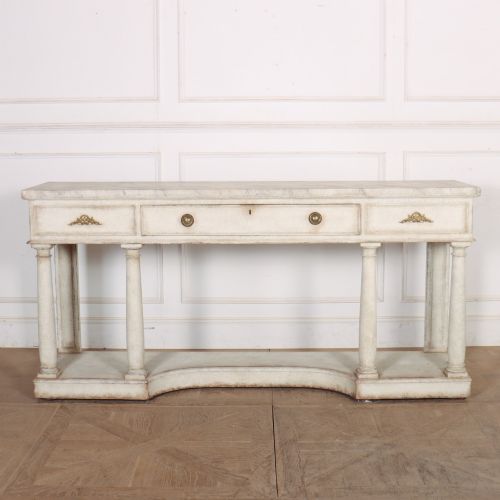
Marble slabs appear on heavier hallway stands and washstands, providing durable tops for daily use. Faux bamboo turnings and gesso details emerge in Regency and Victorian variations, demonstrating diverse decorative applications upon timber.
Some tables served dirty duties in greenhouses and dairies before retiring to polite hallways as treasured antiques.
Distinguishing quality across periods
Quality rests in the integrity of the timber frame and the historical honesty of the painted surface. Untouched original pigment carries far more authority than later decorative overpainting applied to plain wood.
Proportion and execution separate utilitarian country pieces from sophisticated neoclassical or Regency urban commissions. Refined turning, crisp carving and well-proportioned demi-lune curves indicate superior cabinet-making origins.
The English Painted Console Table Glossary
- Console table
- A table supported by wall brackets or legs, designed to stand against a vertical surface in a hall or parlour.
- Demi-lune
- A half-moon shape common in eighteenth and nineteenth-century console table design, suited for placement against flat walls.
- Potboard
- An open lower shelf built into dresser bases and serving tables, originally intended for storing earthenware and heavy kitchen utensils.
- Gesso
- A plaster-like mixture applied to wood surfaces as a base for paint or intricate gilded and moulded decoration.
- Faux bamboo
- Wood turned and carved to imitate the segmented stalks of natural bamboo, popular during the Regency and Victorian periods.
English Painted Console Table: Frequently Asked Questions
Where should I place a console table?
These tables find a natural home in entrance halls, corridors or behind sofas where surface space is required without blocking traffic.
Their shallow depth allows them to sit flush against walls while displaying lamps, mirrors or decorative objects.
How do I care for painted wood?
Keep painted surfaces away from direct sunlight and excessive heat fluctuations to prevent the timber underneath from moving and the paint from flaking.
Dust gently with a dry, soft cloth and avoid modern chemical cleaning sprays that can soften historic finishes.
Are these tables original?
Many retain their early painted schemes, whilst others show later decorative paint applied during subsequent domestic redesigns over the centuries.
Examination of the underlying timber age, nail types and wear patterns helps determine the chronology of the construction and surface.