
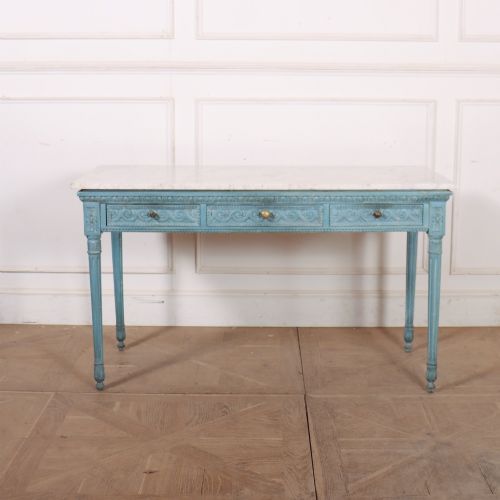


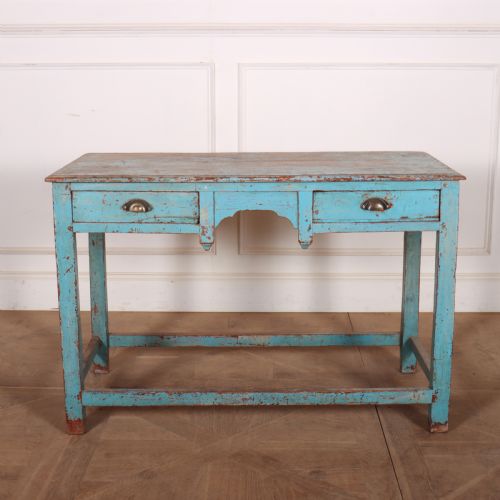


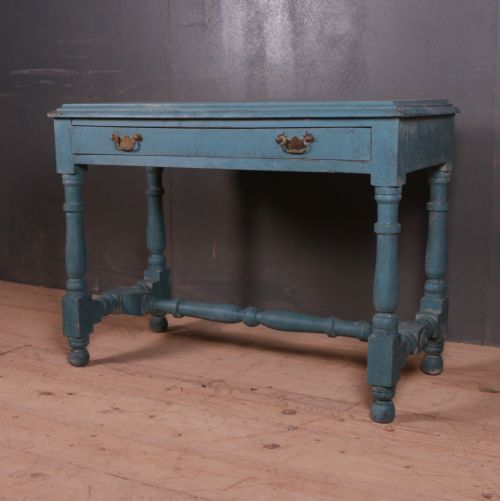
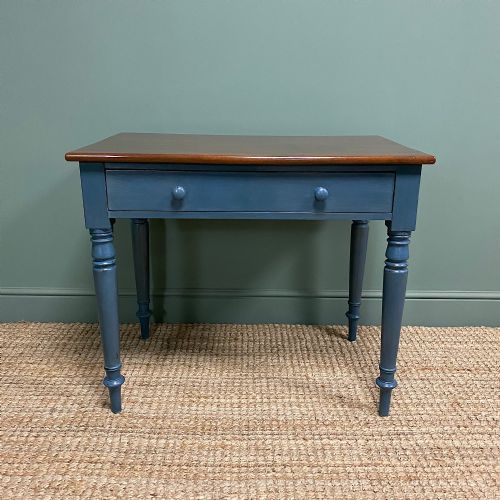

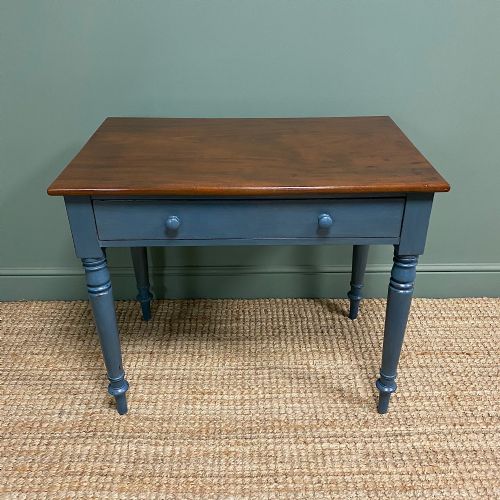
Blue Painted Writing Desk
A blue painted writing desk brings a crisp, provincial touch to a room, offering functional workspace finished in historic colour.
Blue Painted Writing Desk
When you search for a blue painted writing desk, you encounter a selection of historic furniture forms united by painted surfaces and practical utility. The pieces on this page span the eighteenth, nineteenth, and early twentieth centuries, reflecting diverse regional aesthetics from English country workshops to Scandinavian interiors.
The assortment includes bureau forms alongside side tables, console tables, and occasional tables that served similar writing and surface purposes. Stylistic influences range from Gustavian and Scandinavian country to Georgian and Italian neoclassical designs, each displaying characteristic proportions of its period.
Most examples rely on traditional timber construction, predominantly pine and other solid timbers, finished with historic blue paint schemes. Their forms serve both decorative and functional roles in contemporary domestic settings, providing compact workspaces or display surfaces.
How they were made
Construction relies on solid timbers such as pine and oak, joined using traditional cabinetmaking techniques appropriate to each period. Surfaces are prepared to receive historic paint layers, which often show cumulative wear and patination from decades of use.
Hardware details incorporate brass fittings alongside timber and metal structural elements. Faience and tin-glazed earthenware components appear on associated desk accessories like inkstands, demonstrating complementary decorative arts of the era.
Styles include Gustavian, Georgian, Rococo Revival, and rustic farmhouse aesthetics.
What varies in quality
Quality rests in the integrity of the original construction and the preservation of authentic surface finishes rather than pristine condition. Pieces retaining their early or original blue paint demonstrate greater historic interest than those with later redecoration.
Proportion and execution distinguish finer regional workshops from standard utilitarian production, visible in the handling of mouldings, joinery, and structural balance.
Gillows
The Blue Painted Writing Desk Glossary
- Gustavian
- A Swedish neoclassical style originating in the late eighteenth century, known for restrained ornamentation and light painted finishes.
- Bureau
- A sloping-front desk enclosing pigeonholes and small drawers, often supported on legs or a chest base.
- Faience
- Tin-glazed earthenware produced in Europe, frequently decorated in blue and white pigments resembling oriental porcelain.
- Console Table
- A wall-mounted or freestanding table designed to stand against a vertical surface, sometimes adapted for writing use.
- Patina
- The surface sheen and colour modification developed by wood and paint over years of handling, exposure, and age.
Blue Painted Writing Desk: Frequently Asked Questions
What is a blue painted writing desk?
These pieces comprise antique tables, sideboards, and bureaux finished in historical blue paint. They originate from various European traditions, particularly English and Scandinavian country workshops.
Buyers choose them to introduce character and practical surface space into studies, living rooms, and bedrooms.
How do I date these desks?
Dating relies on construction methods, timber choice, and stylistic cues associated with periods like the Georgian era or the nineteenth century. Tool marks, joinery styles, and hardware types provide reliable chronological indicators.
Paint analysis also helps determine whether the finish is original or applied during a later period of the piece's history.
Are the paint finishes original?
Survivals retain varying degrees of their early or original paint surfaces, often showing natural thinning and craquelure over time. Some examples have been repainted during their working lives to suit changing interior fashions.
Examining the layers beneath surface chips reveals the age of the underlying pigment.
How do I care for painted wood?
Maintenance requires keeping pieces away from direct sunlight and extreme humidity fluctuations to prevent paint flaking and timber movement. Gentle dusting with a dry, soft cloth preserves the historic surface without stripping delicate patination.
Avoid modern chemical polishes that can soften aged oil or distemper paint layers.