


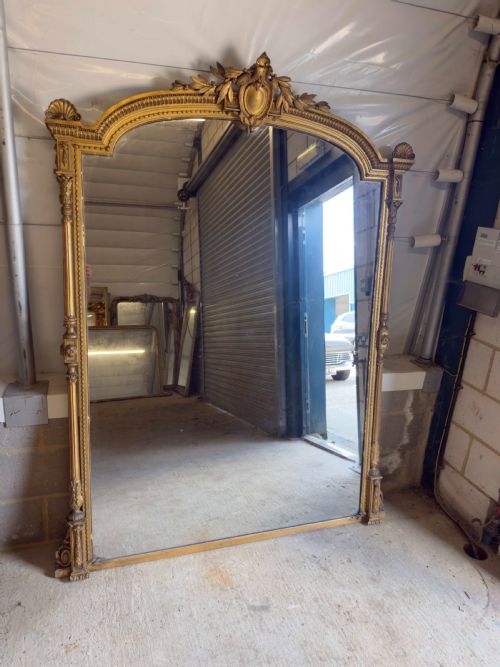
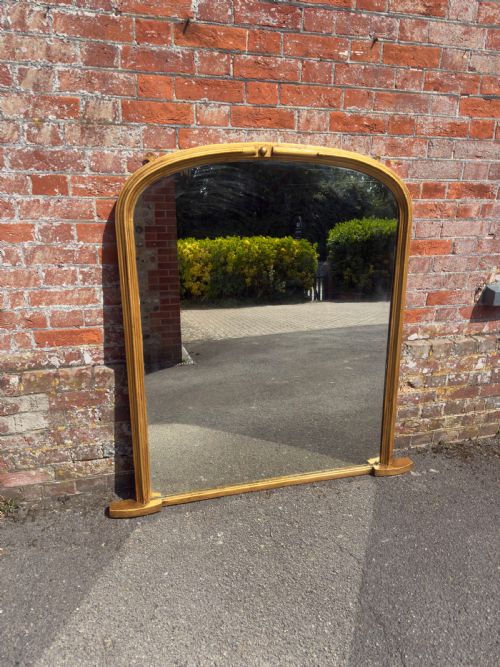
English Overmantle Mirror
An English overmantle mirror brings grand nineteenth-century presence to a room, anchoring a fireplace with gilded proportion and reflective light.
English Overmantle Mirror
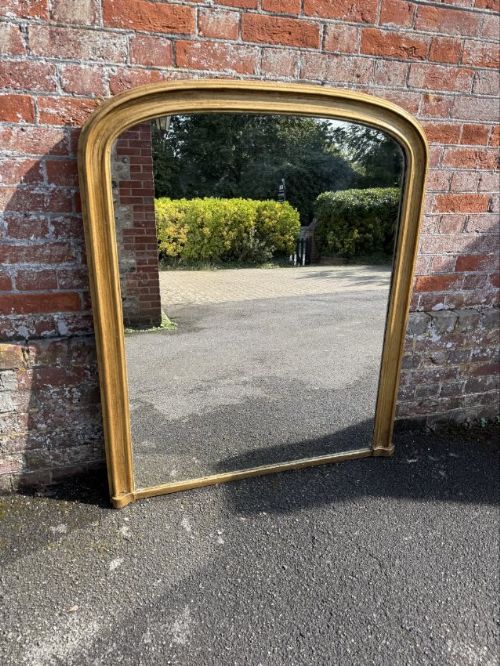
An English overmantle mirror is a large wall-hanging looking glass traditionally designed to sit directly above a mantelpiece. These pieces dominate a chimney breast, reflecting interior light and expanding the visual dimensions of a reception room.
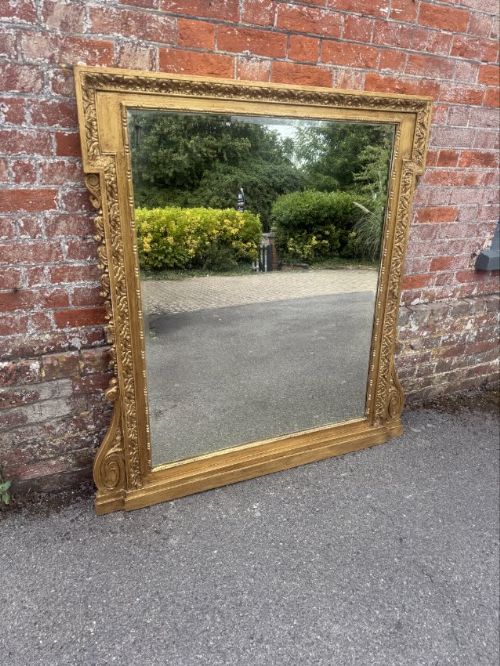
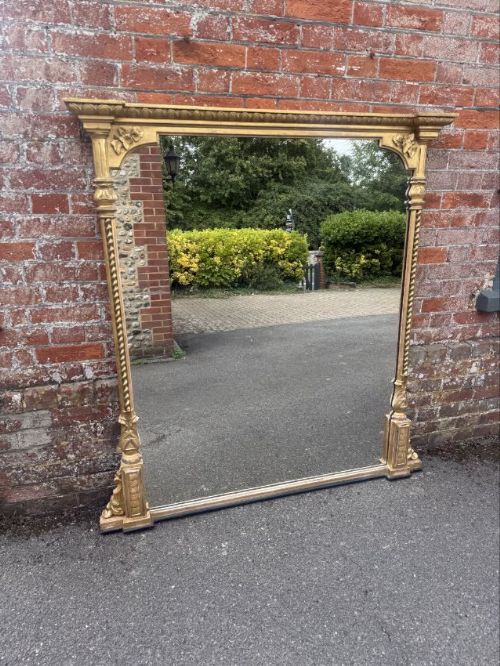
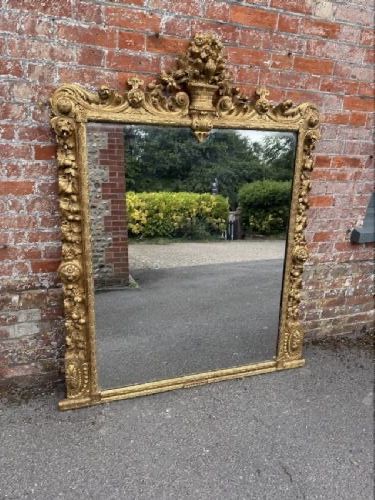
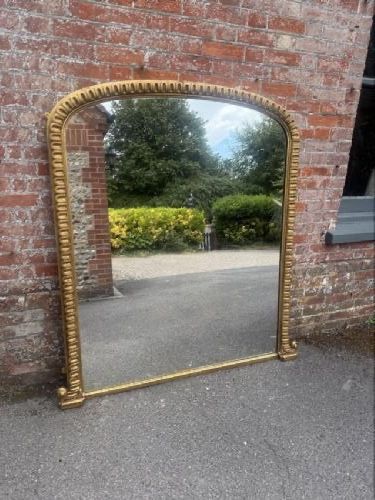
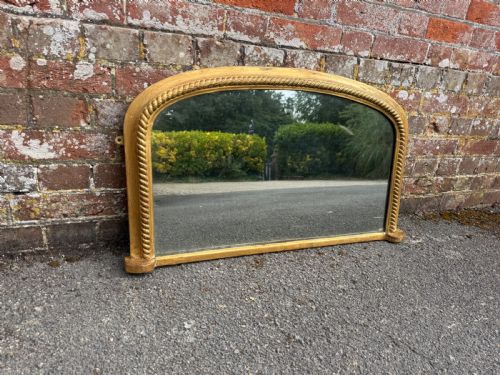
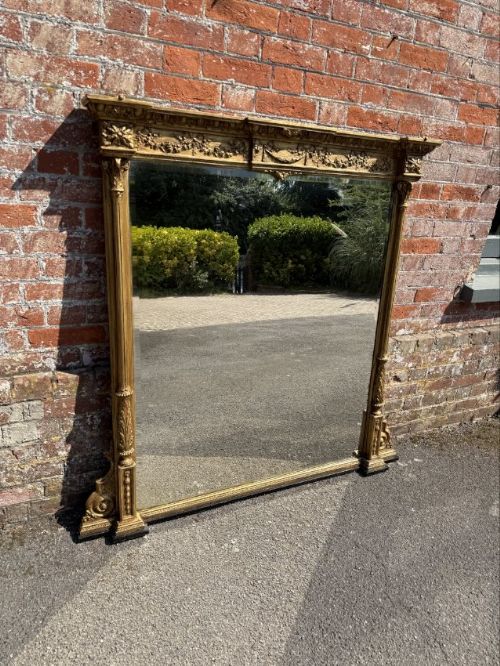
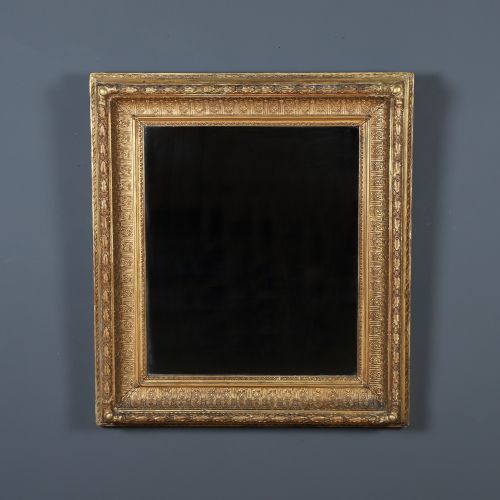
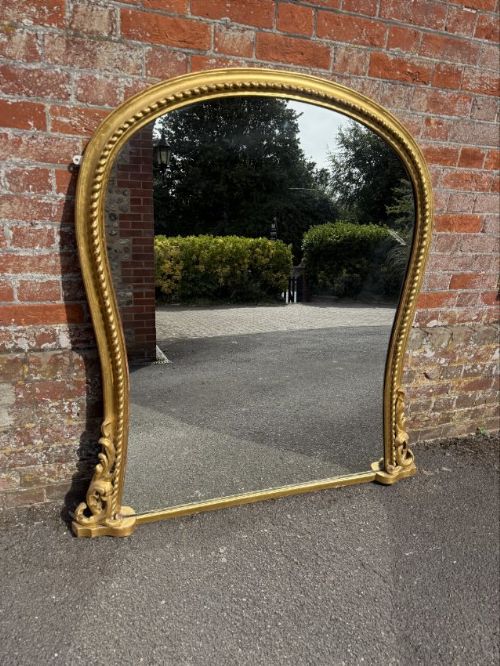
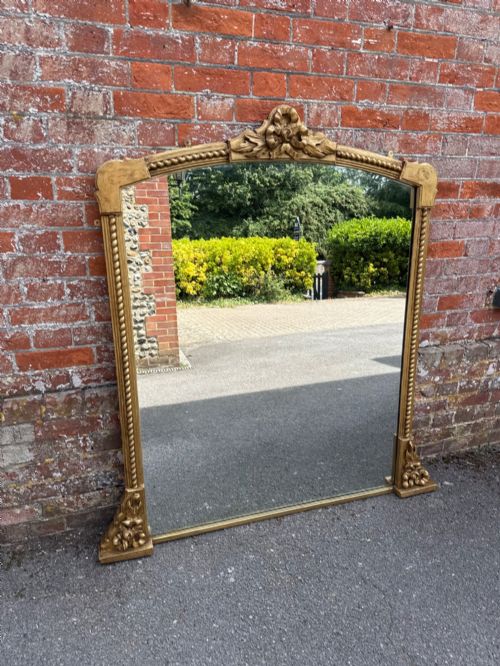
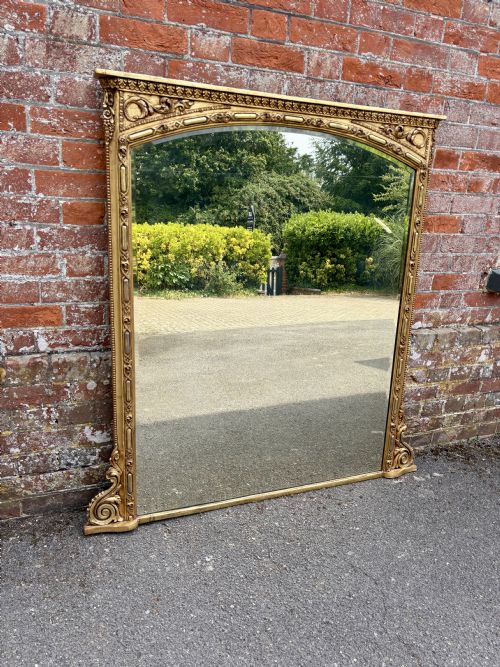
Makers drew upon diverse historical motifs, producing items ranging from classical architectural columns to ornate rope twist borders and Chinese Chippendale influences.
How they were made
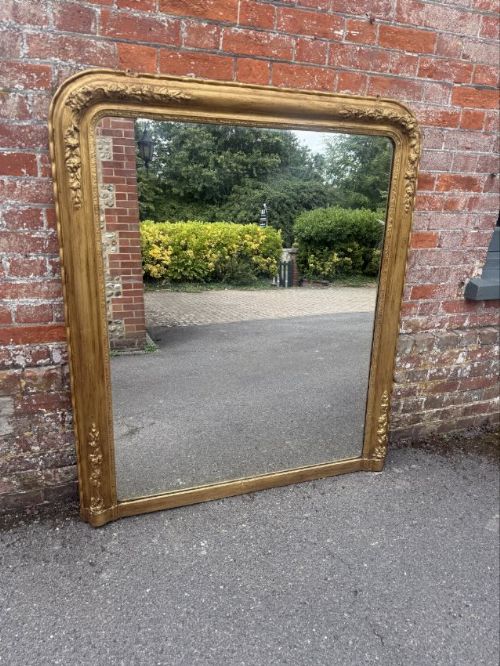
Craftsmen built the underlying framework using carved wood, frequently applying a layer of gesso to create smooth surfaces for detailed ornamentation. This plaster-like mixture allowed artisans to mould intricate relief work such as laurel leaves, tulip motifs, and ribbed columns before gilding.
Gilding involved the application of delicate gold leaf onto the prepared gesso and wood structure, creating a brilliant metallic sheen. Artisans also utilised paint and parcel-silvering on specific pieces, while mirror glass was set securely within the decorated rebates.
Some frames sport tulip carvings and rope twists, proving that nineteenth-century joiners loved a bit of botany and knotwork.
What varies in quality
The sophistication of the carved wooden ornament and applied gesso relief dictates much of the distinction between standard items and exceptional examples. Crisp detailing in rope twists, columns, and leaf work demonstrates superior workshop capability.
The preservation of original gilding and mirror glass adds considerable merit, as does the complexity of the frame profile, such as multi-tiered arches or intricate shaped crestings.
The English Overmantle Mirror Glossary
- Overmantle
- A large mirror specifically proportioned to hang above a fireplace mantel. These fixtures serve as central architectural focal points in period interiors.
- Gesso
- A plaster mixture applied to wood frames to provide a smooth base for carving and gilding. It enables the creation of sharp, durable decorative reliefs.
- Giltwood
- Timber that has been coated with gold leaf or gold paint. This finish produces a luminous surface characteristic of formal nineteenth-century frames.
- Rope Twist
- A carved decorative moulding resembling braided cord. This pattern frequently borders the inner or outer edges of Victorian mirror frames.
- Parcel-Gilt
- A treatment where only specific portions of an object are gilded while the remaining surface is painted or ebonised. This technique highlights particular carved details against a contrasting background.
English Overmantle Mirror: Frequently Asked Questions
Where should an overmantle mirror be hung?
These mirrors are traditionally positioned centrally on the chimney breast directly above the fireplace mantel. Their substantial scale allows them to balance the visual weight of the hearth below.
Securing the piece properly to structural wall anchors is essential due to the heavy weight of the wood, gesso, and thick glass construction.
How do I identify a Victorian overmantle mirror?
Nineteenth-century examples frequently feature heavy carved wood frames coated in gesso and gold leaf, often displaying arched or shaped tops. Common decorative elements include rope twists, columns, and classical leaf motifs.
Earlier Regency pieces tend towards distinct neoclassical lines, while later variations incorporate ebonised finishes or painted details.
Were these mirrors always hung above fireplaces?
While the name denotes their primary architectural placement above mantelpieces, large wall mirrors of this form were also utilised in grand hallways and reception rooms. Their reflective properties were valued for brightening dark Victorian interiors.
Proportions were specifically scaled to span the width of a standard fireplace surround.
What is parcel-gilt on a mirror frame?
Parcel-gilt refers to a decorative finish where gold leaf is applied selectively to highlighted areas of a carved frame. The rest of the wooden structure is typically painted or ebonised to create contrast.
This technique emphasises the intricate relief work and architectural mouldings.