


English Oak Wainscot Chair
An english oak wainscot chair is a heavy, panelled seat built for status, offering a solid architectural presence.
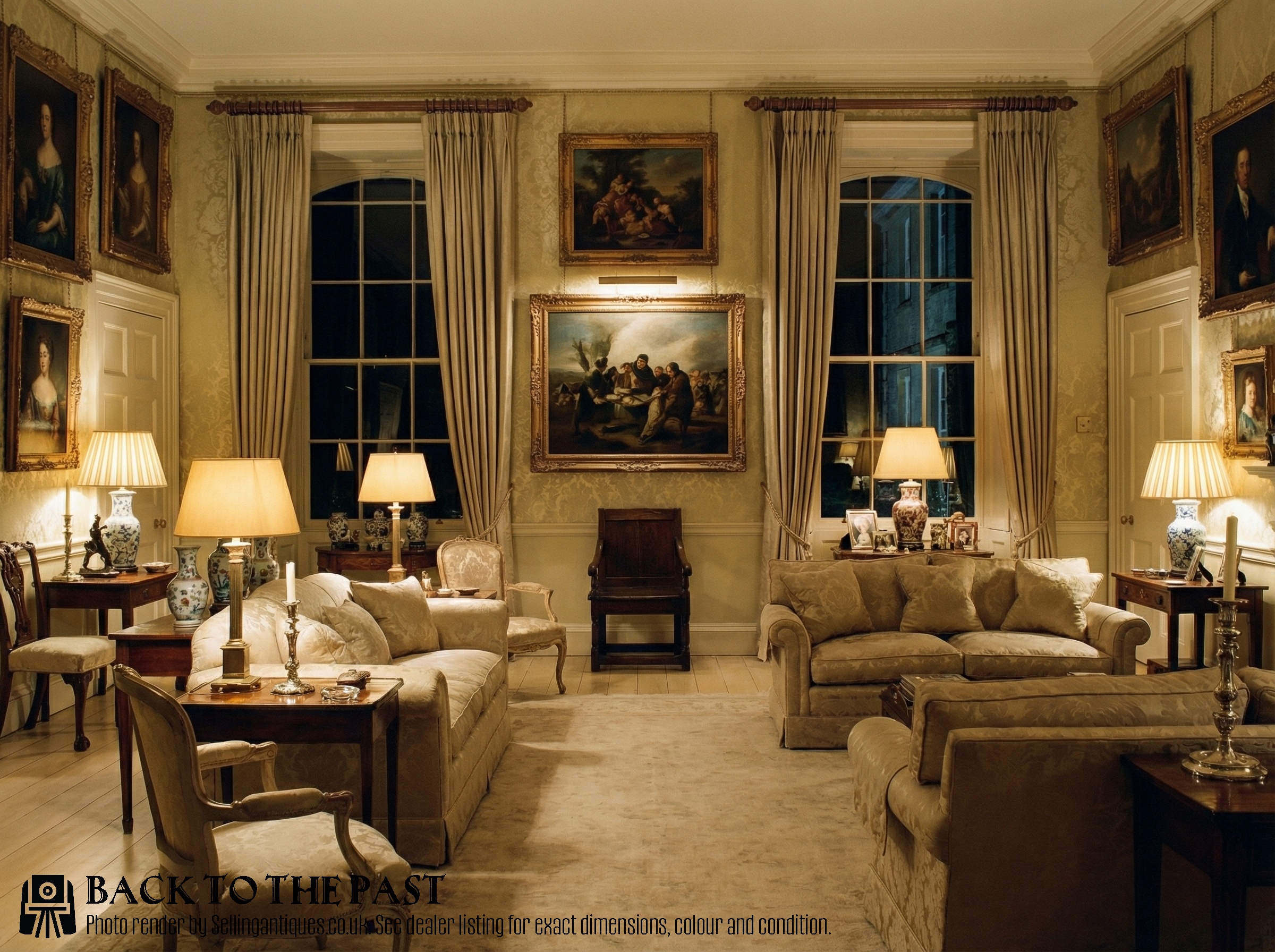
English Oak Wainscot Chair
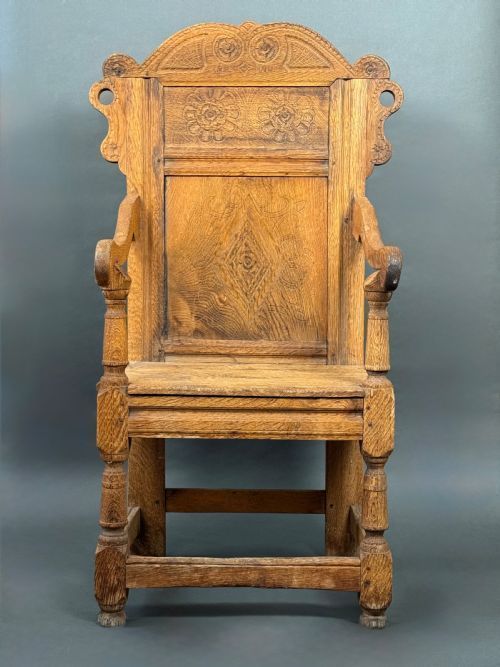
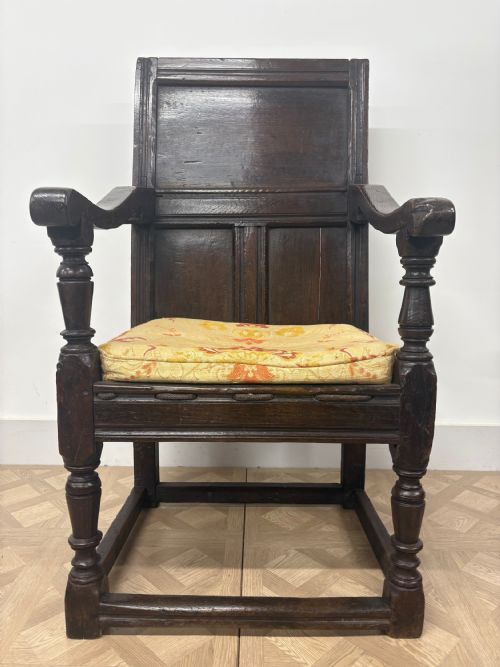
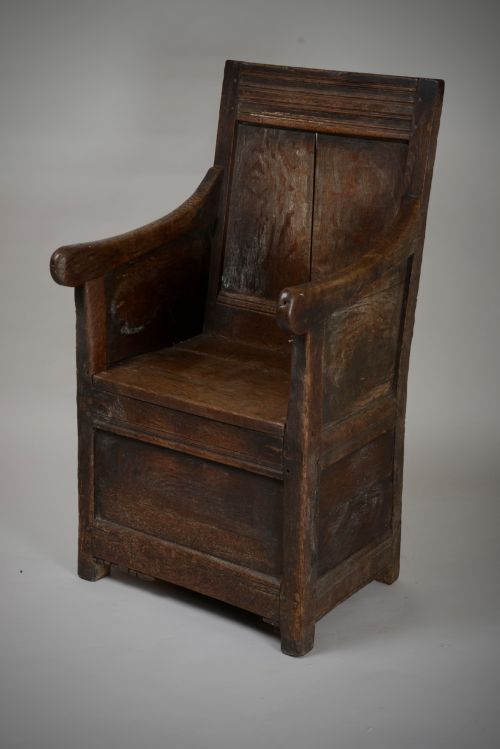
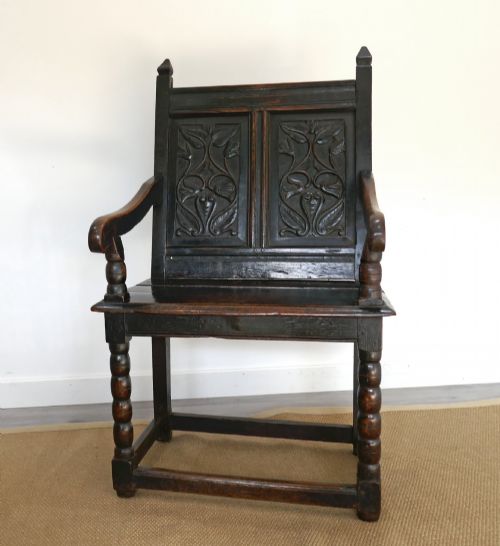
An english oak wainscot chair is a rigid wooden seat constructed with panelled backs, coming primarily from the 17th century with occasional 16th century and 18th century examples. The version met most often on this page is the 17th century armchair, alongside side chairs, backstools, and hall chairs.
Regional variations appear across England, with pieces identified from Lancashire, Cheshire, South Yorkshire, and the West Country. These forms serve as primary seating for the household, often functioning as master chairs or hall seating.
The aesthetic bridges Elizabethan, Jacobean, Carolean, and Restoration styles, showing the heavy proportions and joined construction typical of early English furniture. Later revival pieces also emerge from the 19th century and 20th century, mirroring these earlier regional forms.
What varies in quality
The depth and crispness of the carved decoration on the back panels separate utilitarian seating from high status commissions. Bold moulding, well-proportioned arm supports, and intact original timbers elevate a piece.
Substantial survival of original structure without excessive timber replacement dictates the standing of the chair. Regional quirks, such as distinctive Yorkshire or Lancashire crest rails, add regional character to individual examples.
Listings span three centuries, running from 16th century Elizabethan examples through 17th century Jacobean pieces to 18th century variants.
The English Oak Wainscot Chair Glossary
- Wainscot chair
- A wooden armchair constructed with panelled framing, taking its name from the type of fine oak imported for wall panelling. This form provides a rigid back and solid seat.
- Backstool
- An early term for a chair without arms, essentially functioning as a single chair or side chair. These pieces share the panelled construction of their armed counterparts.
- Joined construction
- A method of building furniture using interlocking mortise and tenon joints secured with wooden pegs. This technique creates a rigid frame without relying on metal screws or nails.
- Jacobean
- A style spanning the early to mid-17th century, characterised by solid proportions and geometric carved ornamentation. Pieces from this period reflect the architectural tastes of the era.
- Box chair
- An early form of seating where the base functions as an enclosed box beneath the seat. This heavy construction precedes standard framed chair designs.
English Oak Wainscot Chair: Frequently Asked Questions
What is an english oak wainscot chair?
An english oak wainscot chair is a heavy, rigid wooden seat featuring a panelled back and solid arms. These pieces represent early domestic seating from the 16th century through the 18th century.
They reflect the architectural joinery of their period, utilising solid timber and pegged joints. The form evolved from wall panelling techniques, hence the shared name.
How were these chairs used originally?
These chairs served as principal seats of authority within the household, typically reserved for the head of the house or important guests. Their solid panelled backs protected the sitter from cold draughts in large halls.
Over time, simpler versions and backstools found use throughout domestic rooms for general seating. They remained functional items of daily utility before becoming collected antiques.
How do I live with an early oak chair?
Place the chair away from direct heat sources and sudden temperature shifts to protect the historic timber. Feeding the wood with appropriate wax helps maintain the surface finish without building up heavy residues.
Use cushions if required for comfort, ensuring modern materials do not trap moisture against the ancient oak seat. The robust construction allows these chairs to function safely as occasional seating in modern spaces.
How can I tell the periods apart?
Early 16th century and Elizabethan pieces often display box chair formations and simpler, heavier proportions. Mid-17th century Jacobean and Restoration examples introduce more elaborate carving, moulded panels, and regional turning.
Later 18th century examples and 19th century revivals borrow these early motifs, though the tool marks, timber ageing, and joinery methods reveal the true date of manufacture.