
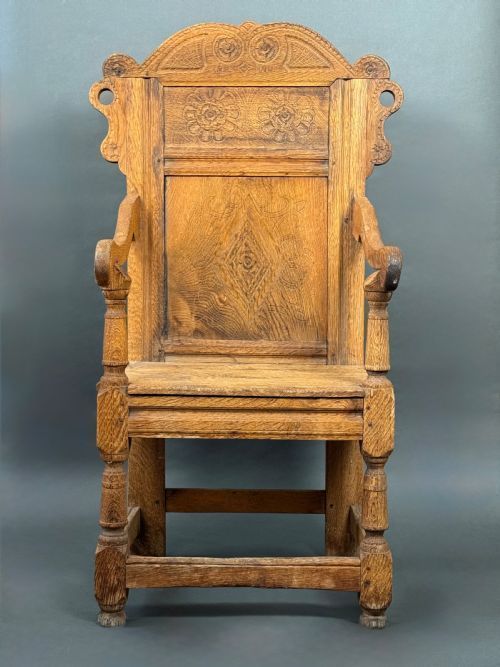
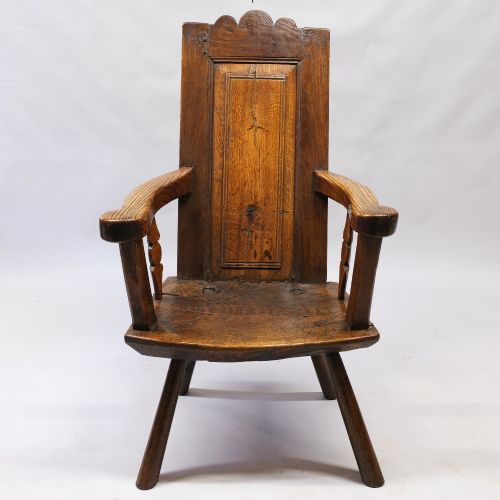
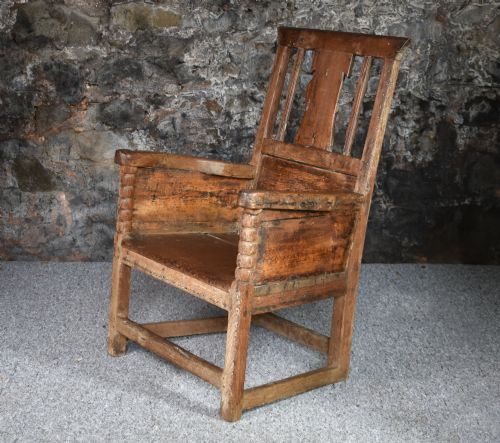


18th Century Wainscot Chair
An 18th century wainscot chair brings solid oak construction and panelled wooden authority straight into a room.
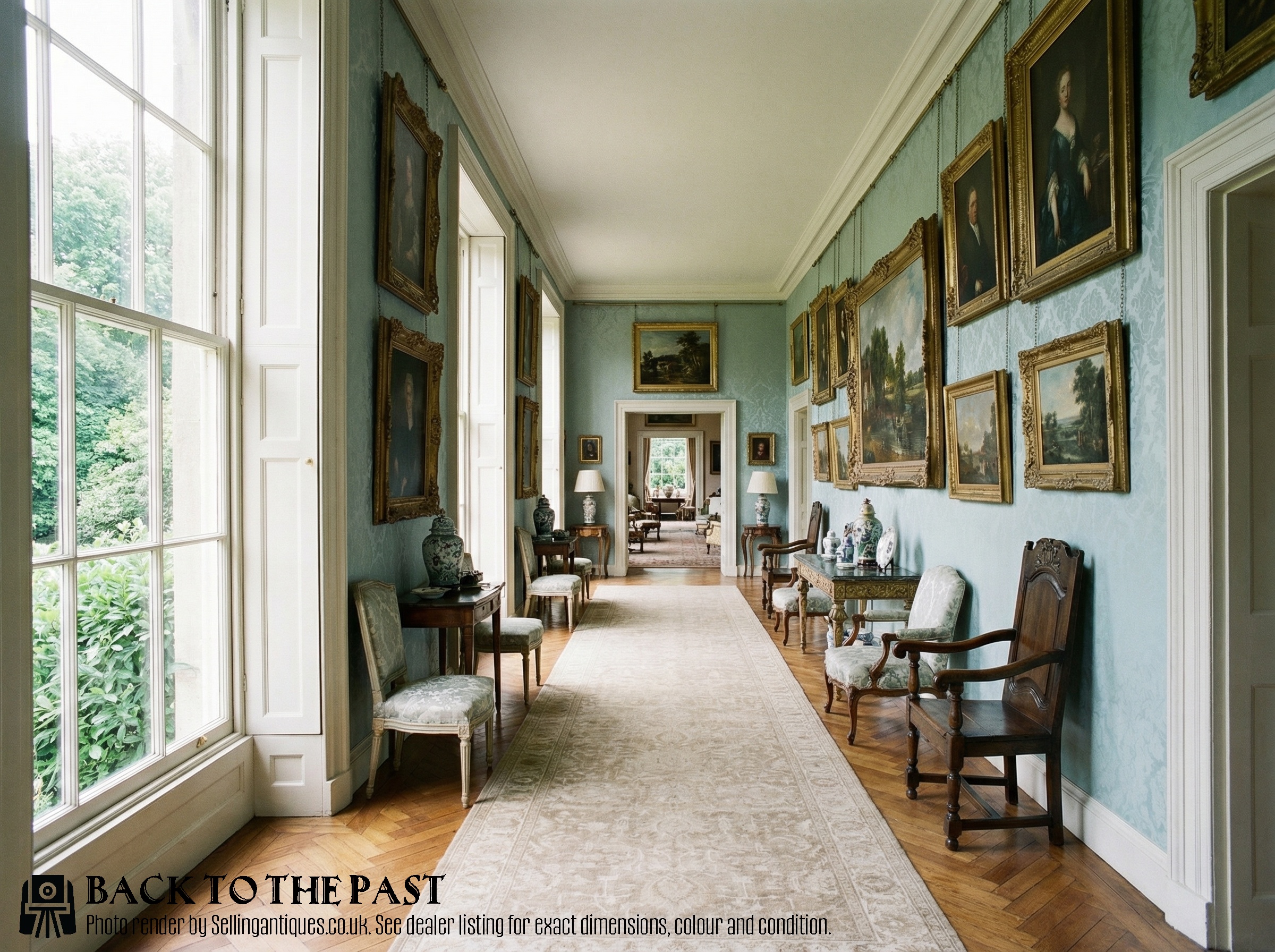
18th Century Wainscot Chair
An 18th century wainscot chair is a heavy wooden armchair defined by solid panelled backs and substantial armrests, built to withstand daily use. When you search for an 18th century wainscot chair, you encounter regional variations including Welsh country examples, Yorkshire pieces, and early Georgian interpretations.
Most pieces on offer date from the 1700s up to around 1800, appearing in formats like hall chairs, reading chairs, and open armchairs. Alongside standard oak constructions, the evidence records elm, pine, fruitwood, and occasional upholstery in velvet.
Makers working within English, Welsh, Scottish, and Dutch vernacular traditions shaped these sturdy armchairs using local timber. The forms bridge the gap between heavy 17th-century seating and lighter Georgian domestic furniture.

How they were made
Joiners and country cabinet makers built these armchairs primarily using solid oak, supplemented by elm, fruitwood, and pine for secondary parts. Panels fit snugly into grooved frameworks to construct the distinctive solid backs and sides characteristic of wainscot seating.
Carving and inlay appear on select examples, adding surface pattern to the structural timberwork. Bobbin turning and panel framing provide structural integrity without relying on excessive metal fixings.
Some chairs double as reading thrones, ready to shield you from the draft while you ponder estate accounts.
What varies in quality
The degree of carving and regional elaboration separates simpler utilitarian seating from grander panelled armchairs. Richly carved crest rails and detailed back panels indicate a higher tier of country craftsmanship.
Timber selection and surface patination dictate visual depth, with well-handled fruitwood and mature oak showing distinct tonal variation. The integration of solid arm supports and balanced proportions distinguishes a superior vernacular form.
The 18th Century Wainscot Chair Glossary
- Wainscot chair
- A wooden armchair characterised by a panelled back, solid wooden seat, and heavy armrests. These pieces derive their name from wainscot oak panelling used in domestic interiors.
- Vernacular
- Everyday furniture made by local regional cabinet makers rather than high-style metropolitan workshops. This approach prioritises local timbers and functional design over prevailing court fashions.
- Joint chair
- Seating constructed using mortise and tenon joints held together with wooden pegs rather than metal nails. This technique underpins the rigid durability of early wooden armchairs.
- Patination
- The surface sheen and colour acquired by wood over centuries through handling, light exposure, and polishing. Good patination reveals the natural grain beneath deep historical use.
- Lambing chair
- A specialised high-backed armchair designed to shield the sitter from draughts, often featuring panelled sides and a hooded top. These functional forms served fireside and reading purposes in country houses.
18th Century Wainscot Chair: Frequently Asked Questions
What is an 18th century wainscot chair?
An 18th century wainscot chair is a heavy wooden armchair featuring a panelled back and solid arms. These sturdy seats derive from earlier architectural panelling traditions.
They reflect regional woodworking styles across England, Wales, and Scotland, utilising local timbers like oak and elm.
Where were these chairs used?
These chairs stood in the principal rooms of country houses, farmhouses, and halls. Their heavy build suited them for placement near firesides or in drafty hallways.
They functioned as primary seating for heads of households or readers seeking shelter from drafts.
How do I live with an oak armchair?
Place your oak armchair away from direct heat sources and sudden humidity changes to protect the ancient timber. Regular gentle dusting preserves the natural surface patination.
Allow enough space around the piece to appreciate its solid panelled back and robust arm supports.
How can I tell the periods apart?
Early examples from around 1700 retain heavier joinery and sparse decoration rooted in 17th-century traditions. Later pieces nearing 1800 incorporate lighter framing and refined regional vernacular touches.
Examining the wood species and construction methods helps clarify whether a chair belongs to the early or late 18th century.