

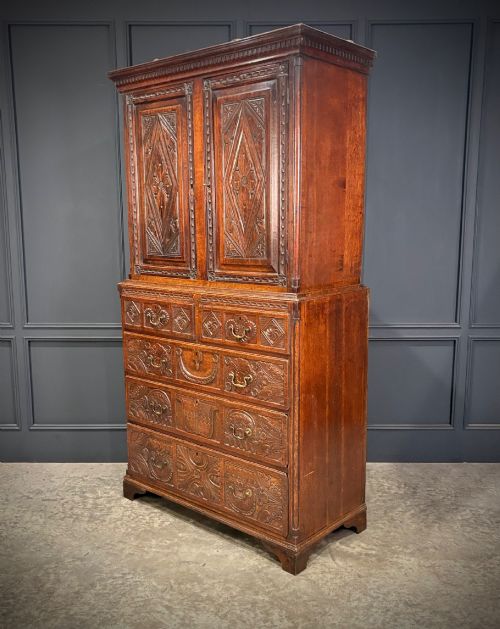


English Oak Press Cupboard
An english oak press cupboard brings robust timber and centuries of storage history directly into a modern room.
English Oak Press Cupboard
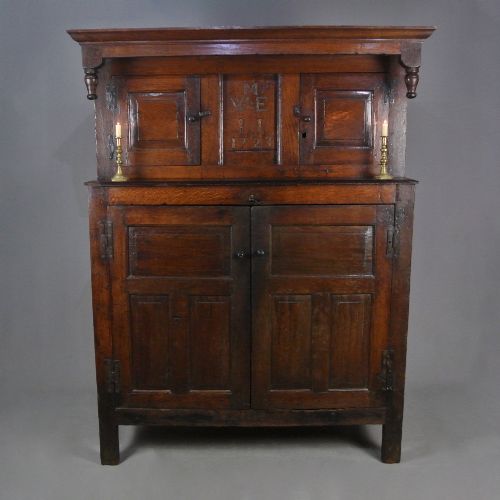
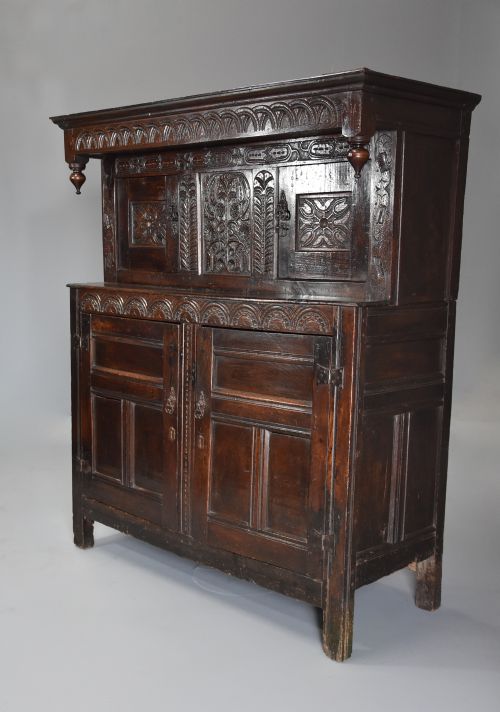
An english oak press cupboard is a substantial storage piece built to hold household textiles, clothing or provisions. These items typically span from the sixteenth century through the Georgian era, with seventeenth century court cupboards and eighteenth century housekeepers cupboards appearing frequently.
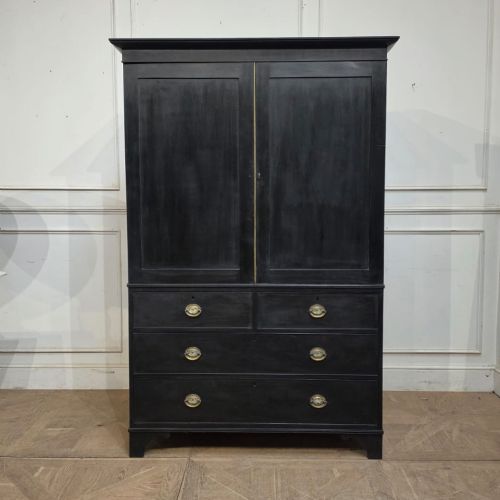
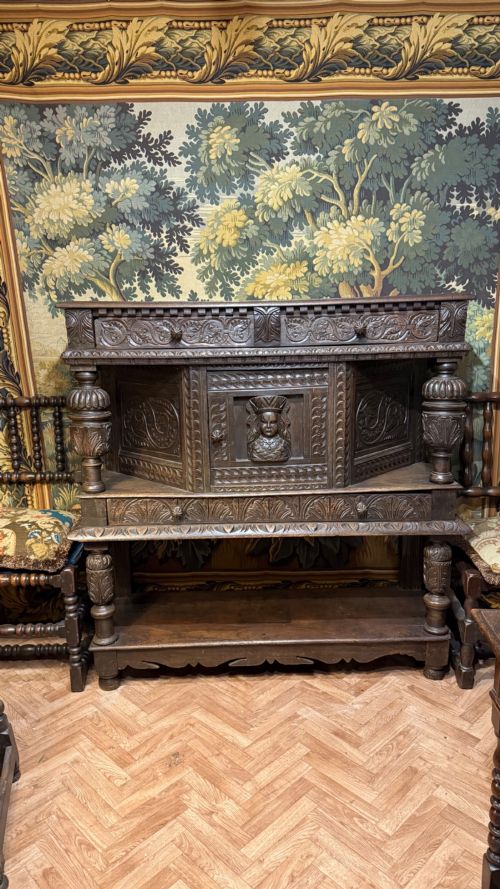
Buyers encounter variations ranging from tall linen presses to low cupboards combined with chests of drawers. The selection includes regional court cupboards featuring carved details alongside simpler utilitarian kitchen and estate cabinets.
Distinctions in craftsmanship and preservation
Quality separates along the lines of surface survival, structural integrity and the crispness of any carved decoration. Pieces retaining untouched patination and original timber stand apart from those with extensive later alterations.
The sophistication of the joinery and the depth of period detail dictate the standing of an individual press cupboard within its era.
Listings span multiple eras from pre-sixteenth century examples to nineteenth century interpretations, predominantly constructed in oak with occasional elm and fruitwood.
The English Oak Press Cupboard Glossary
- Court cupboard
- A traditional enclosed piece of furniture used for displaying plate and storing food or textiles, often featuring upper and lower tiers.
- Livery cupboard
- A small storage cabinet traditionally used for keeping rations or small provisions away from servants.
- Housekeepers cupboard
- A large utilitarian storage unit used in grand homes to store household linen and dry goods.
- Linen press
- A tall piece of furniture designed specifically for storing folded garments and table linens, frequently incorporating sliding trays.
- Patina
- The surface sheen and colour developed by timber over centuries of handling, exposure to light and natural ageing.
English Oak Press Cupboard: Frequently Asked Questions
How do I date an english oak press cupboard?
Dating relies on observing construction methods, timber choice and decorative motifs such as linenfold carving or geometric mouldings. Earlier pieces often display pegged frame-and-panel construction and heavy mouldings characteristic of the seventeenth century.
Later eighteenth and nineteenth century versions tend to incorporate drawers, simpler cornices and different internal configurations like sliding shelves for linen.
Where were these cupboards used in the home?
These pieces served multiple domestic functions in halls, chambers and large farmhouses. They were designed to protect valuable household textiles, garments and provisions from damp and pests.
Housekeepers cupboards often stood in service wings to manage estate supplies, while court cupboards held prized possessions in principal living spaces.
How do I care for antique oak timber?
Maintaining old oak involves keeping the timber away from direct heat sources and sudden humidity changes to prevent splitting. Regular dusting with a soft, dry cloth preserves the finish.
Occasional application of traditional wax helps nourish the wood and maintain the natural surface sheen without building up heavy residues.
What is the difference between a press and a wardrobe?
A press traditionally contains internal sliding trays or shelves designed for flat-folded textiles rather than hanging space. Many historic examples were adapted later to include hanging rails.
Wardrobes focus primarily on vertical garment storage, whereas press cupboards emphasise compartmentalised shelving for household linens.