





English Oak Lowboy Table
An English oak lowboy table provides a sturdy, compact surface with drawers, offering historical character and useful storage for a hallway or living space.
English Oak Lowboy Table
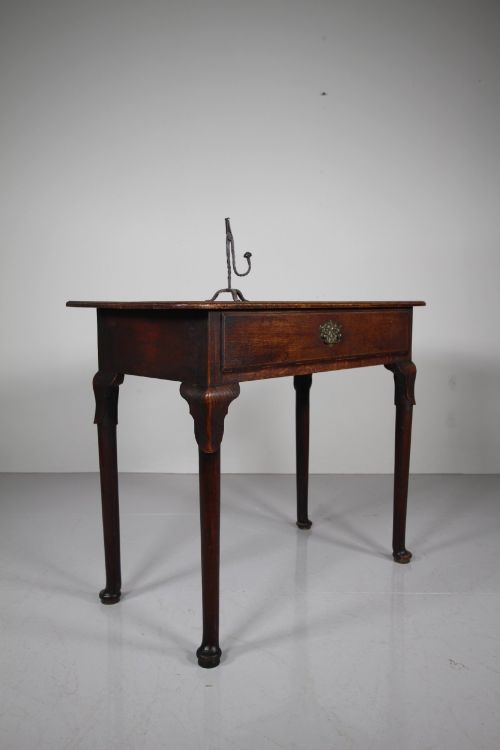
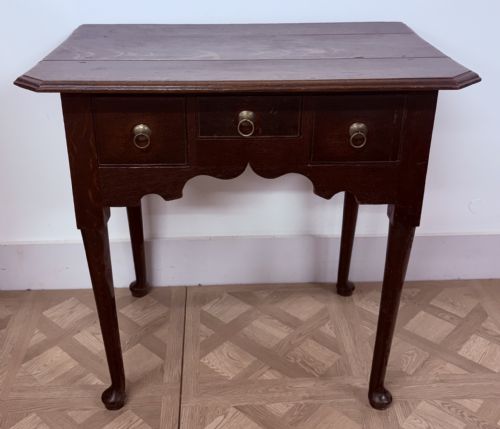
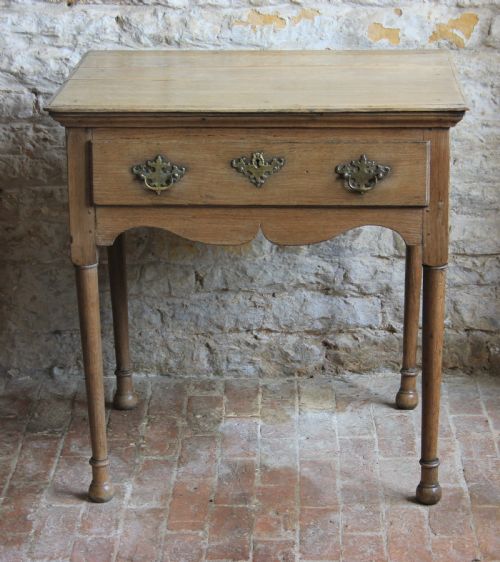
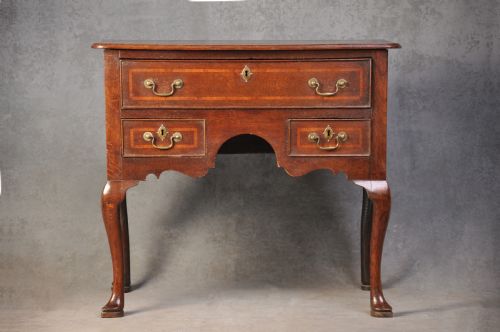
An english oak lowboy table is a small, low table fitted with one or more drawers, often utilised historically as a dressing table or writing surface. These pieces sit comfortably in contemporary hallways and sitting rooms where surface space is required without a heavy footprint.
The versions most frequently met on this page span the 17th, 18th and 19th centuries, reflecting provincial workshop traditions as well as more formal Georgian designs. Plain country examples sit alongside cross-banded or carved variants.
Makers produced these tables primarily in oak, occasionally incorporating ash, elm or walnut for drawer linings and cross-banding. Their low height and practical drawer configuration distinguish them from taller side tables and larger dresser bases.
Construction and materials
Makers constructed these tables predominantly using solid timber, joining tops to frames with traditional peg and mortise joints. Oak provides the robust structural foundation, while secondary woods appear in drawer construction.
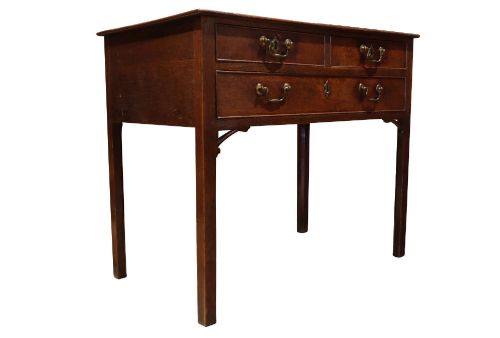
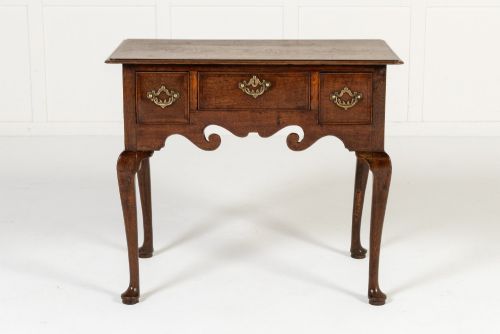
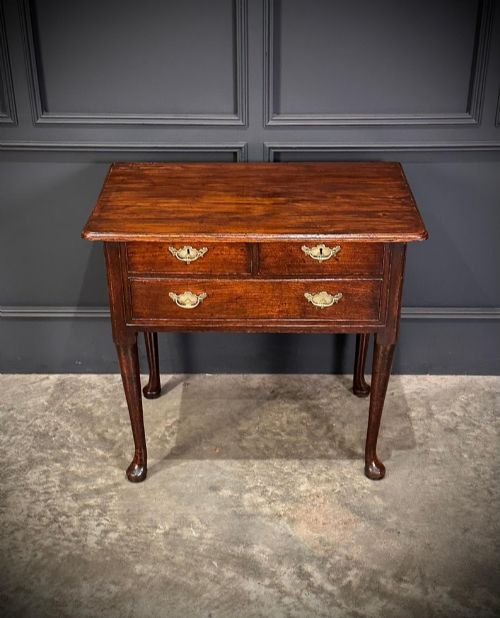
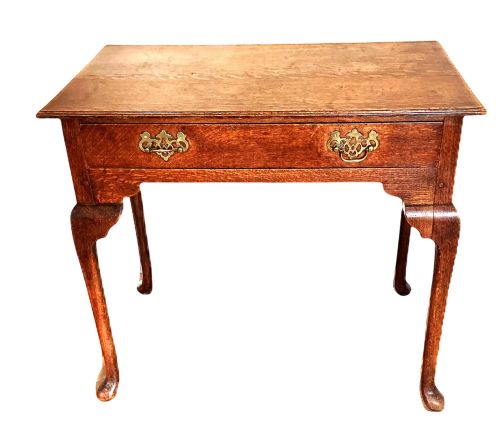
Brass drop handles and escutcheons secure the drawer fronts, often retaining patination built up over centuries of handling. Hand-cut dovetails anchor the drawer boxes, showing the steady hand of provincial joiners.
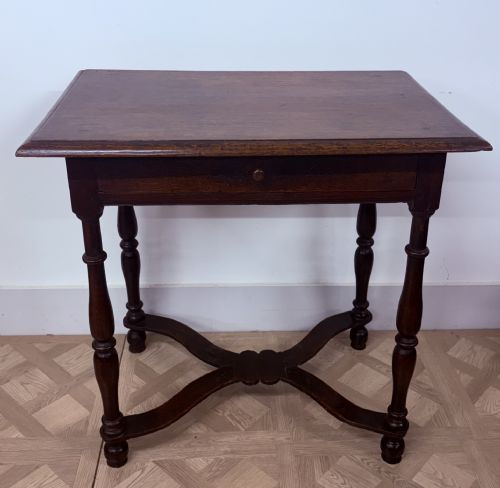
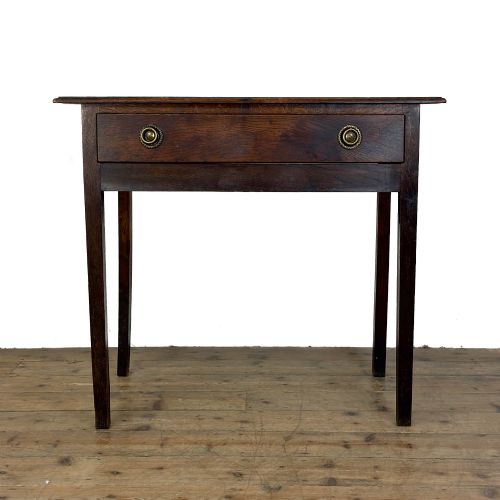
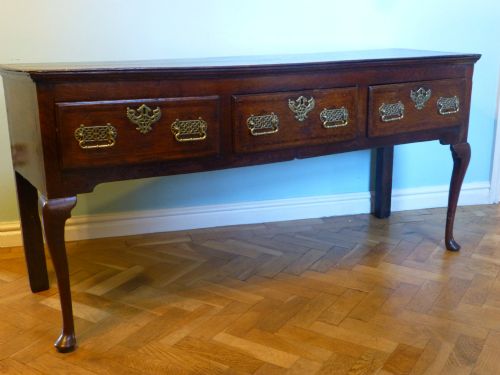
Turned legs, straight square legs, or cabriole legs support the frame, depending on the period and stylistic influence. Surface finishes rely on wax polish applied over decades, highlighting the natural grain and figuring of the timber.
English Oak Lowboy Table Retail Price Guide 2026
Typical asking prices for english oak lowboy table among the pieces listed under this phrase on Sellingantiques today, from the lower quarter to the upper quarter. They describe what is for sale here now, not the wider market.
Listings feature oak, walnut, mahogany and brass across 17th, 18th and 19th-century periods.
Judging quality and proportion
Proportion and timber selection separate ordinary examples from exceptional ones. Tables retaining their original timber top boards without excessive shrinkage or warping command greater attention from collectors.
The sharpness of carved details and the retention of period brass hardware influence the overall integrity of a piece. Fine craftsmanship shows in tight drawer joints and balanced leg profiles that support the low stance harmoniously.
The English Oak Lowboy Table Glossary
- Lowboy
- A small oak or walnut table with one or more drawers, standing on four legs and dating chiefly from the late 17th through the 18th century. It served various domestic functions including writing and grooming.
- Dresser base
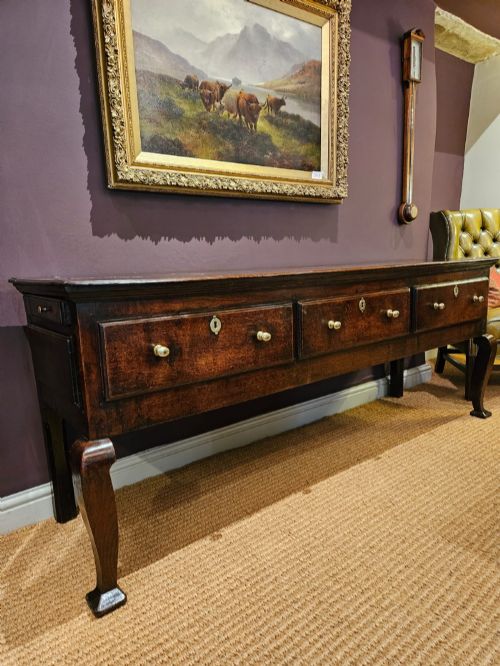
- A long, low table featuring multiple drawers, heavier in scale than a lowboy. These pieces originate from farmhouse kitchens and dining spaces.
- Cabriole leg
- A furniture leg that curves outward at the knee and tapers inward toward the ankle, reflecting stylistic influences from the Queen Anne and Georgian periods.
- Cross-banding
- A decorative border applied to table tops or drawer fronts where the grain runs perpendicular to the central panel, adding visual contrast using walnut or contrasting oak.
- Dovetail
- A joint formed by interlocking wedge-shaped fingers, used extensively to secure drawer corners in period furniture construction.
English Oak Lowboy Table: Frequently Asked Questions
What is a lowboy used for?
Historically, these tables functioned as dressing desks, sideboards or writing surfaces in domestic chambers and halls. Today, owners frequently place them in hallways as compact console tables or utilise them as writing desks in smaller rooms.
The drawer configuration provides convenient storage for keys, correspondence or stationery while keeping the surface clear for lamps or decorative objects.
How do I date an oak lowboy?
Dating relies on examining construction methods, leg styles and hardware fixings. Earlier 17th-century examples feature turned legs and pegged joints, whereas Georgian pieces often incorporate cabriole or square tapered legs.
Secondary timber choices and drawer dovetailing techniques also offer clear indicators of the period in which the provincial workshop operated.
Are all lowboys made of oak?
While oak forms the primary material for the majority of these tables, makers occasionally utilised walnut, mahogany, elm or ash. Walnut veneer and cross-banding appear on more decorative Georgian examples.
Internal drawer components frequently consist of secondary timbers such as deal or ash, reflecting the practical material availability of the period.
How do I care for antique oak?
Maintaining period oak requires simple dusting with a dry, soft cloth and occasional application of traditional beeswax to nourish the dry timber. Direct sunlight and sudden temperature shifts should be avoided to prevent wood splitting.
Avoiding synthetic polishes ensures the historic patina develops character naturally over time without building up a sticky residue.