





English Oak Footstool
An english oak footstool brings solid timber and centuries of domestic craft straight to the hearth, offering a durable seat or footrest built to last.
English Oak Footstool
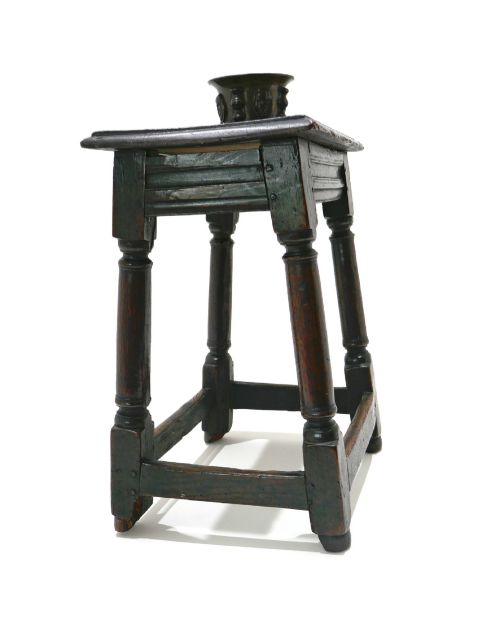
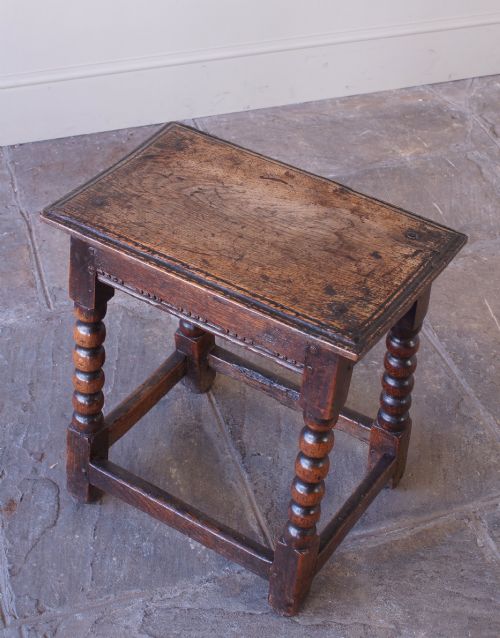
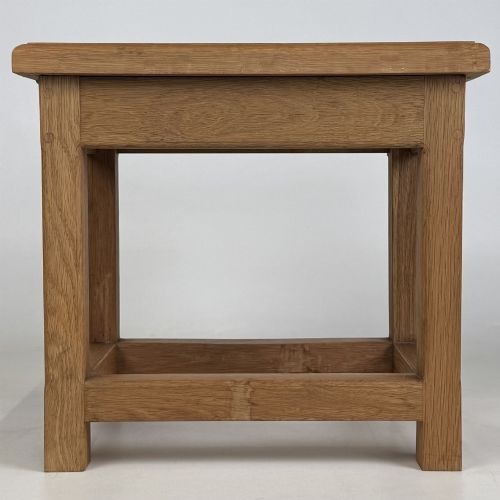
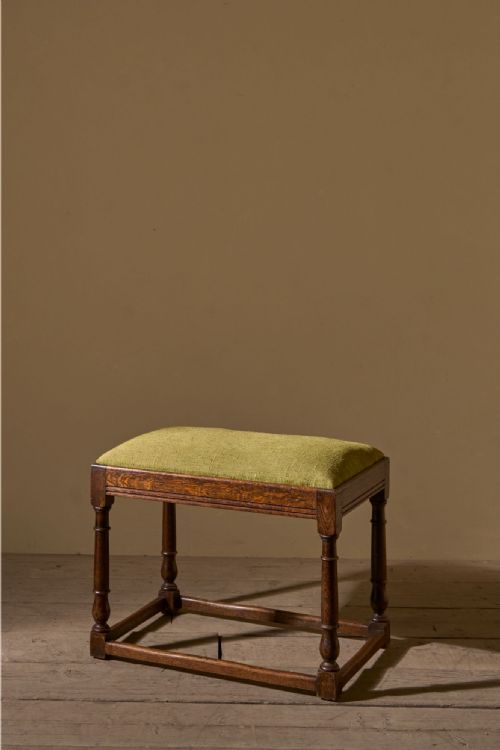
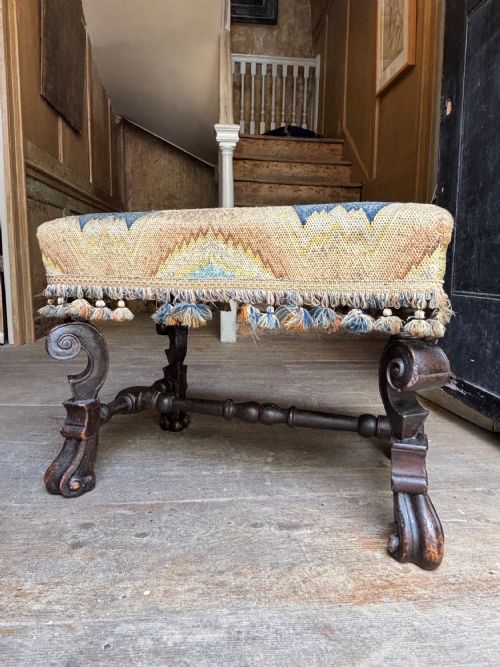
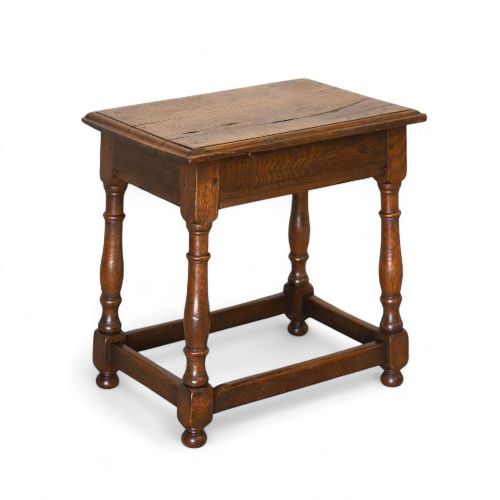
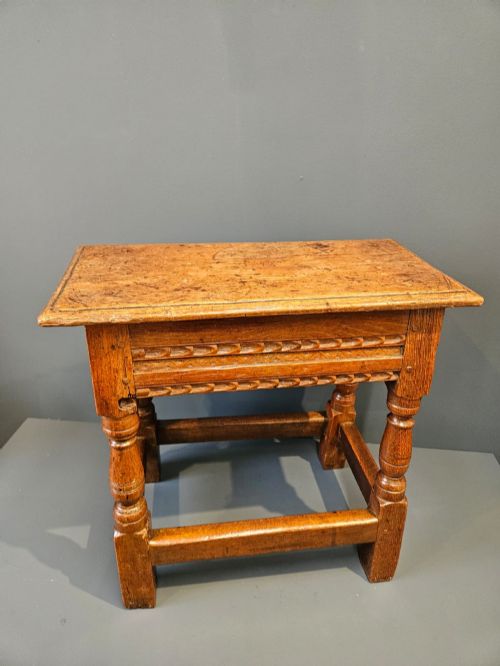
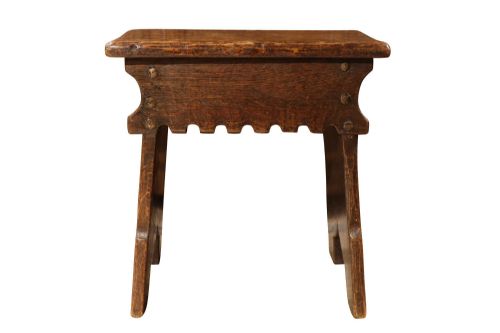
When you search for an english oak footstool, you encounter a remarkably varied group of low seating spanning from the seventeenth century through to the art deco period. The selections here range from austere provincial joint stools and pegged five-plank forms to upholstered Victorian window seats and twentieth-century Windsor designs.
You are most likely to meet sturdy joint stools and country house footstools shaped by vernacular traditions and revivalist movements like the Jacobean style. These pieces frequently employ simple rectangular or oval seats supported by robust turned or squared legs.
Materials and construction
Carpenters relied primarily on solid oak, occasionally combining it with elm for seats or framing it alongside walnut accents. Secondary materials such as leather, heavy linen, textile, and needlepoint tapestry provided the upholstered surfaces for fireside and dressing stools.
Traditional joinery governed the fabrication of these low seats, utilising pegged construction and rigid joint frameworks rather than modern hardware. Upholstered variants integrated webbing and stuffing beneath decorative fabrics, while cane panels offered lighter alternatives for twentieth-century frames.
English Oak Footstool Retail Price Guide 2026
Typical asking prices for english oak footstool among the pieces listed under this phrase on Sellingantiques today, from the lower quarter to the upper quarter. They describe what is for sale here now, not the wider market.
The listings on this site encompass periods ranging from the mid-seventeenth century up through art deco twentieth-century designs.
Assessing quality
Quality reveals itself in the depth of the timber's colour and the integrity of the pegged joinery rather than surface embellishment. Earlier seventeenth-century examples derive their standing from exuberant baroque carving and uncompromised structural survival.
Later Victorian and Edwardian interpretations depend heavily on the crispness of their revival detailing and the quality of the upholstery materials, whether tight leather or rich green linen. Pieces displaying honest patination and substantial framing consistently separate themselves from standard production.
Harry & Lou Epstein·James Shoolbred·David Oakleafman Langstaff
The English Oak Footstool Glossary
- Joint stool
- A low wooden stool constructed with mortise and tenon joints, traditionally assembled by joiners rather than carpenters. These sturdy items served multiple household functions in early domestic interiors.
- Pegged construction
- A traditional assembly method utilising wooden pins to secure joints without relying on metal fasteners. This technique accommodates seasonal wood movement while maintaining structural rigidity.
- Jacobean Revival
- A nineteenth-century stylistic movement emulating the architecture and furnishings of the early seventeenth century. Makers utilised heavy turned members and geometric carving to recreate seventeenth-century forms.
- Carolean
- Pertaining to the reign of Charles II, characterised by exuberant baroque forms and rich ornamentation. Surviving pieces from this period display sophisticated turning and sculptural woodwork.
English Oak Footstool: Frequently Asked Questions
What is an english oak footstool used for?
These low wooden items primarily served as seats near the hearth, dressing tables, or music rooms, as well as supports for tired feet.
Over the centuries, households adapted them wherever an extra sturdy perch or footrest was needed close to the floor.
How do I tell a seventeenth-century stool from a revival piece?
Authentic seventeenth-century pieces display genuine tool marks, hand-carved details, and deep patination accumulated through generations of use.
Revival furniture from the Victorian era often shows more mechanical uniformity in its turning and standardised joint work.
Can I use an antique footstool with modern furniture?
The neutral tones of aged timber and traditional upholstery fabrics allow these low seats to blend easily beside contemporary sofas and chairs.
Their modest proportions ensure they fit comfortably into smaller spaces without dominating a room.
What does pegged construction mean for stability?
Pegged joinery uses wooden pins through mortise and tenon joints to lock the framework together without modern glues or metal screws.
This traditional method allows the oak frame to flex slightly with humidity changes while remaining remarkably durable.