
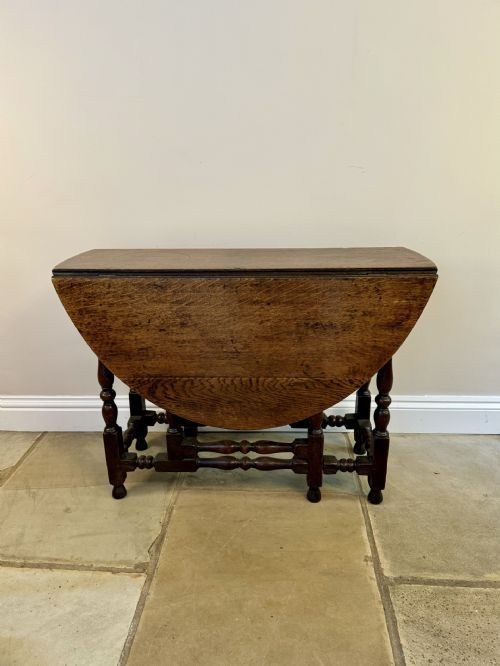
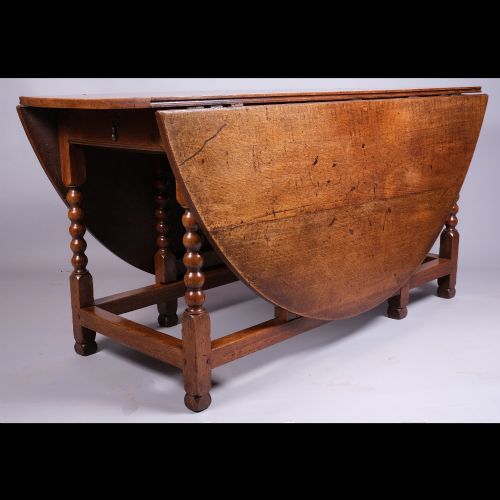
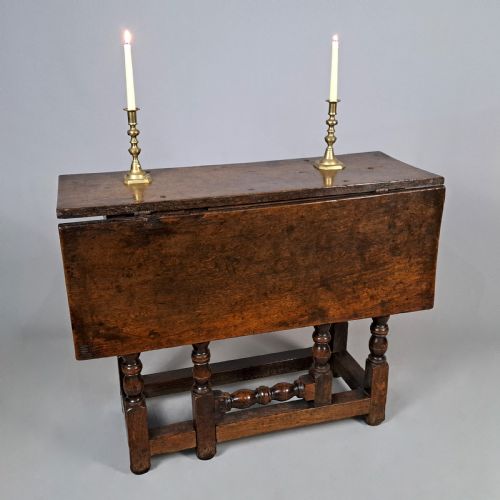


English Oak Drop Leaf
An English oak drop leaf table brings centuries of practical carpentry and rich timber into a modern room.
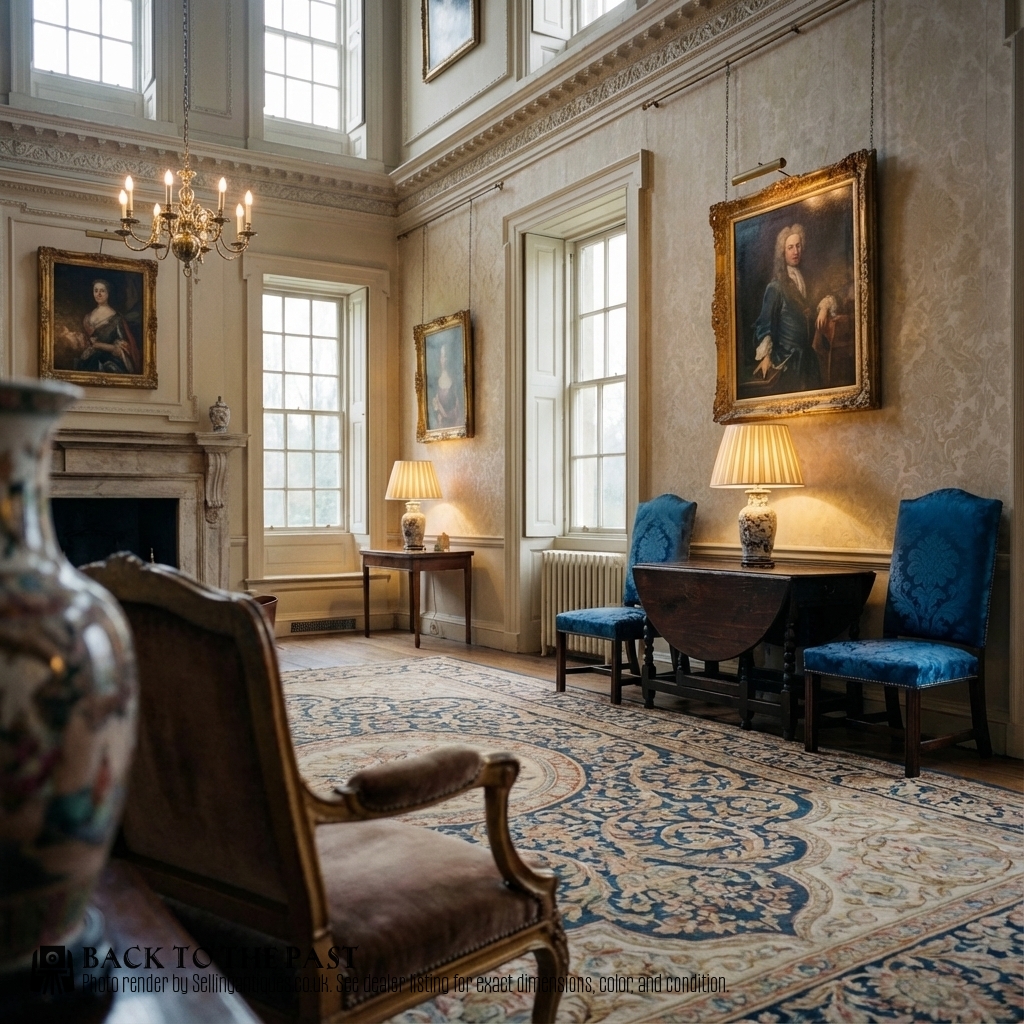
English Oak Drop Leaf
An English oak drop leaf table is a versatile form designed to save space by folding down its hinged flaps when not in use. When you search for this phrase, you encounter everything from compact side tables to large dining tables intended for everyday meals.
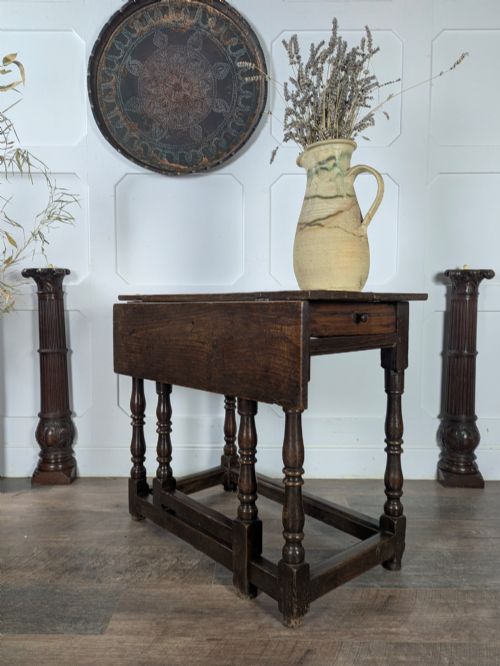
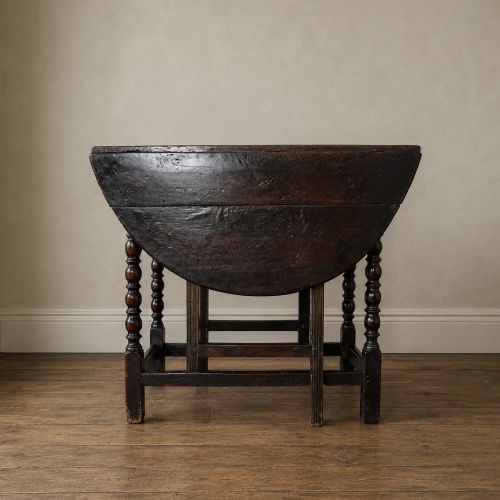
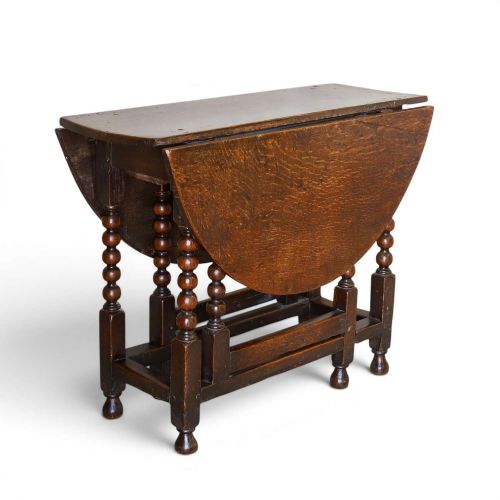
The pieces on this page span several centuries, with a strong representation of seventeenth-century gateleg forms alongside eighteenth-century dining variants and later revivals from the twentieth century. These tables typically feature oval or rectangular tops supported by pivoting legs that swing out to hold the leaves.
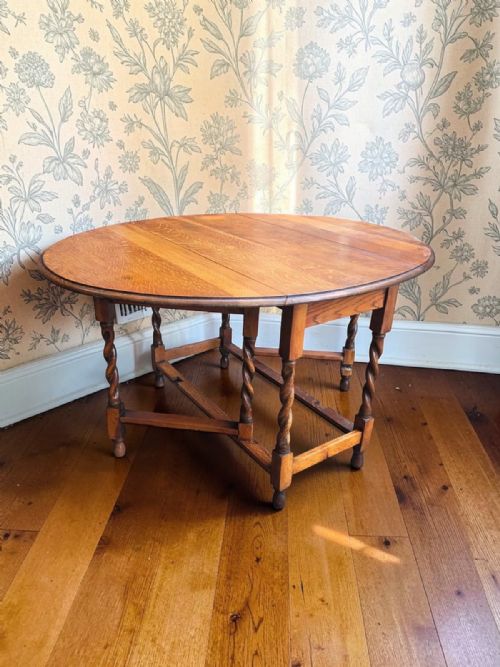
Earlier examples often show robust seventeenth-century construction with turned supports, while later revivals from the Edwardian era and the nineteen-twenties adapt the traditional gateleg format to domestic interiors. Solid timber construction remains a consistent characteristic across the entire selection.
How they were made
Makers constructed these tables primarily from solid oak, utilising iron and brass for hinges, catches, and structural fixings. The timber was worked by hand using traditional jointing methods to ensure the pivoting legs could bear the weight of the drop leaves.
Turnery formed a central part of the construction process, producing distinct leg profiles such as barley twist, bobbin turned, and baluster post supports. These turned elements provide the structural framework that allows the gateleg action to function smoothly.
The listings combine seventeenth-century originals with twentieth-century revival pieces, all constructed in solid oak with iron and brass hardware.
What varies in quality
Quality in an English oak drop leaf table rests upon the integrity of the timber and the retention of original surface characteristics such as patina. Pieces with well-maintained joints and balanced proportions demonstrate superior cabinetmaking standards.
The complexity and execution of the turnery on the legs, whether bobbin turned or barley twist, also distinguish finer examples from simpler utilitarian pieces. The depth of the timber's colour and the condition of the folding mechanism further separate standard items from exceptional survivals.
The English Oak Drop Leaf Glossary
- Gateleg table
- A table with hinged leaves supported by one or more legs that swing outward like a gate. This design provides sturdy support for the drop leaves when extended.
- Barley twist
- A type of decorative wood turnery resembling a spiralling rope. It appears frequently on the legs of seventeenth-century tables and later revival pieces.
- Bobbin turned
- A style of turning that creates a series of rounded, spool-like shapes along the length of a furniture leg. This technique is characteristic of seventeenth-century English joinery.
- Patina
- The surface sheen and coloration developed by timber over years of handling, polishing, and exposure to light. A well-preserved surface indicates considerable age and careful use.
- Baluster post
- A vertical support column shaped with a swollen lower portion, commonly found on earlier tables. It provides robust weight-bearing capacity for heavy oak frameworks.
English Oak Drop Leaf: Frequently Asked Questions
How do I use a drop leaf table daily?
You can keep the leaves folded down against a wall as a console or side table to save floor space in smaller rooms. When you need extra surface area for dining or working, simply lift the leaves and swing the gatelegs outward into position.
The sturdy wooden construction ensures the extended flaps remain stable for everyday tasks, allowing the furniture to adapt easily to changing room layouts throughout the day.
How can I tell a seventeenth-century table from a later revival?
Examining the construction methods, tool marks, and wear patterns on the timber helps distinguish period pieces from later copies. Seventeenth-century examples often display hand-split oak boards and traditional pegged joints that differ from twentieth-century manufacturing techniques.
Evaluating the specific style of turnery, such as bobbin or baluster forms, alongside the depth of the natural surface colour provides further clues regarding the actual date of manufacture.
Are these tables suitable for modern dining rooms?
These pieces fit comfortably into contemporary dining spaces because their folding design offers flexible seating capacity. A six-seat gateleg table can easily reduce its footprint when not in use, making it practical for modern living.
The warm tones of the oak timber complement various interior styles, bridging historic craftsmanship with functional daily requirements.
What maintenance does old oak require?
Solid oak furniture benefits from occasional application of quality wax to nourish the wood and protect the surface from drying out. Avoiding direct sunlight and extreme temperature changes prevents the timber from splitting or warping over time.
Gentle dusting with a soft cloth preserves the natural finish and maintains the historic character of the surface without harming the wood.