


English Oak Drop Leaf Table
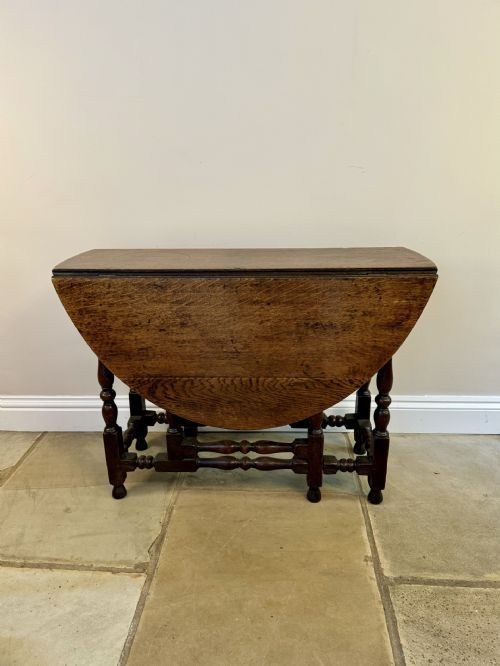
An english oak drop leaf table offers sturdy practicality and warm timber tones, spanning formats from compact side pieces to large dining tables.
English Oak Drop Leaf Table
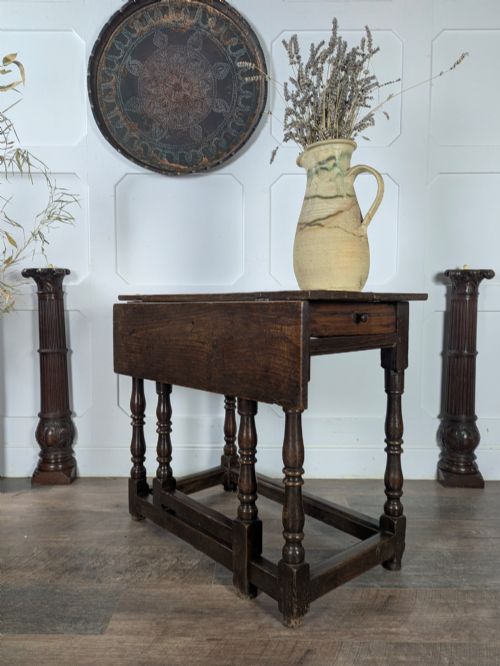
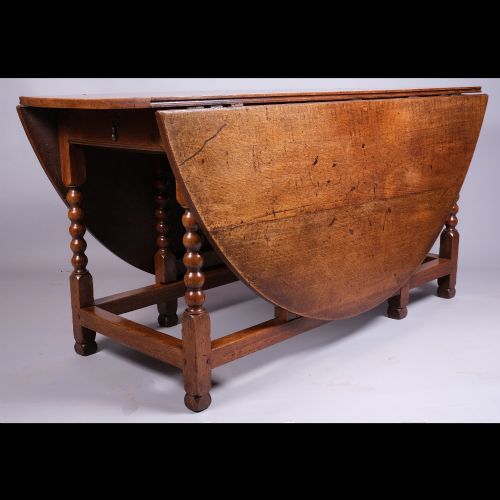
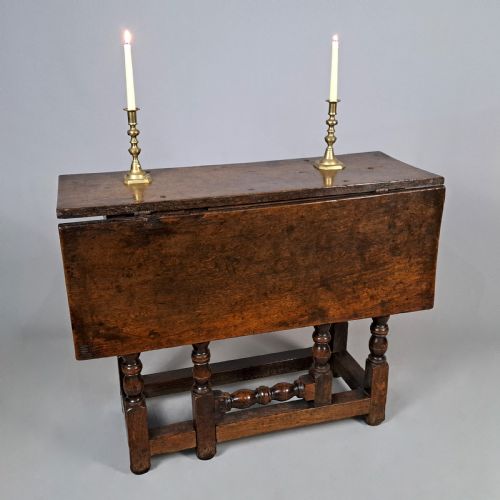
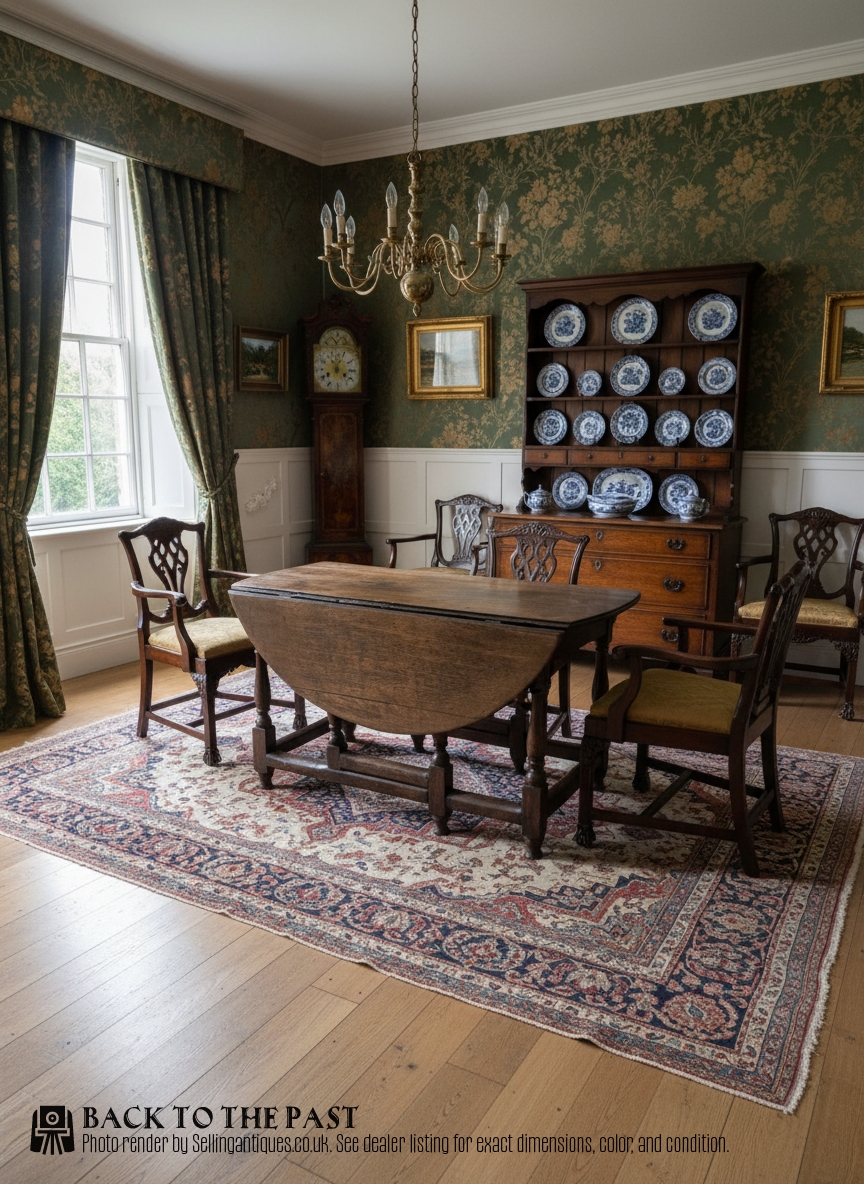
When searching for an english oak drop leaf table, you encounter versatile gateleg designs constructed for dining and everyday use. The forms range from small side and coffee tables to large six-seat dining tables with oval tops.
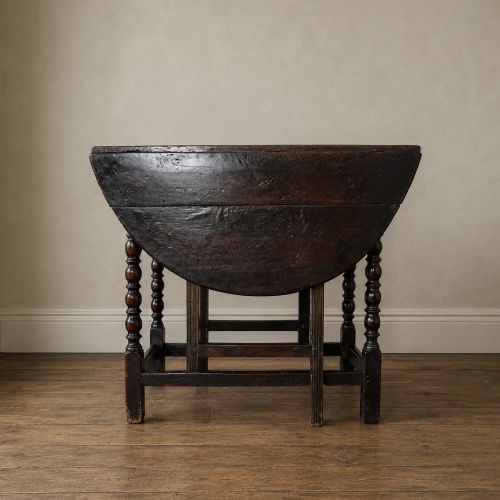
The selection spans centuries of craftsmanship, featuring examples originating from the seventeenth and eighteenth centuries alongside later revival pieces from the Edwardian era and the 1920s and 1930s. Most examples rely on swing legs to support the folding flaps, creating an adaptable surface that expands when needed.
How they were made
Makers utilised solid oak for the primary framework and leaves, sometimes complemented by iron and brass fittings. Structural integrity depended on sturdy timber framing combined with hinged drop leaves supported by pivoting gate legs.
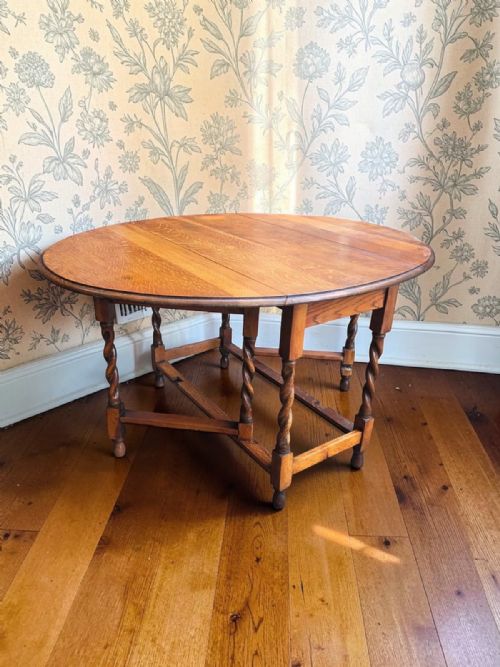
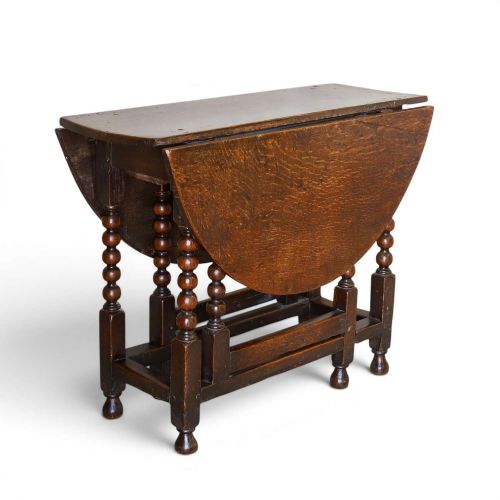
Turned wooden components define many of the upright supports, with bobbin, baluster, and barley twist legs appearing frequently across different periods. Surface finishes developed through traditional timber treatment, leaving visible grain and natural patination across the solid oak.
Some drop leaf tables were built narrow enough to squeeze beside a wall like a polite guest at a crowded party.
What varies in quality
The distinction between tiers of quality rests upon the depth of the timber's patina and the crispness of the turned legs, such as bobbin or barley twist details. Early pieces from the seventeenth and eighteenth centuries often display superior surface maturity compared to later revivals.
Proportion and scale also dictate distinction, where larger six-seat dining formats and well-balanced smaller gateleg frames demonstrate refined proportions. The integrity of the pivoting gate mechanism and the uniform matching of the oak leaves further separate standard examples from finer specimens.
The English Oak Drop Leaf Table Glossary
- Gateleg table
- A table with hinged leaves supported by one or more legs that swing outward like a gate. This design provides robust support for the drop leaves when fully extended.
- Barley twist
- A spiral turning carved into furniture legs and posts. This decorative woodworking technique appears frequently on seventeenth-century pieces and later revival tables.
- Bobbin turned
- A style of leg shaping resembling a series of spools or bobbins joined end to end. It is achieved through lathe turning solid timber.
- Drop leaf
- A hinged section of a tabletop that folds down when not in use. It allows the table to occupy less floor space.
- Patina
- The surface sheen and colour developed by aged timber through handling and time. A desirable surface exhibits depth and warm natural tones.
English Oak Drop Leaf Table: Frequently Asked Questions
How do I seat six people?
Select a larger gateleg or dining format with substantial length and swing-out support legs. These larger frames provide adequate knee clearance and stability when both flaps are raised.
Ensure the floor space accommodates the fully extended oval top before setting chairs around the piece.
Are these tables suitable for daily dining?
Solid oak construction provides the durability required for everyday meals and kitchen use. The heavy timber resists normal wear while maintaining structural stability.
Protect the surface with placemats and address spills promptly to preserve the finish of the wood.
How do I date a gateleg table?
Examine the turning style on the legs, joinery methods, and the overall wear of the timber. Seventeenth-century examples often feature bold baluster or bobbin turnings, while later twentieth-century pieces show different surface tooling.
Compare the construction details and patination against documented pieces from similar eras.
How do the folding leaves operate?
The hinged flaps lift upward while a pivoting gate leg swings out from the central frame to lock underneath. This wooden support takes the weight of the lowered leaf when extended.
Fold the leg back inward and drop the leaf down when you need to reduce the footprint of the furniture.