



English Mahogany Wine Table
An English mahogany wine table provides a compact, elevated surface historically used for holding bottles and glasses during evening gatherings.
English Mahogany Wine Table
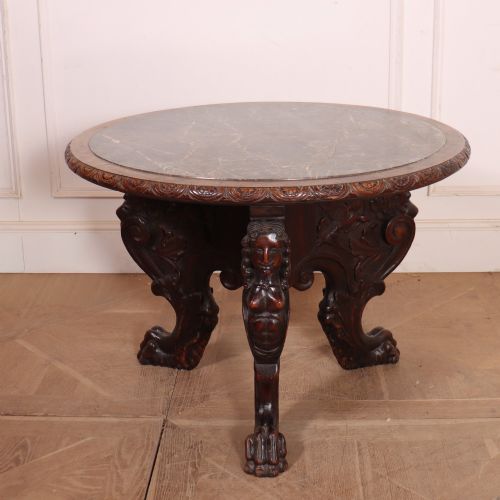
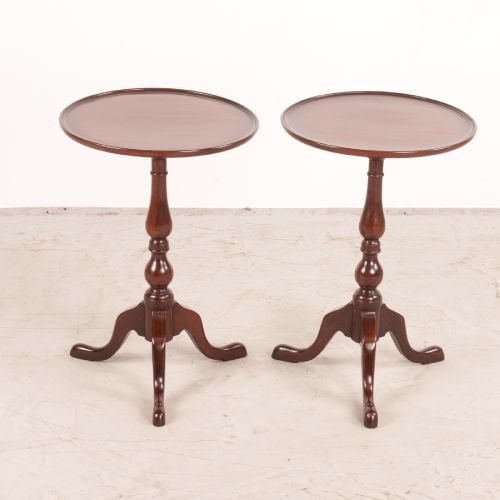
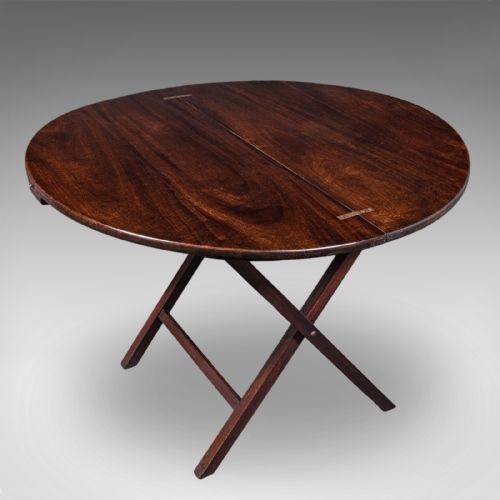
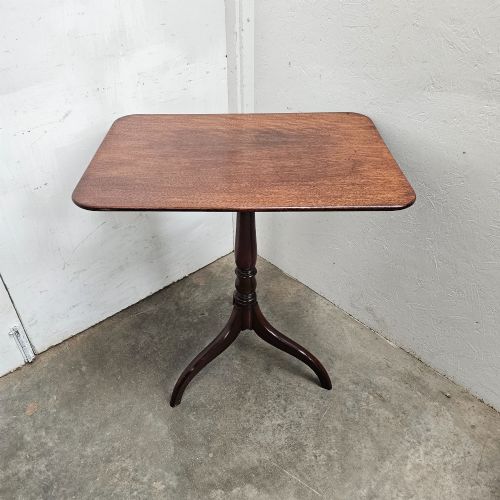
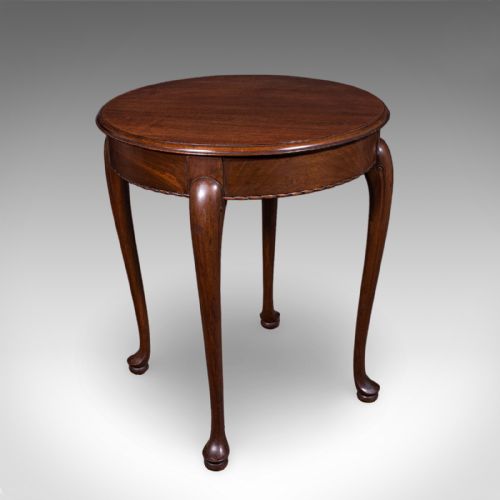
An English mahogany wine table appears predominantly in circular tripod formats dating from the eighteenth and nineteenth centuries, alongside later Edwardian iterations.
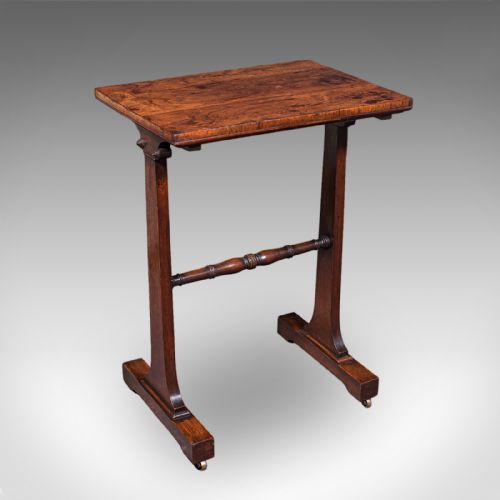
Makers designed these small-scale pieces for domestic reception rooms and parlours, where they functioned flexibly as occasional, lamp, or kettle stands.
Surviving examples frequently feature pedestal supports and tilt-top mechanisms, reflecting the practical space-saving needs of period interiors.
Materials and construction
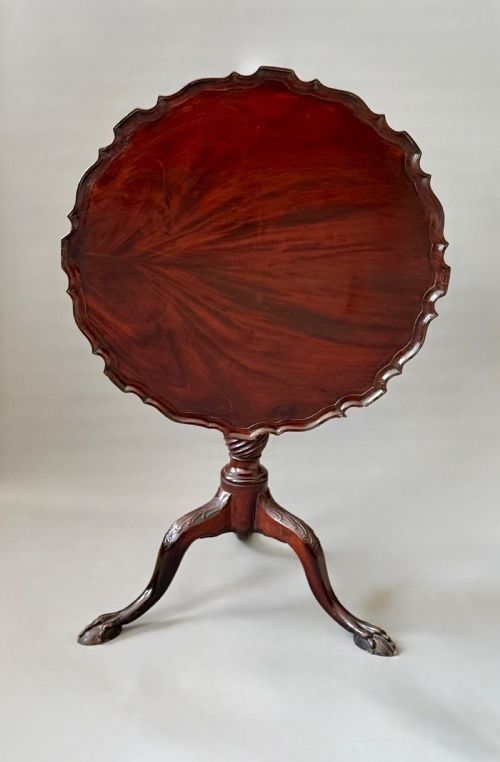
Cabinet makers utilised dense timber stocks, often selecting figured flame mahogany for circular table tops to highlight natural grain patterns.
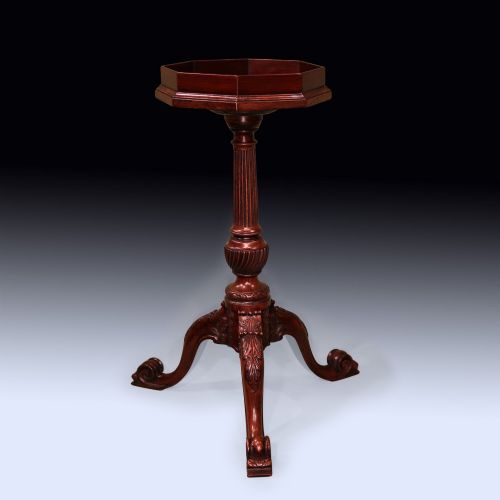
Tripod bases utilise three spreading legs joined to a central turned pillar, occasionally incorporating birdcage mounts or tilt-top hinges for movement.
The documented pieces span the eighteenth, nineteenth, and early twentieth centuries, constructed primarily from mahogany alongside accents of brass, marble, and satinwood.
Assessment of quality
Superior examples demonstrate refined carving on the pedestal knees and claw feet, alongside careful timber selection for the top surface.
The precision of the tilt mechanism and stability of the central column assembly distinguish standard production from master workshop output.
Waring & Gillow·Gillows of Lancaster
The English Mahogany Wine Table Glossary
- Tripod table
- A small freestanding table supported by a central pillar resting on three legs. This configuration prevents wobbling on uneven floorboards.
- Tilt-top
- A hinged table top that folds flat into a vertical position when not in use. This mechanism allowed servants to store multiple tables against the wall.
- Pie crust
- A carved, raised edge shaped with alternating curves and scrolls resembling pastry work. This decorative border stopped glasses from sliding off.
- Birdcage mount
- A rotating wooden framework fitted beneath the table top that enables both turning and tilting motions. It represents a more complex piece of joinery.
- Flame mahogany
- Timber veneer cut from the branch forks of the tree to produce swirling, fiery patterns. Cabinet makers reserved this material for prominent display surfaces.
English Mahogany Wine Table: Frequently Asked Questions
What is a wine table used for?
These small tables were originally positioned beside seating to hold drinking vessels, candles, or small lamps during evening gatherings.
Today, they serve equally well as compact lamp stands or decorative occasional surfaces in reception rooms.
How do I identify a tilt-top mechanism?
A tilt-top design incorporates a hinged block beneath the circular surface that allows the entire top to pivot ninety degrees into a vertical plane.
This historical feature enabled owners to tuck the furniture away neatly against a wall when clearing the floor space.
Are these tables sturdy enough for daily use?
Tripod bases provide surprising stability on level floors, though the central column joint requires gentle handling during movement.
Placing moderate weights such as table lamps or small planters poses no structural risk to solid timber examples.
How can I distinguish Georgian from Victorian pieces?
Georgian iterations typically display restrained lines, slender proportions, and fine cabinet work associated with Chippendale or Sheraton influences.
Victorian examples often introduce heavier turnings, bolder pedestal profiles, and occasionally decorative elements like barley twist stems.