
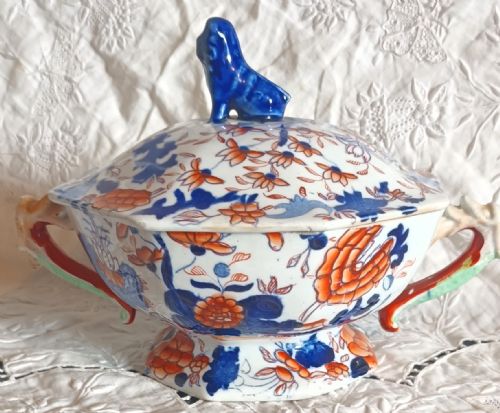
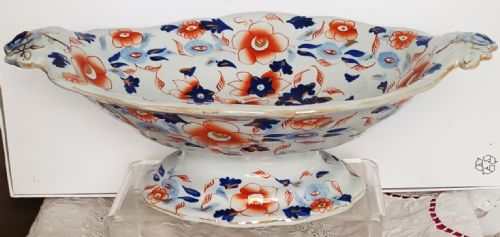


English Ironstone Dishes
English ironstone dishes are durable ceramic serveware from the nineteenth century that bring colourful patterns and robust utility to the table.
English Ironstone Dishes
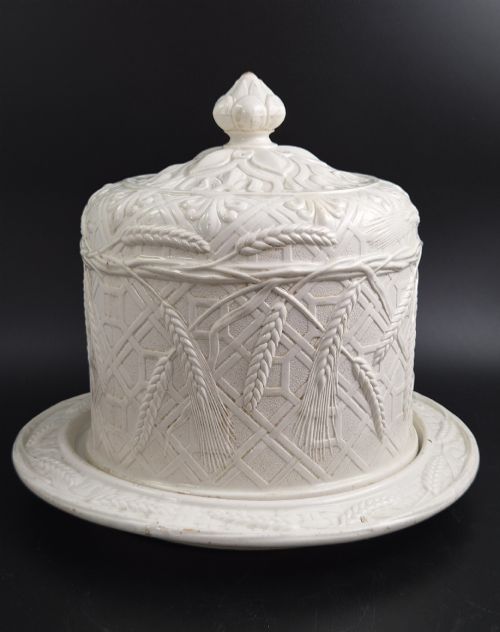
English ironstone dishes include decorative plates, tureens, serving dishes, platters, cheese domes, and comports from the nineteenth century, spanning Georgian, Victorian, and Regency periods. Buyers typically encounter nineteenth-century pieces decorated with transfer prints or hand-painted motifs.
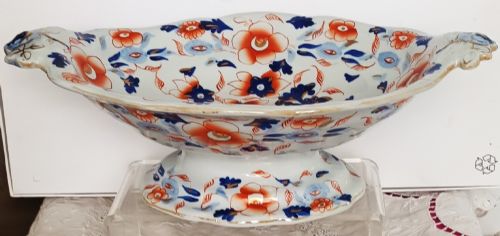
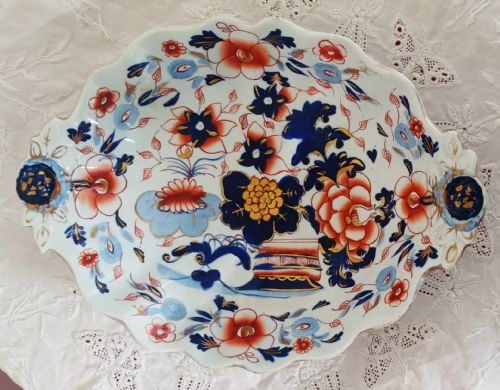
The forms range from large meat platters and footed cheese dishes to small pickle dishes and sauce tureens with ladles. Makers produced these heavy ceramics for both practical dining and display, utilising styles such as Chinoiserie, Imari, and Japan patterns.
Materials and Techniques
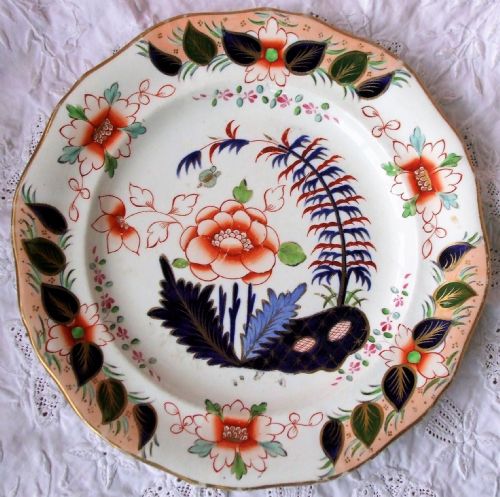
These pieces utilise ironstone ceramic and earthenware bodies coated in glaze, providing a hard-wearing surface designed for regular service. Artisans applied blue and white transfer prints or hand-painted polychrome designs, sometimes incorporating gold leaf and gilt highlights.
Production techniques involved moulding or pressing the heavy clay bodies into specific serving forms, followed by kiln firing and glazing. Many items combined transfer printing for the foundational design with hand-applied enamel colours.
Among the creatures gracing these nineteenth-century ceramics are an Indian grasshopper and a green mandarin.
Quality and Execution
The refinement of the hand-painted enamels and the crispness of transfer printing separate standard wares from superior examples. Skilled brushwork in patterns like Green Mandarin or Japanese motifs elevates a piece significantly.
Completeness of sets, such as matching covers, stands, and ladles for tureens and cheese domes, dictates the desirability of surviving items. The complexity of moulded shapes, including chestnut baskets and footed comports, also marks the upper tier of production.
John Davenport of Longport·John Ridgway·C.J. Mason·Mason·Minton·Copeland
The English Ironstone Dishes Glossary
- Comport
- A pedestal bowl or dish used for serving fruit or sweetmeats at the table. These raised vessels sit on a central foot.
- Cheese Dome
- A large cover and stand designed to protect and present cheese. They often feature elaborate moulded details like wheat and lattice patterns.
- Ashet
- A large serving platter or meat dish used for joint presentation. The term derives from the French assiette.
- Imari
- A decorative style inspired by Japanese export wares featuring iron red, underglaze blue, and gilt. It appears frequently on nineteenth-century ironstone plates and comports.
- Chinoiserie
- European interpretations of Chinese and East Asian artistic motifs. This style populates many nineteenth-century service pieces.
English Ironstone Dishes: Frequently Asked Questions
What are english ironstone dishes?
English ironstone dishes are heavy ceramic tableware items produced primarily during the nineteenth century in various serving forms.
They combine durability with decorative patterns ranging from transfer-printed blue and white to hand-painted polychrome designs.
How do I date english ironstone dishes?
Dating relies on maker marks, stylistic periods such as Georgian and Victorian, and the specific decorative patterns recorded on the ceramic bodies.
Changes in glaze formulation and backstamps help assign pieces to specific decades within the nineteenth century.
How were tureens and platters used?
Tureens held sauces, vegetables, or soups at the dining table, often accompanied by matching ladles and covers to retain heat.
Large meat platters served jointed poultry and roasts during substantial nineteenth-century meals.
Can I use these dishes daily?
While ironstone was built for robust service, these nineteenth-century pieces now function mostly as decorative serveware or collection centerpieces.
Hand washing preserves the delicate gilt, enamel colours, and glaze integrity over time.