

English Hand Painted China
English hand painted china brings together centuries of delicate brushwork, botanical studies, and gilded porcelain from historic kilns.
English Hand Painted China
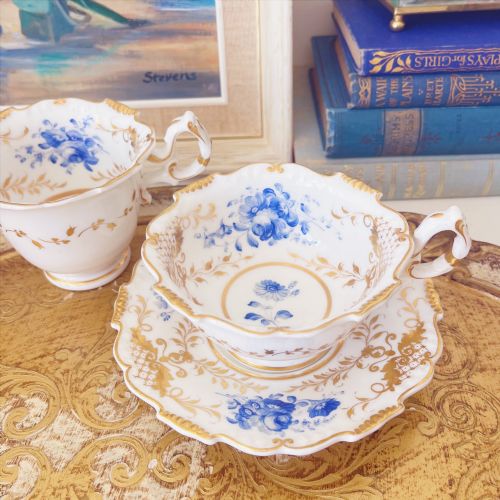
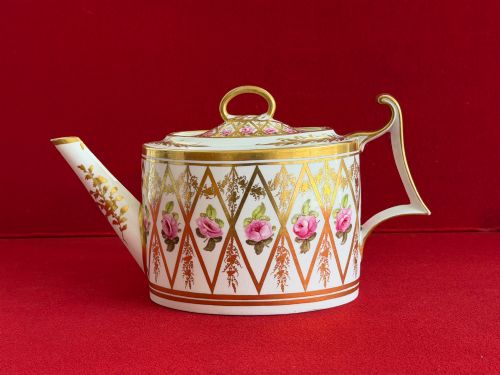
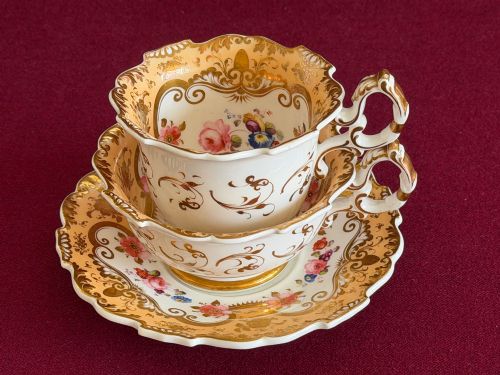
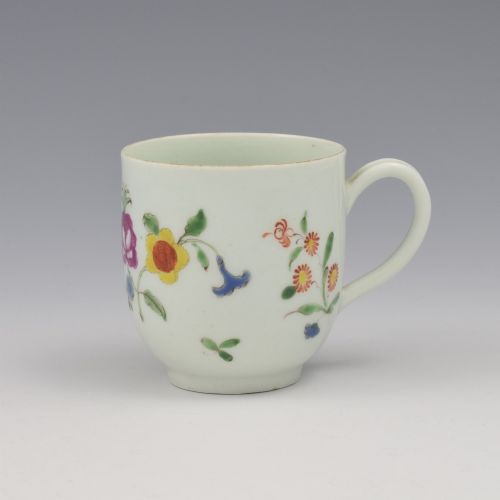
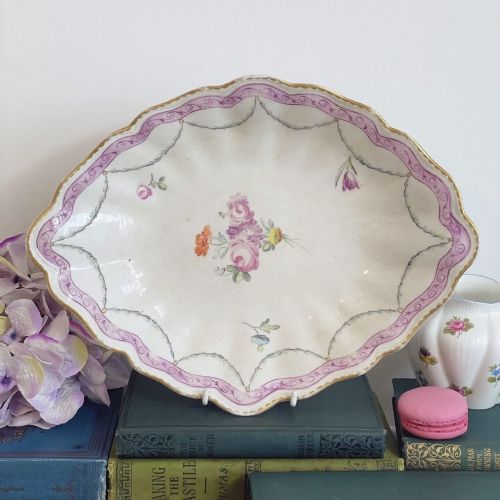
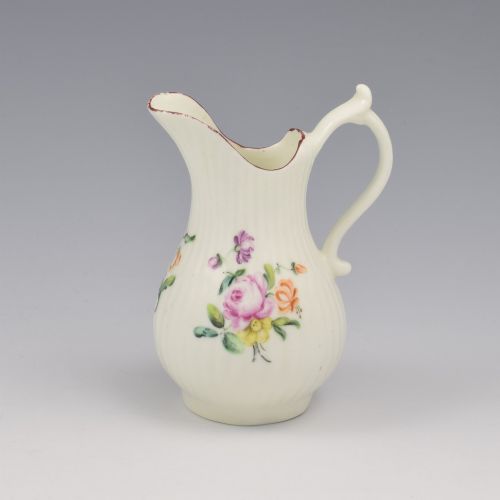
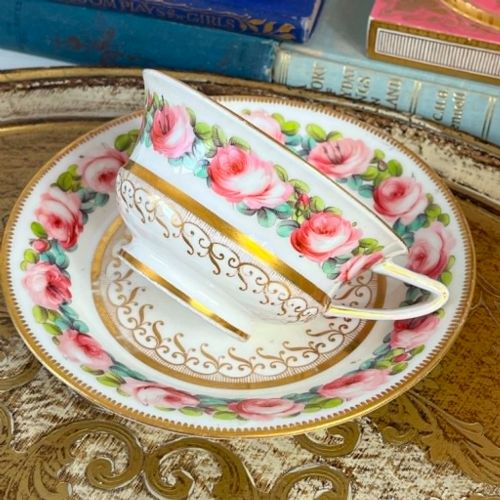
English hand painted china encompasses decorative plates, tea services, and cabinet pieces created across the eighteenth, nineteenth, and twentieth centuries. Buyers seeking these items encounter everything from early soft-paste porcelain tea cups to later bone china dessert services.
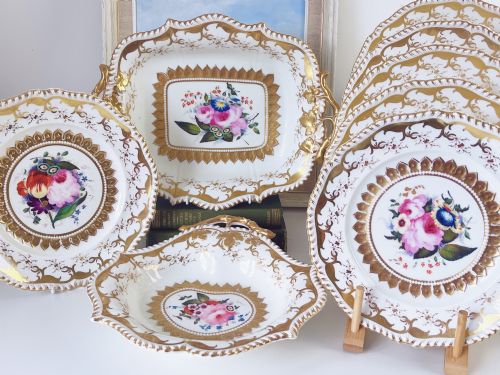
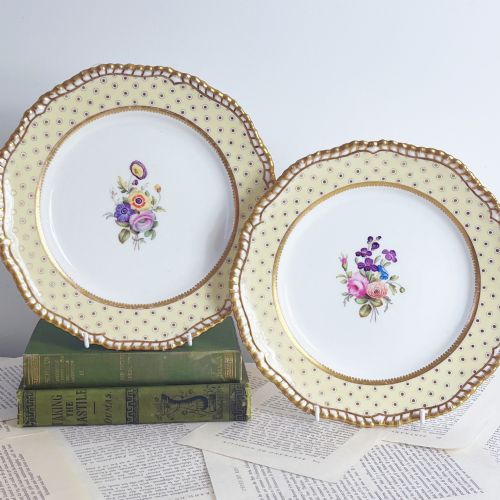
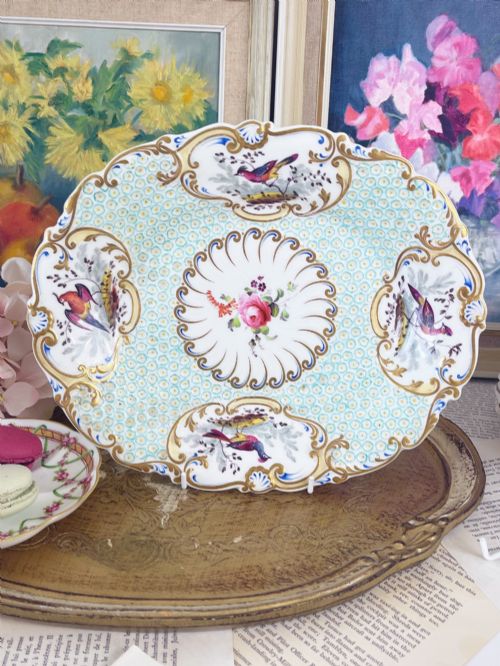
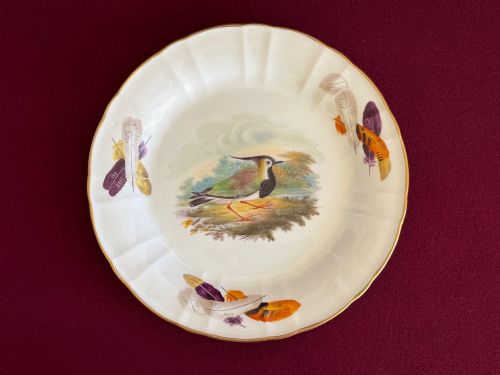
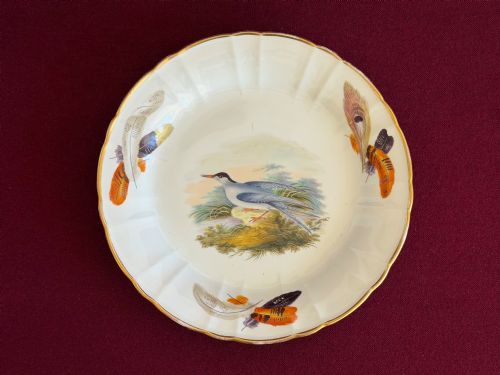
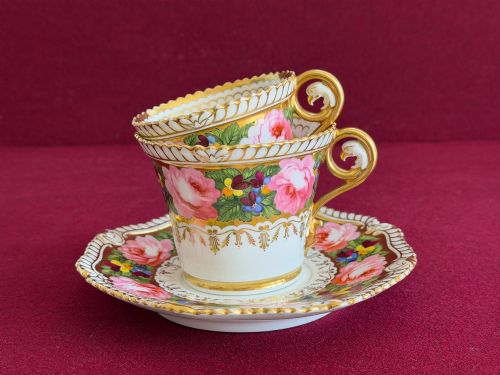
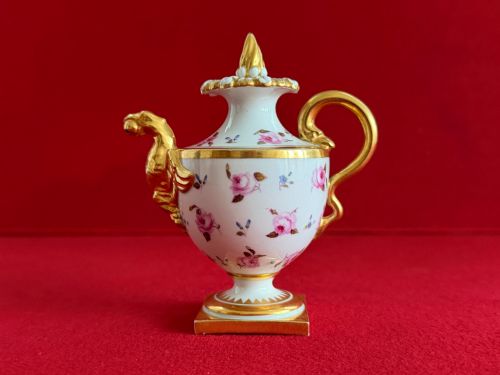
The pieces on this page heavily represent the Regency and Georgian periods alongside later twentieth-century decorative porcelain. Cabinet plates and teacups bearing floral motifs or avian studies dominate the forms available for collectors.
Traditional English workshops utilised skilled painters to apply polychrome enamels directly onto fired ceramic bodies. These items served both functional dining purposes and decorative displays in period interiors.
Materials and technique
Potters shaped these wares from soft-paste porcelain, bone china, and glazed porcelain, firing the ceramic bodies before applying detailed enamel pigments by hand. Gilding and gold leaf accents were frequently added as finishing touches to highlight moulded borders and rims.
Makers employed specialised brushwork for botanical and ornithological subjects, requiring precise control over coloured enamels. Subsequent low-temperature firings fixed the hand-painted designs securely into the glassy glaze surface.
Early porcelain painters frequently hid tiny painted insects inside teacups to surprise unsuspecting tea drinkers.
Quality and execution
The calibre of English hand painted china depends heavily on the fineness of the brushwork and the complexity of the painted subject. Master painters working for prominent factories achieved remarkable detail in feather patterns, floral gradients, and landscape scenes.
The purity of the porcelain body and the crispness of the gilt work also divide standard domestic wares from exceptional cabinet pieces. Well-preserved gilding and vibrant, stable enamel colours elevate the standing of any historical ceramic.
Grainger Lee And Co·Spode·H And R Daniel·Royal Doulton·Derby Porcelain·Wedgwood·Chamberlain Worcester·Flight Barr And Barr·Richard Chaffers·Chelsea·Newhall·Coalport John Rose·Dr Wall Worcester·Royal Worcester·Royal Crown Derby
The English Hand Painted China Glossary
- Bone china
- A type of porcelain incorporating bone ash, resulting in a strong, brilliant white body utilised extensively by English potteries.
- Soft-paste porcelain
- An early ceramic composition fired at lower temperatures than hard-paste, producing a warm glaze and a distinctive translucent body.
- Gilding
- The application of gold leaf or powdered gold to ceramic surfaces, typically accentuating handles, rims, and moulded borders.
- Cabinet plate
- A decorative ceramic plate intended primarily for display in a cabinet or on a wall rather than for functional dining use.
- Polychrome
- Decoration utilising multiple distinct colours painted onto the ceramic surface before a final fixing fire.
English Hand Painted China: Frequently Asked Questions
How do I identify eighteenth-century English porcelain?
Eighteenth-century pieces typically feature soft-paste bodies with subtle glaze pooling and hand-painted underglaze blue or polychrome enamel decoration. Many early works lack factory stamps, relying instead on characteristic potting flaws and painted decorator marks.
Examining the base and foot rim reveals the unglazed ceramic texture distinctive of early firing methods used before standard bone china compositions dominated the market.
Were cabinet plates used for dining?
Cabinet plates were primarily manufactured for visual display in drawing rooms rather than for serving food. Their elaborate hand-painted fruit or bird scenes and delicate gilding made them unsuitable for everyday use.
Wealthy households showcased these decorative plates in glass-fronted cabinets to demonstrate taste and refinement to visiting guests.
What is a porcelain trio?
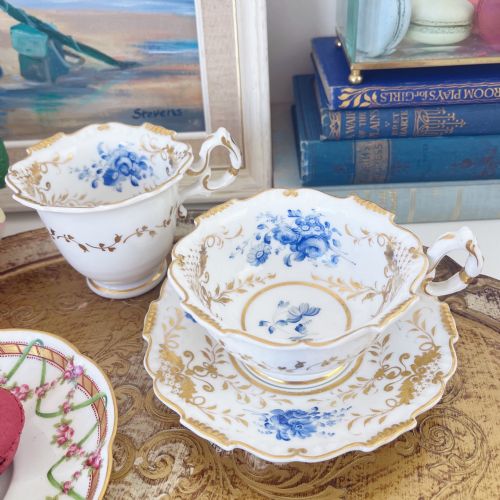
A porcelain trio consists of a matching teacup, saucer, and a matching dessert or tea plate. These sets gained popularity during the Georgian and Regency periods for formal afternoon tea service.
Finding a complete, undamaged trio with matching hand-painted motifs is particularly satisfying for collectors assembling historical table settings.