


Antique Ceramic Compote Dish
An antique ceramic compote dish stands on a pedestal to elevate fruit and sweetmeats on the dining table.
Antique Ceramic Compote Dish
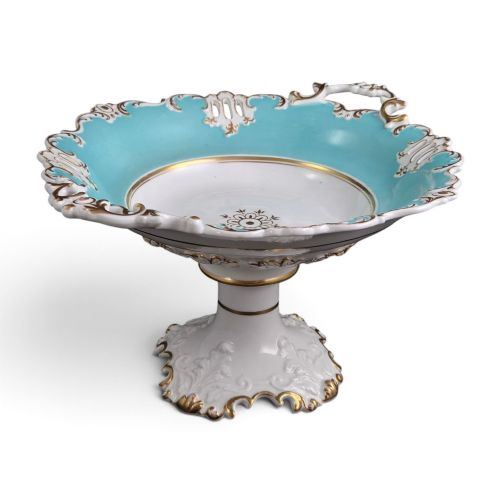
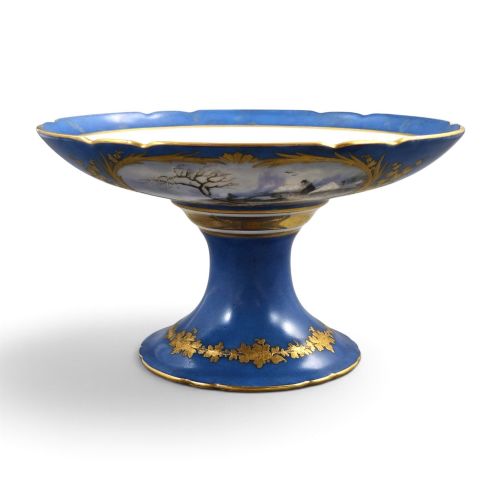
An antique ceramic compote dish takes the form of a pedestal bowl, tazza, or footed centrepiece designed for formal dessert services. The selection spans Georgian, Regency, and Victorian periods, alongside Edwardian and later continental works.
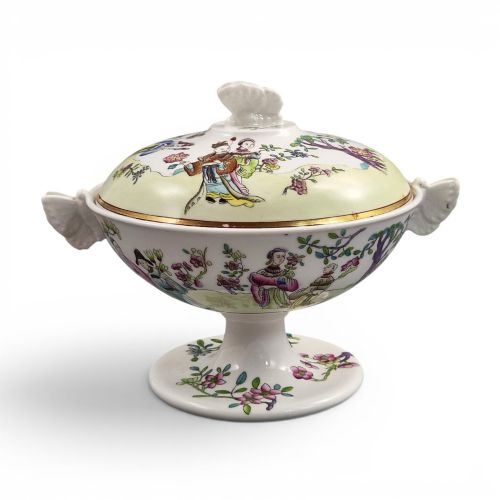
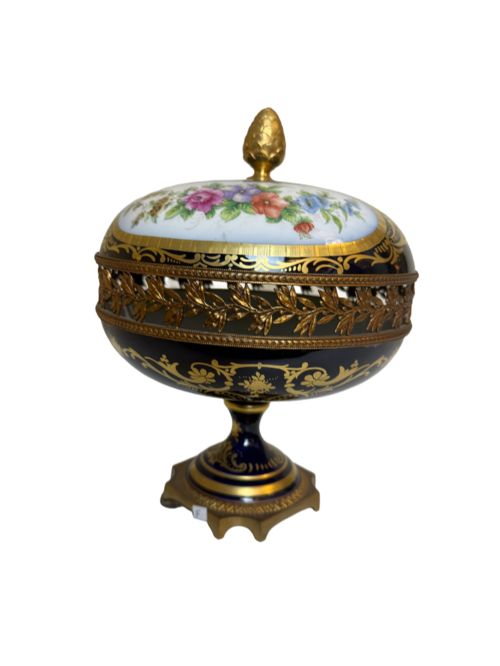
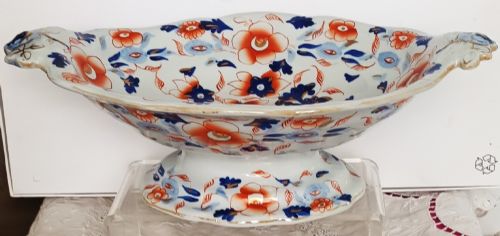
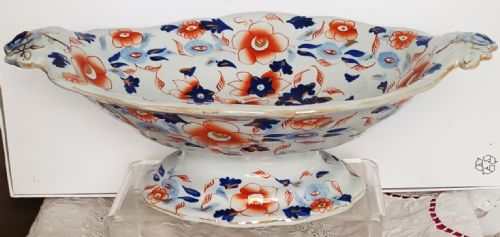
Makers utilised ironstone, porcelain, and earthenware to create raised display vessels. English factories such as Minton, Spode, and Coalport sit alongside continental porcelain from Sèvres, Limoges, and German manufactories like Schierholz.
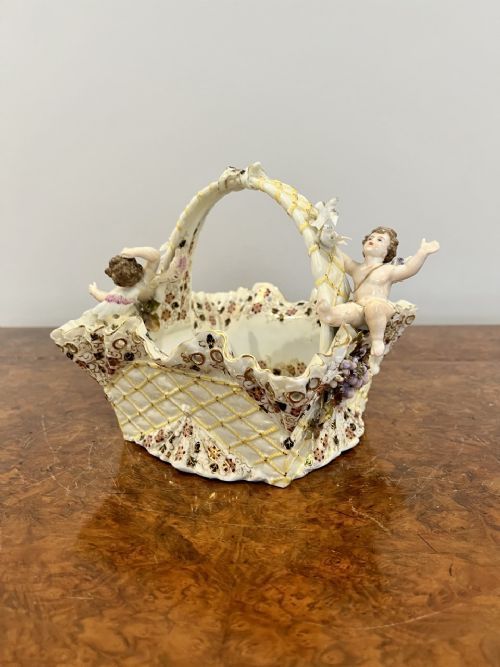
Buyers encounter variations ranging from blue and white transferware and Japan pattern ironstone to elaborately modelled majolica and hand-painted porcelain tazzas featuring cherubs and botanical studies.
Materials and Techniques
Potters shaped durable ironstone and refined bone china or porcelain, often mounting the bowls on substantial pedestal feet. Moulded bodies frequently incorporated applied elements such as cherubs, putti, handles, and botanical motifs.
Decoration relied on hand-painted enamels, cobalt blue underglaze, and rich gilt accents or gold leaf. Majolica pieces employed coloured lead glazes over moulded earthenware to achieve vibrant botanical textures like begonia leaves.
Transfer printing provided intricate blue and white patterns on pearlware and ironstone, while finer porcelain examples received meticulous hand-painted floral or Chinoiserie scenes by specialist decorators.
Several compotes feature mischievous putti and cherubs clinging perilously to the stems, seemingly tasked with holding up the fruit.
Judging Quality
Quality rests upon the crispness of the modelling in applied figures and the precision of the hand-painted details. Finer pieces display delicate brushwork in floral studies and figures rather than purely mechanical transfer printing.
The sophistication of the glaze and gilding distinguishes exceptional examples from standard production wares. Intricate three-dimensional additions, such as modelled putti or complex pierced handles, require superior skill from the potter and modeller.
Coalport·Spode·Limoges·John Ridgway·Schierholz·Minton·Swansea·Thomas Moorcroft·Royal Worcester·Eichwald·Moorcroft
The Antique Ceramic Compote Dish Glossary
- Tazza
- A shallow bowl or plate mounted on a pedestal foot, used for serving fruit or small cakes. The form derives from Renaissance silver shapes.
- Comport
- An alternative term for a footed dish or compote used within a dessert service. They often stood as part of a matched set along the centre of the table.
- Ironstone
- A heavy, durable type of earthenware patented by Charles Mason, designed to resist chipping while mimicking oriental porcelain. It accepted bright enamels and transfer prints with great stability.
- Majolica
- A Victorian earthenware type characterised by colourful, opaque lead glazes applied over moulded relief decoration. It frequently depicted naturalistic plant and animal forms.
- Pearlware
- A refined earthenware developed by Josiah Wedgwood in the late eighteenth century, featuring a pale bluish glaze that pooled in recesses to resemble Chinese export porcelain.
Antique Ceramic Compote Dish: Frequently Asked Questions
What is an antique ceramic compote dish used for?
These elevated vessels served fruit, nuts, and sweetmeats during the dessert course of formal dining. Placed centrally on the table, they added height and visual interest to the table setting.
Today, they function well as decorative centrepieces on sideboards or dining tables, continuing their original role of holding seasonal fruit or flowers.
How do I date an antique compote?
Dating relies upon examining the ceramic body, glaze characteristics, and any factory marks stamped or painted underneath. Transfer-printed blue and white pieces often point towards the Georgian and Regency eras, while majolica and elaborate gilt porcelain typically indicate Victorian manufacture.
Stylistic cues such as Rococo Revival scrolls or Art Nouveau contours provide further chronological markers when factory marks are absent.
Are compotes and tazzas the same thing?
The terms are often used interchangeably to describe footed display dishes, though a tazza traditionally refers to a flatter, saucer-like vessel on a central stem. Compotes can feature deeper bowls suited for loose fruit.
Both forms served identical functions within a nineteenth-century dessert service and share similar manufacturing techniques.