
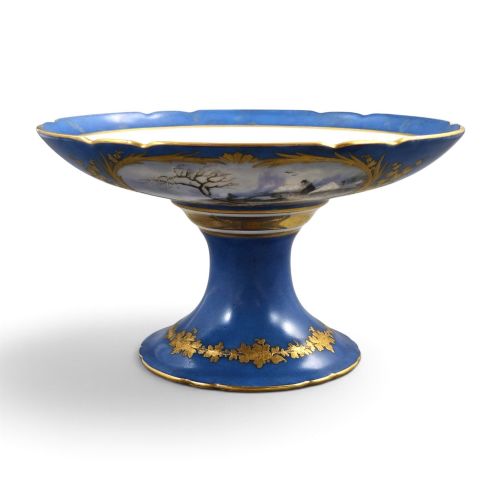
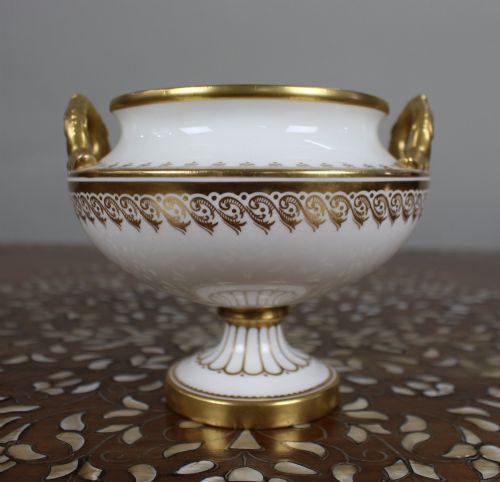


Gilded Ceramic Footed Bowl
These gilded ceramic footed bowl examples bring together raised pedestal forms and precious metal highlights to anchor a dining table or console.
Gilded Ceramic Footed Bowl
A gilded ceramic footed bowl combines a ceramic or porcelain body with raised pedestal supports and metal leaf or gilt decoration. When searching for a gilded ceramic footed bowl, collectors encounter forms ranging from fruit bowls and comports to tazzas and centrepiece vessels.
The pieces recorded on this page span the 18th century, Georgian and Victorian eras, Edwardian designs, and 1940 items, drawing on French, English, and Japanese origins. Forms include tripod vessels, two-handled urns, and lattice baskets created for decorative display.
English factories, French workshops, and Japanese kilns all contributed to this tradition, utilising bone china, ironstone, and hard-paste porcelain. Buyers select these elevated vessels to display fruit, flowers, or stand alone as architectural table centrepieces.
How they were made
Potters shaped these vessels using traditional throwing and moulding techniques in porcelain, ironstone, and bone china before applying intricate glaze layers. Lustre glazes, enamel pigments, and underglaze painting created complex surface patterns across the body.
Craftsmen applied gold leaf and liquid gilding by hand to rims, handles, and pedestal bases, often firing the pieces multiple times to bond the metal to the ceramic surface. Japanese Arita pieces and European works alike relied on precise kiln temperature control to achieve both vibrant enamel colours and stable metallic finishes.
Object forms on this page include comports, centrepiece bowls, tripod vessels, and two-handled urns.
What varies in quality
The crispness of the modelled pedestal and the fineness of the ceramic body distinguish standard production from exceptional studio outputs. Hand-painted enamels show varying levels of brush control and detail, particularly in complex figural or landscape scenes.
The preservation and purity of the gold leaf or gilding across high-wear areas like rims and handles dictate the visual weight of the piece. Superior examples maintain intact metallic lustre without excessive rubbing or dulling from past cleaning.
Sèvres Porcelain·Daisy Makeig-Jones Wedgwood·Mason’s Ironstone China·Royal Worcester Hadley·Royal Worcester Kitty Blake·Samson Porcelain
The Gilded Ceramic Footed Bowl Glossary
- Comport
- A pedestal bowl used for serving fruit or sweets at table. These elevated dishes often feature decorative pierced or lattice rims.
- Tazza
- A shallow saucer or bowl mounted on a stem and foot. This ancient Italian form was widely revived during the 19th century for display.
- Lustre Glaze
- A ceramic finish containing metallic oxides that produce an iridescent sheen when fired in a reduced oxygen atmosphere. Wedgwood utilised this technique extensively on decorative bowls.
- Ironstone
- A heavy, durable type of earthenware patented in the 19th century. It provided a robust alternative to porcelain for utilitarian and decorative tablewares.
- Tripod Bowl
- A vessel supported by three distinct feet. Japanese Imari examples often employ this configuration.
Gilded Ceramic Footed Bowl: Frequently Asked Questions
How do I display a footed bowl?
These elevated vessels sit well on dining tables, sideboards, or open shelves where their pedestal profile remains visible. They function effectively on their own as architectural objects or filled with seasonal fruit and dried botanicals.
Position the bowl away from direct, high-traffic edges to protect delicate handles and protruding tripod feet. Lighting from above will catch the gilt highlights and lustre glazes across the ceramic surface.
Are these bowls safe for food use?
Most antique pieces function primarily as decorative objects rather than active tableware. Historic enamel pigments and gold leaf can wear down with regular food contact and acidic ingredients.
Wash these vessels by hand using lukewarm water and mild soap when cleaning becomes necessary. Avoid soaking or placing them in modern dishwashers, which can strip the delicate gilding and lustre glazes.
How do I date a porcelain bowl?
Examine the base for factory marks, impressed ciphers, and painted patterns that correspond to known registry dates or manufacturer ledgers. The weight and composition of the ceramic body, whether ironstone, bone china, or hard-paste porcelain, also offer chronological clues.
Style indicators such as Neoclassical urn forms, Victorian gilt borders, or Art Deco lustre motifs help narrow down the decade of production. Compare the potting technique and glaze characteristics against documented examples from the same kiln.
What is the difference between a comport and a tazza?
A comport generally refers to 19th-century and later pedestal dishes used for fruit or dessert service, often found in sets. They tend to have wider, shallower bowls suited to table presentation.
A tazza describes a classical stemmed flat bowl or saucer shape derived from Renaissance forms. While both share a footed profile, tazzas lean toward architectural display pieces rather than dining service.