
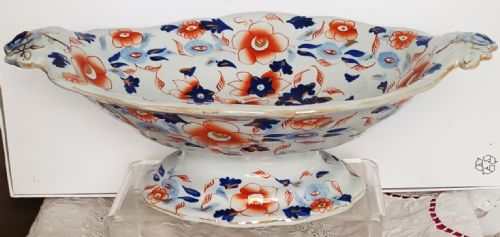


Hand Painted Porcelain Comport
A hand painted porcelain comport brings elevated fruit serving and table display into your home through finely decorated ceramic form.
Hand Painted Porcelain Comport
When you search for a hand painted porcelain comport, you encounter elevated pedestal dishes and centrepieces designed for fruit or sweet service on formal tables. The examples available here span the Georgian, Victorian, and Edwardian eras, incorporating styles from French Rococo Revival to Chinese Export and Chinoiserie.
How they were made
Potters shaped these vessels using porcelain, ironstone, and ceramic before applying hand-painted enamel decoration and delicate gold leaf or gilt bronze mounts. Artisans utilised techniques such as transfer printing combined with freehand painting to render botanical studies, Mandarin scenes, and intricate floral patterns.
Firing took place in kilns to fix the enamel colours and gilding onto the ceramic body, occasionally mounting the porcelain in ormolu or gilt frameworks. The physical weight and resonance of the porcelain or ironstone indicate the specific firing density and clay composition employed by each manufactory.
Orchids painted by hand peered out from nineteenth century tables, enduring long after the real blooms faded.
What varies in quality
The standard of painting on a hand painted porcelain comport sets the finer examples apart, distinguishing skilled botanical or figurative artistry from repetitive workshop decoration. Precision in the application of gold leaf and the crispness of moulded details on the pedestal or handles further mark the upper tier of production.
The distinction between a standard factory piece and a premier maker's output rests in the depth of the enamel palette and the sophistication of the ceramic body. Pieces featuring named artists or specific factory marks carry greater distinction in their execution.
Flight Barr and Barr·Thomas Moorcroft for E.J.D Bodley·Royal Worcester·Kitty Blake·Wedgwood
The Hand Painted Porcelain Comport Glossary
- Comport
- A pedestal dish or stand used for serving fruit or dessert at the table. It elevates the contents above the surface for display.
- Tazza
- A shallow bowl or dish mounted on a stem and foot, functioning similarly to a comport. This form originates from Renaissance metalwork.
- Ironstone
- A type of heavy, durable ceramic patented in the nineteenth century. It bridges the gap between earthenware and fine porcelain.
- Chinoiserie
- European decorative art reflecting Chinese artistic motifs and styles. It appears frequently on English and continental porcelain of the period.
- Ormolu
- Gilded bronze mounts applied to furniture and decorative ceramics. It provides structural support and decorative framing for the porcelain body.
Hand Painted Porcelain Comport: Frequently Asked Questions
What was a comport used for?
These elevated vessels served fruit, sweetmeats, and dessert courses during formal dining in Georgian and Victorian homes.
Placed centrally on the table, they added height and visual interest to the dining arrangement while holding provisions for guests.
Can I use it for serving food?
Many owners continue to use these dishes for serving dry fruits, nuts, or cakes during special occasions.
Take care with older glazes and delicate gold leaf embellishments to prevent wear from cutlery or acidic foods.
How do I date a porcelain comport?
Examine the base for factory stamps, painted marks, and impressed ciphers that correspond to known registry dates.
The style of painting, ceramic body composition, and historical shape also offer clear indications of the period.