



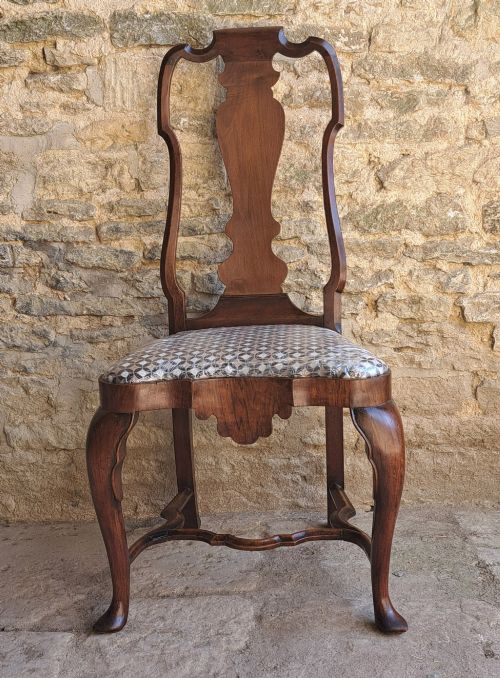
English Georgian Desk Chair
An English georgian desk chair brings solid mahogany, deep leather, and centuries of functional seating into a modern study.
English Georgian Desk Chair
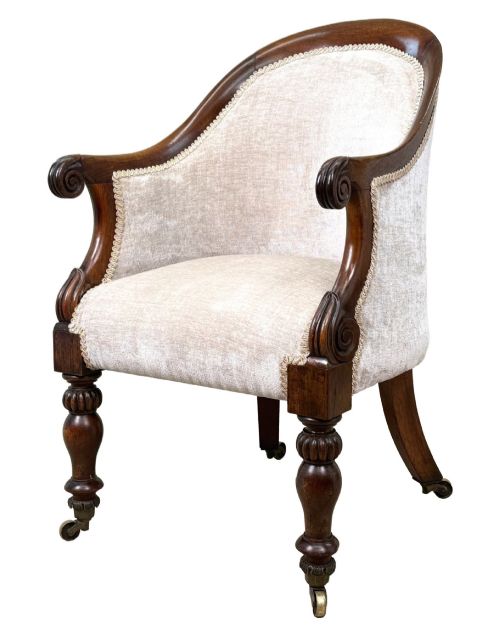
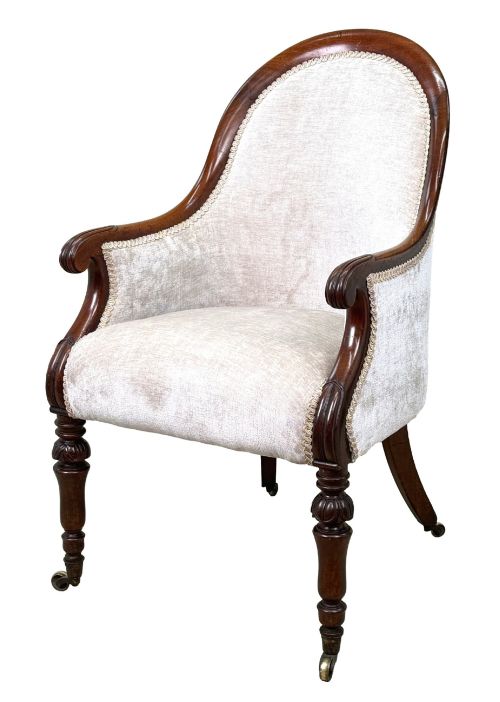
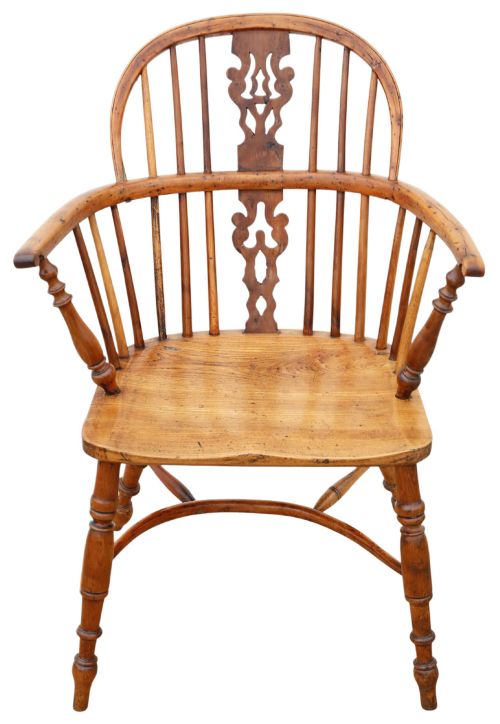
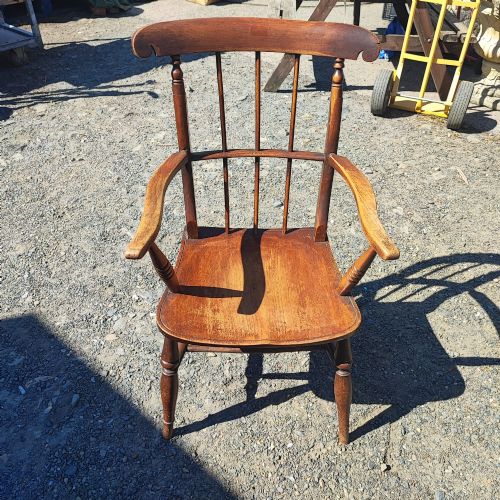
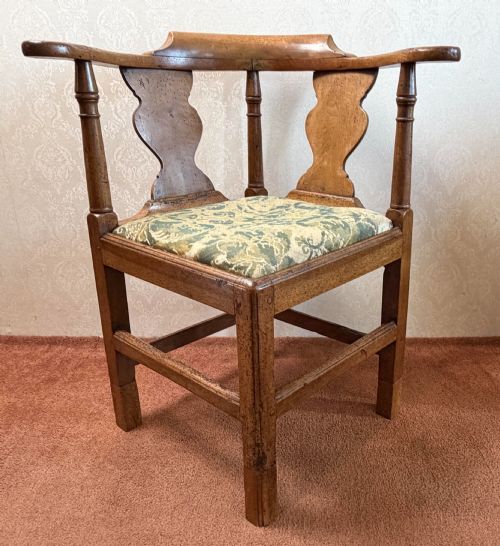
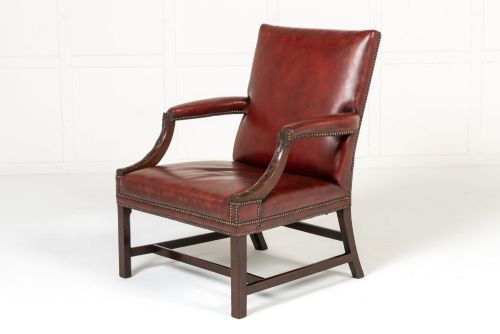
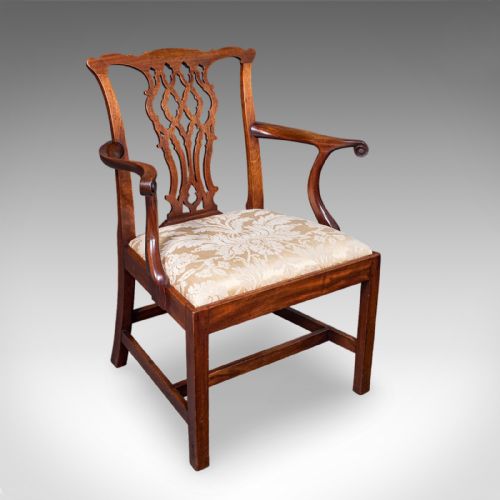
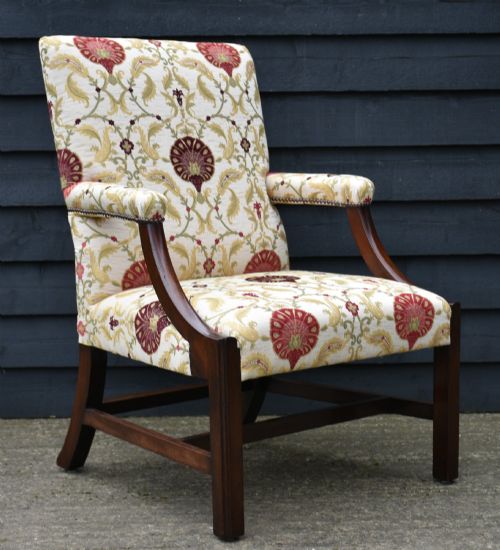
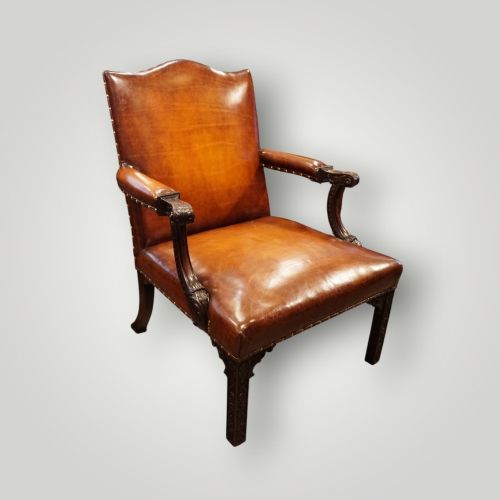
When you search for an english georgian desk chair, you encounter sturdy timber frames designed for administrative work, letter writing, and library use during the eighteenth and nineteenth centuries. The selections span formal mahogany dining carvers adapted for writing tables, upholstered Gainsborough armchairs, and robust vernacular Windsor models.
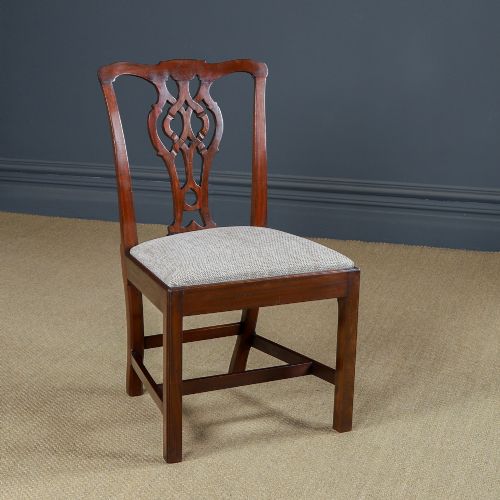
You will frequently meet variations featuring open arms, pierced splat backs, or swivelling mechanisms housed in rich hardwoods. Styles range from straightforward country elm to sophisticated Chippendale and Regency interpretations originating across English workshops.
Materials and Construction
Joinery relies on solid domestic timbers such as mahogany, oak, walnut, yew, and elm, often combined within a single Windsor or country armchair for structural strength. Seat pads utilise hand-dyed hide leather, velour, or woven rush dropped into rebated frames.
Turned spindles, steam-bent hoops, and pegged mortise and tenon joints hold the heavy wooden chassis together through generations of daily use. Brass castors and decorative brass nail-tack work appear on refined library and Gainsborough models.
Listings feature eighteenth-century and nineteenth-century seating constructed from elm, mahogany, yew wood, oak, and ash.
Defining Quality
The standard of timber selection sets individual examples apart, with figured mahogany grains and dense, mature yew wood marking out the superior specimens. Carving execution dictates the visual tier, distinguishing crisp, hand-chiselled acanthus leaves and blind frets from softer mechanical mouldings.
Structural integrity depends upon original timber retention rather than extensive later replacement of legs or arm supports. Surface patina accumulated through continuous dry polishing separates untouched historical seating from over-finished alternatives.
John Brand of Sleaford·Gillows
The English Georgian Desk Chair Glossary
- Carver
- An armchair designed to match a set of dining or office chairs, featuring open arms to accommodate wide garments.
- Splatt
- The central vertical slat of wood within a chair back, frequently pierced or carved in the manner of Chippendale or Hepplewhite.
- Crinoline stretcher
- An arched or curved wooden brace linking the legs of a Windsor chair near the floor, providing lateral stability.
- Gainsborough chair
- A wide, upholstered armchair with open padded arms, low back, and short cabriole or straight legs dating from the mid-eighteenth century.
- Bar back
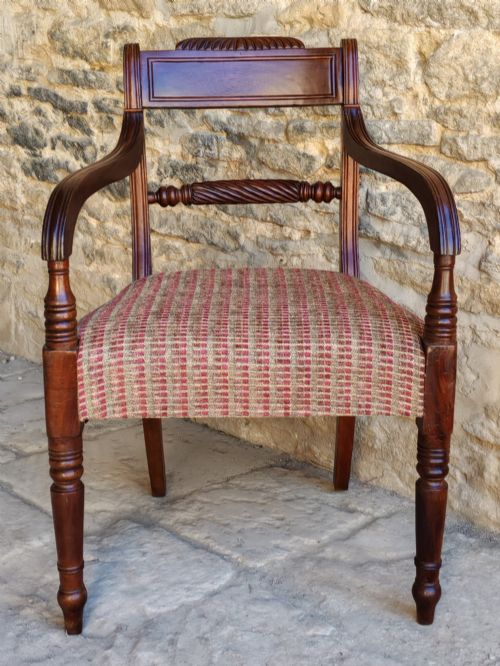
- A horizontal curved top rail spanning the uprights of a chair back, popular during the Regency period.
English Georgian Desk Chair: Frequently Asked Questions
Can I use an antique chair at a modern desk?
These historical seats function well at contemporary writing desks provided the seat height aligns comfortably with your knee clearance. Many examples were built slightly lower than modern office furniture, so checking exact dimensions ensures daily usability.
Adding a slim, matching leather cushion can adjust the seating height without altering the historic wood frame. Regular use helps condition the timber and keeps the antique joints active.
How do I distinguish Chippendale from Regency styles?
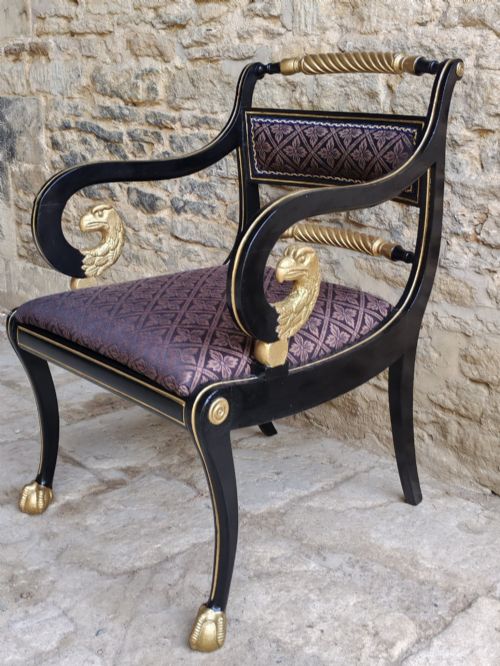
Chippendale pieces, originating in the eighteenth century, feature carved mahogany splats, cabriole legs, and elaborate pierced woodwork reflecting Gothic or Chinese motifs. Regency designs from the early nineteenth century favour ebonised details, brass inlay, and saber legs.
Bar back top rails and scroll arms are typical of the later Regency period rather than the earlier carved chair backs. Comparing the primary timber grain and leg geometry clarifies the specific period of manufacture.
Were these chairs originally made for offices?
Most of these seating forms served multipurpose roles in libraries, morning rooms, and dining spaces before later generations repurposed them for desk work. Formal mahogany armchairs with leather pads were designed for reading and writing in large country houses.
Sturdier elm and ash Windsor models originated in rural farmhouses and country cottages as practical daily work seats. Their robust construction made them natural candidates for long-term administrative duties.
How should I care for leather desk chair pads?
Hand-dyed hide leather benefits from periodic application of specialist nourishing wax to preserve the supple texture and prevent surface cracking. Avoid placing antique seating near direct heat sources or strong sunlight that can dry out old animal skins.
Dusting the wooden frame with a soft dry cloth maintains the historic polish and prevents grit accumulation in carved joints. Gentle maintenance preserves both the leather upholstery and the structural timber.