

English Earthenware Pitcher
An English earthenware pitcher brings functional warmth and transfer-printed or lustred decoration into a room, combining robust utility with enduring craft.
English Earthenware Pitcher
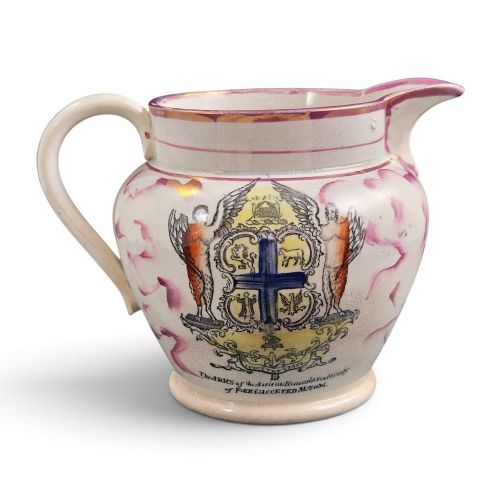
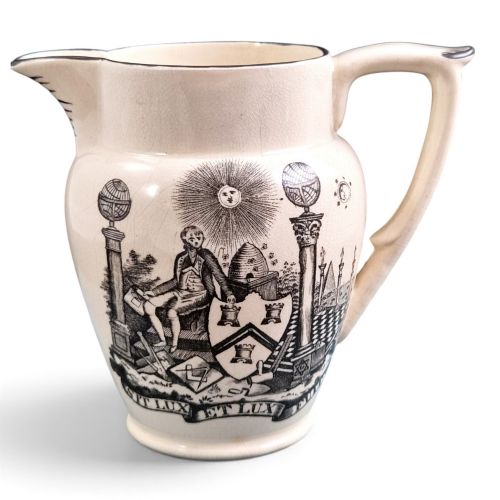
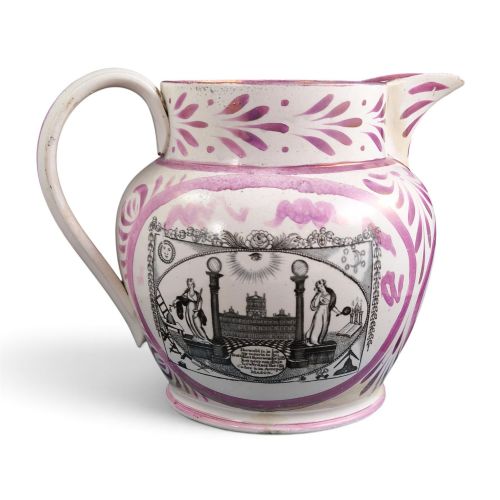
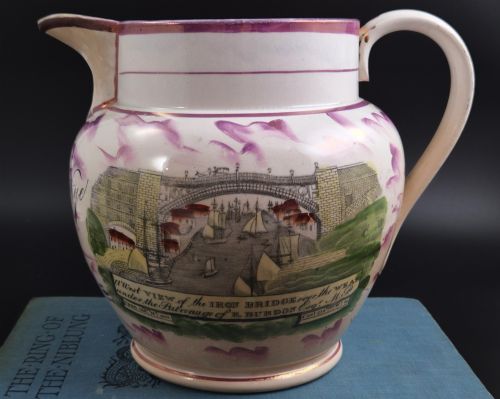
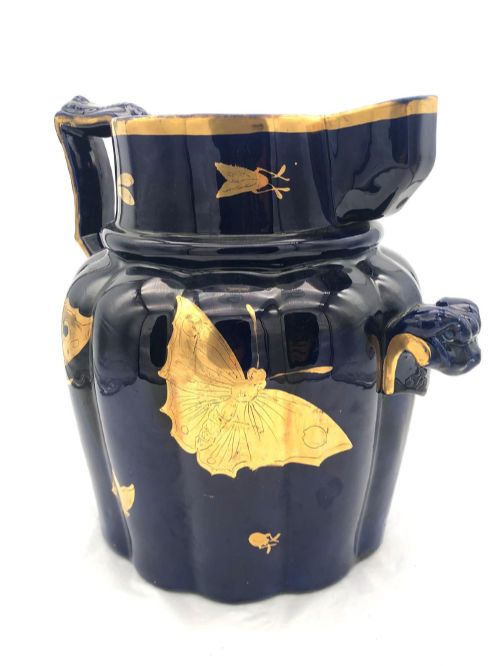
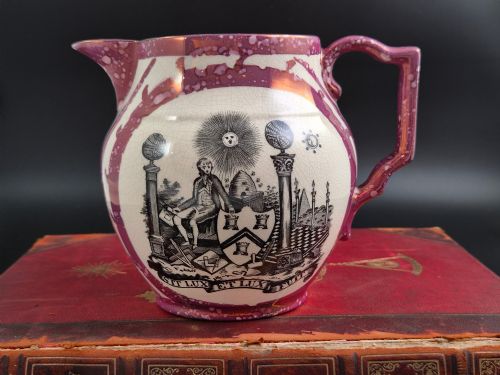
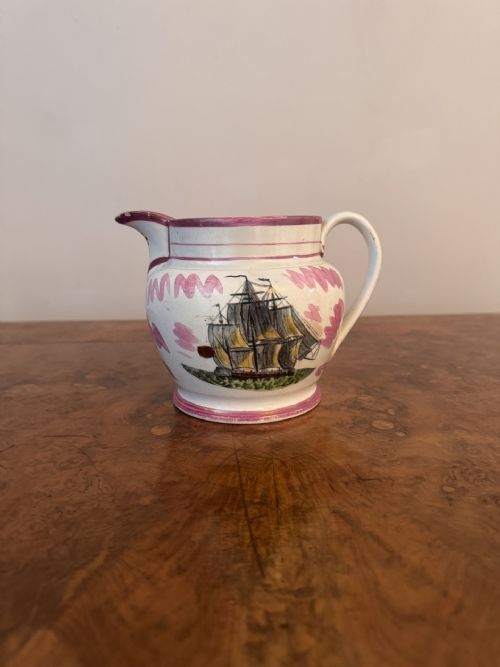
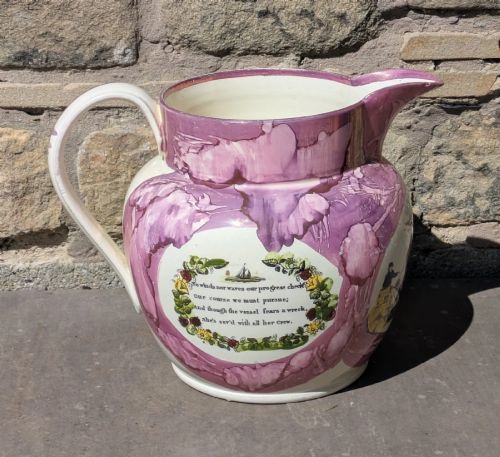
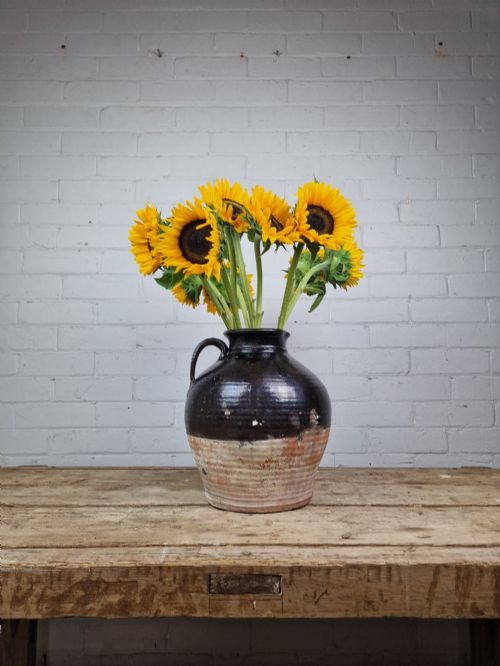
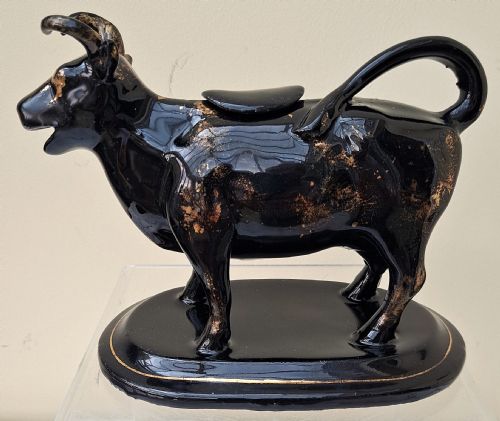
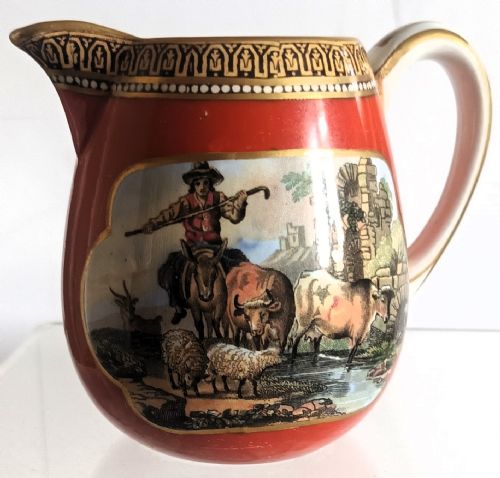
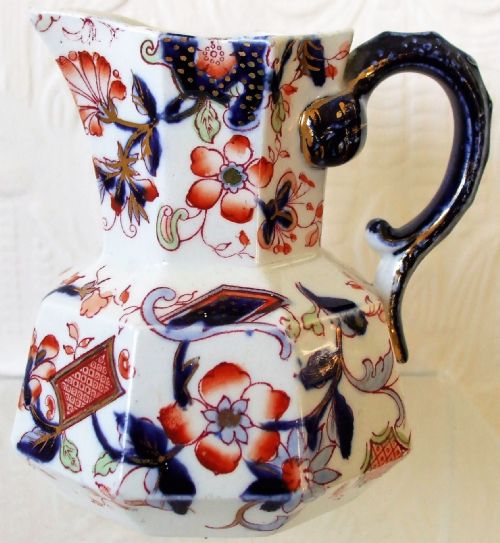
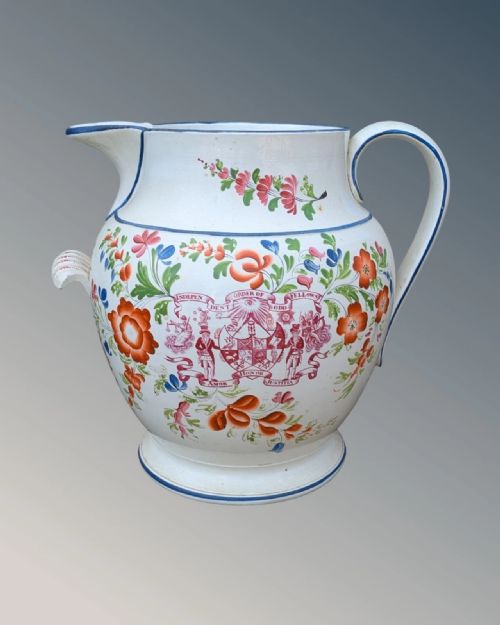
Every English earthenware pitcher on this page represents centuries of ceramic utility, spanning the Georgian, Victorian, and later periods. The selection includes domestic creamware, slipware tavern vessels, and boldly decorated Sunderland pink lustre jugs featuring maritime and masonic subjects.
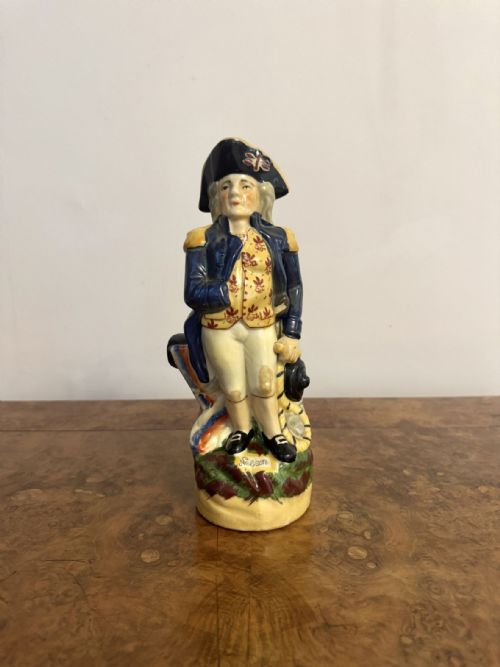
Buyers will encounter various forms ranging from large one-gallon vessels and footbath jugs down to smaller cream jugs and figural toby jugs. These domestic and commemorative items frequently combine moulded earthenware with colourful enamel or metallic glazes.
Materials and methods
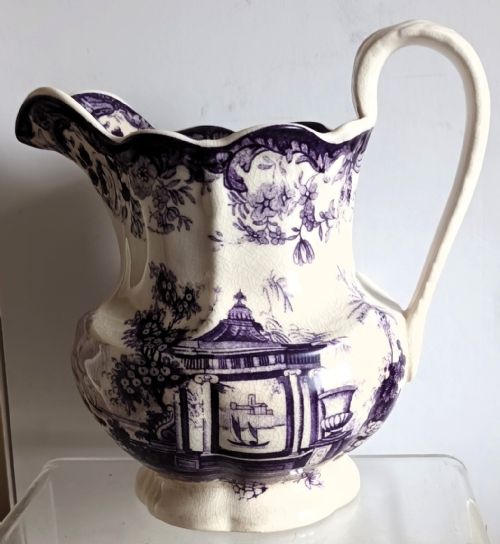
Potters utilised refined earthenware, creamware, and pearlware bodies, shaping them by hand or mould before applying fluid glazes and metallic lustre. Surface decoration often relied on black or coloured transfer printing to render detailed topographical scenes, ships, and mottoes.
Specialised techniques included pink splash lustre and salt glazing, alongside hand-painting with enamels over the glaze. Cobalt blue underglaze transfers and cabbage leaf mouldings further defined the tactile surface of these ceramic containers.
Materials range from salt-glazed stoneware and ironstone to porous earthenware bodies finished with metallic and enamel glazes.
Distinctions in standard
The standard of an English earthenware pitcher rests upon the crispness of the moulded relief and the control shown during transfer printing. Finer examples retain bright, even metallic lustre and rich enamel colours without blurring or running at the edges.
Proportion and decorative ambition also set pieces apart, from simple utilitarian tavern jugs to large exhibition pieces with intricate handle modelling and commemorative inscriptions.
Keeling And Co·Doulton Lambeth·Leeds Pottery·Phillips And Bagster
The English Earthenware Pitcher Glossary
- Creamware
- A fine earthenware with a pale yellowish-cream glaze, developed in Yorkshire and Staffordshire during the eighteenth century.
- Lustre glaze
- A metallic film applied to pottery to create an iridescent, reflective surface sheen.
- Transfer printing
- A method of applying engraved designs to ceramics using paper or tissue pulled from a copper plate.
- Slipware
- Pottery decorated with liquid clay applied to a contrasting clay body before firing.
- Pearlware
- A refined earthenware with a bluish-white glaze designed to imitate Chinese porcelain.
English Earthenware Pitcher: Frequently Asked Questions
What is an English earthenware pitcher?
An English earthenware pitcher is a ceramic pouring vessel made from porous clay bodies, often finished with lead, tin, or salt glazes and decorated with transfer prints or lustre.
These pieces served various daily functions, from serving ale and milk to commemorating historic events and maritime themes.
How do I date an antique pitcher?
Dating relies on stylistic markers, such as the pale body of eighteenth-century creamware versus the vibrant pink splash lustre typical of the nineteenth century.
Potters often included named inscriptions, dates, or specific transfer subjects that tie pieces to exact historical reigns and events.
Were these pitchers used daily?
Many larger jugs and tavern pitchers saw heavy service in domestic households and public houses for pouring liquids.
Others, particularly Masonic and commemorative Sunderland pieces, functioned as display items or presentation pieces rather than utilitarian tableware.
How should I display pottery pitchers?
These ceramic vessels suit stable open shelving or enclosed dressers where their transfer-printed scenes and lustre finishes catch the light.
Keep them away from direct heat sources and handle them carefully by the base and handle to protect fragile earthenware bodies.