




English Drop Dial Clock
An English drop dial clock offers a reliable timekeeper designed to mount cleanly on a wall while bringing traditional character to a room.
English Drop Dial Clock
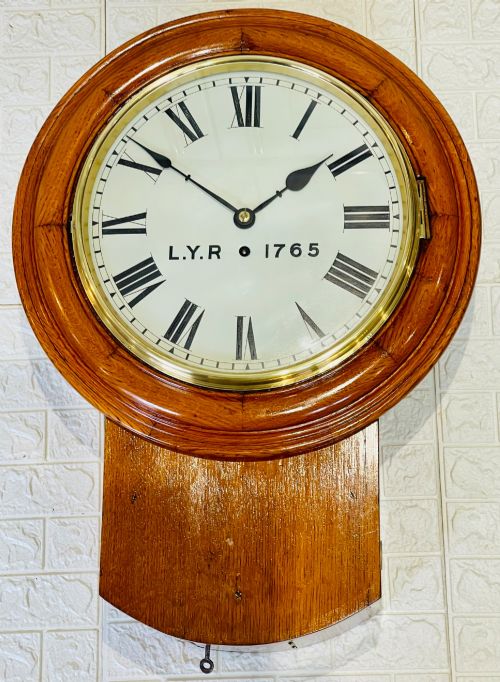
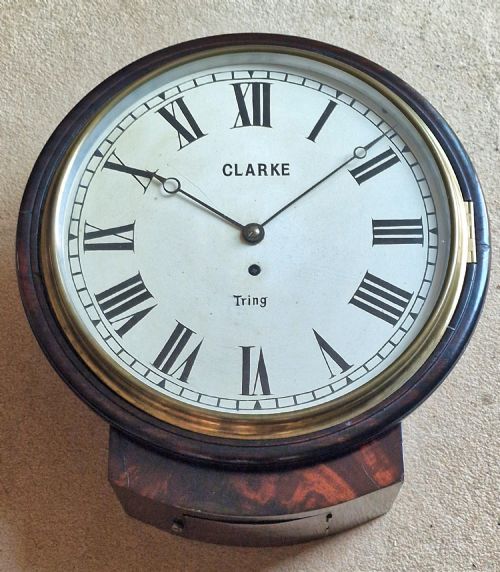
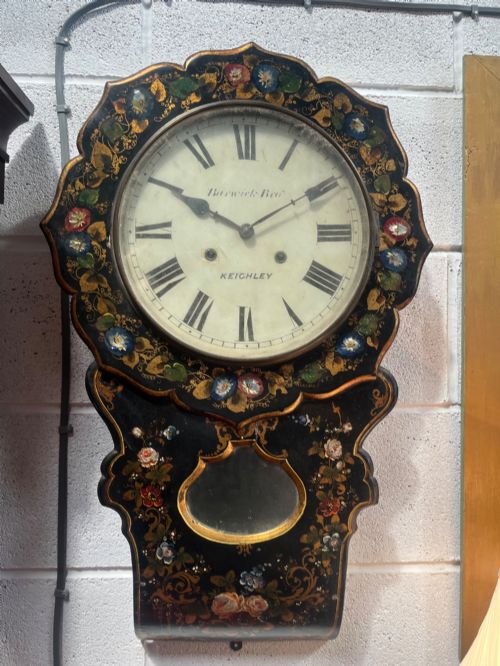
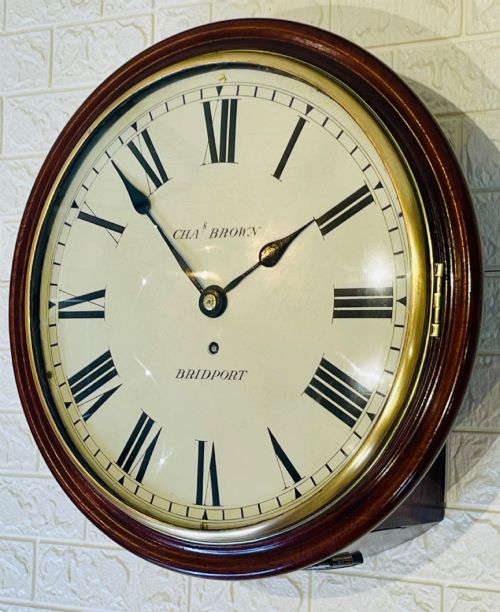
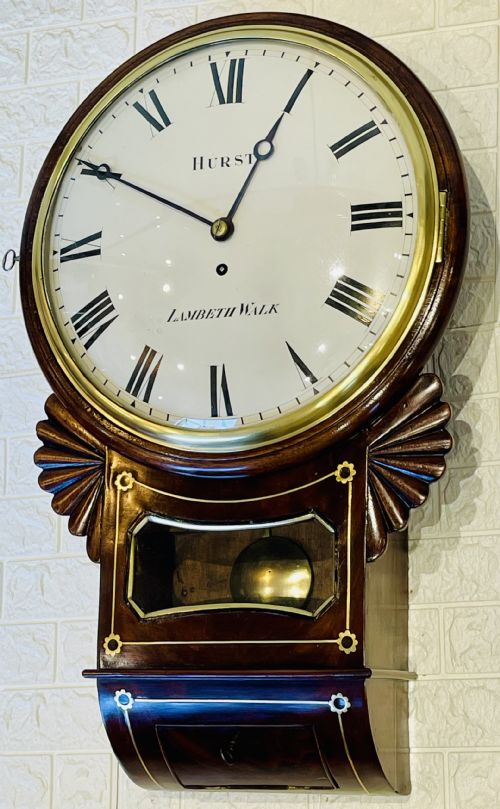
An English drop dial clock combines a circular dial top with a lower wooden trunk or drop case designed to house a pendulum. This specific wall-mounted form appears across the nineteenth century, including Victorian, Regency, and Georgian periods.
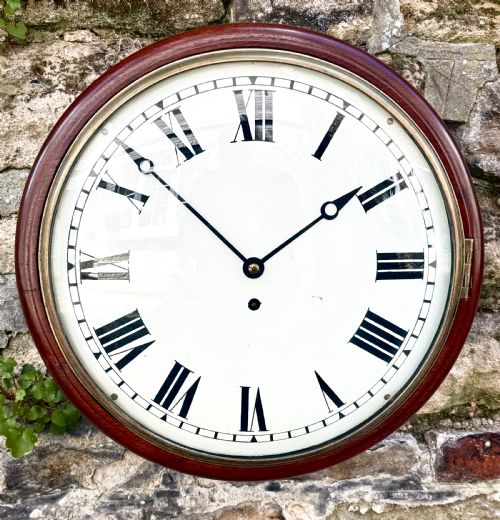
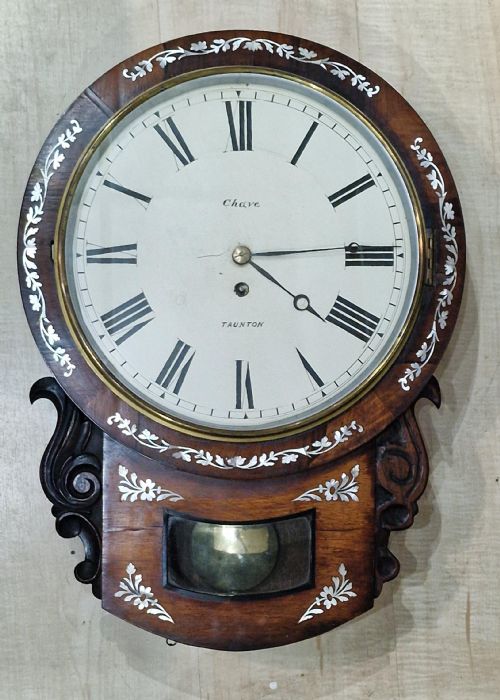
The versions most common on this page span mahogany and oak timbers, sometimes featuring inlaid decoration, railway markings, or provincial maker signatures on the dial. These pieces range from small eight-inch dials to large railway and tavern wall clocks.
How They Were Made
Clockmakers housed the mechanical movements inside robust timber cases built from mahogany, rosewood, or oak, often finished with brass bezels protecting glass dial covers. Many examples utilise single or twin fusee movements to regulate power evenly across the running duration.
Dial construction varied between painted iron and carved wood, with convex or bowed faces designed to catch ambient room light and reduce glare for the viewer below.
English Drop Dial Clock Retail Price Guide 2026
Typical asking prices for english drop dial clock among the pieces listed under this phrase on Sellingantiques today, from the lower quarter to the upper quarter. They describe what is for sale here now, not the wider market.
Railway staff relied on these sturdy wall clocks to keep trains running on time while commuters stared up from the platform.
What Varies in Quality
The integrity of the original movement and the condition of the painted or wooden dial surface dictate the distinction between standard utility pieces and finer examples.
George Clarke·Chave Taunton·Halliday and Rich·Rudge Swindon·Henry Lamb·John Walker·JA Wheatley Carlisle·Kleyser of London·R Roberts·Francis Perigal·Haley and Milner·Thwaites and Reed·Pyott Lewes·Barrauds Cornhill·James Tupman·Thomas Lindey·Anthony Furnace·Thomas Harrison·J Matthews
The English Drop Dial Clock Glossary
- Fusee
- A conical pulley connected to the mainspring by a chain or cord, designed to equalise the declining power of the spring as it unwinds. This mechanism helps maintain steady timekeeping throughout the running period.
- Drop dial
- A clock case featuring a circular upper dial frame attached to a lower, elongated wooden box that houses the pendulum swing. This silhouette became a staple of British public and domestic interiors.
- Twin fusee
- A movement utilising two separate fusee cones, typically dividing the timekeeping train from a striking train that sounds the hours on a bell. This setup appears on larger, more substantial wall clocks.
- Convex dial
- A clock face that curves outward toward the viewer rather than sitting flat. This design improves legibility from oblique angles in busy rooms.
- Dial
- The visible face of the clock where numerals and hands are displayed. On these pieces, dials can be iron, wood, or brass, frequently bearing the name of the maker and town.
English Drop Dial Clock: Frequently Asked Questions
What is an English drop dial clock?
An English drop dial clock is a wall-mounted timepiece featuring a round dial over a wooden drop case for the pendulum.
These clocks served in railway stations, offices, and homes throughout the Georgian, Regency, and Victorian eras.
How do fusee movements work?
A fusee movement uses a conical drum and a chain to regulate the pull of the mainspring.
This system ensures the clock receives even power as the spring unwinds, improving timekeeping accuracy.
Where were these clocks hung?
These clocks were designed for vertical wall mounting in spaces needing clear time visibility, such as offices, hallways, and railway platforms.
Their compact upper profile and secure back boxes kept them stable against bustling walls.
How do I date a drop dial clock?
Dating relies on timber choices, dial materials, case inlay, and maker signatures recorded on the face.
Earlier Georgian and Regency examples often feature wooden dials or brass inlay, while later Victorian railway pieces utilise robust oak or mahogany.