
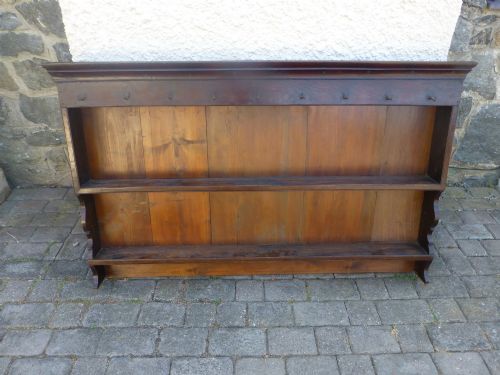


English Country Plate Rack
An english country plate rack brings honest utility and warmth to a kitchen, holding ceramics with simple grace.
English Country Plate Rack
An english country plate rack is a functional storage fixture designed to display and dry ceramics safely against a wall. The pieces found here span the eighteenth, nineteenth, and early twentieth centuries, reflecting long traditions of rural domestic life.
Most examples you will encounter are constructed from native timber, often integrated into larger kitchen dressers or formed as dedicated wall-hanging shelves. The styles range from vernacular Georgian country designs to more utilitarian Victorian farmhouse versions.
These racks served as the central organising element of the country kitchen, keeping everyday earthenware within arm's reach. Their survival demonstrates the enduring appeal of practical vernacular furniture in modern homes.
How they were made
Makers relied on durable native hardwoods and softwoods such as oak, elm, and pine, chosen for their local availability and strength. Boards were hand-planed and joined with traditional methods to support the heavy weight of stacked ceramic plates.
Surfaces were frequently left bare to age naturally, though many pieces received early painted finishes or protective layers. Simple iron and brass hardware, including hanging hooks or small latches, provided necessary structural reinforcement.
Several racks retain subtle grooves worn deep by generations of plates sliding into place over hundreds of years.
What varies in quality
The distinction between ordinary and exceptional pieces lies in the proportion of the timber and the subtlety of the carpentry. Better examples display carefully shaped slats and well-balanced framing that elevates a purely utilitarian object.
Original surfaces and untouched patina contribute significantly to the character of an individual rack. Alterations to the timber or replaced structural elements alter the historical integrity of the piece.
The English Country Plate Rack Glossary
- Delft rack
- A wall-mounted shelving unit specifically constructed with vertical slats or grooves to hold plates upright. These fixtures kept tableware visible and accessible in traditional kitchens.
- Pot board
- The lower open shelf of a dresser, traditionally used for storing heavy pots and pans. This lower tier grounds the heavier storage elements of the furniture.
- Vernacular furniture
- Domestic pieces made by local craftspeople for everyday use rather than high-style urban consumption. These objects prioritize straightforward utility and local material traditions.
- Hanging shelves
- Wall-fixed shelving units designed to save floor space in domestic interiors. They range from simple open boards to more architectural formats with cornice detailing.
English Country Plate Rack: Frequently Asked Questions
How do I hang a plate rack?
These wall-mounted fixtures require secure fixings into solid masonry or direct attachment to wall studs due to the substantial weight of the timber and ceramics.
Professional installation ensures the rack supports both its own mass and the load of the plates safely.
Can these racks hold modern plates?
Most historic slots accommodate standard modern dinnerware, though very thick contemporary ceramics may sit differently than eighteenth-century earthenware.
Checking the depth of the retaining rails helps confirm whether your specific table service will fit comfortably.
Are painted finishes original?
Many country pieces received coats of paint over the decades to update domestic interiors or protect the timber.
Distinguishing between early layered paint and later decorative coatings requires close inspection of the underlying wood and wear patterns.
How should I clean the wood?
Routine dusting with a dry cloth keeps the surface clean without introducing moisture that could damage aged timber or historic finishes.
Avoid modern chemical polishes, as natural beeswax applied sparingly maintains the dry lustre of antique oak and pine.