




English Country House Portrait
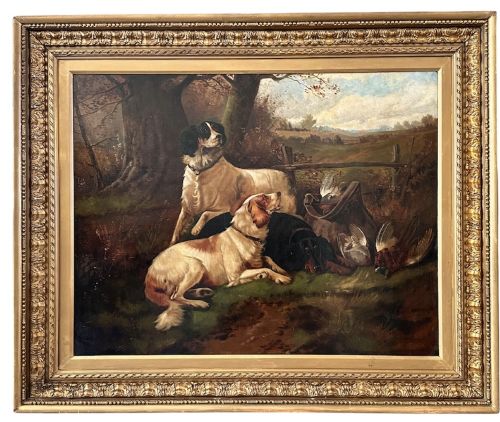
An english country house portrait brings the character, livestock, hounds and landed gentry of historic estates straight to the wall.
English Country House Portrait
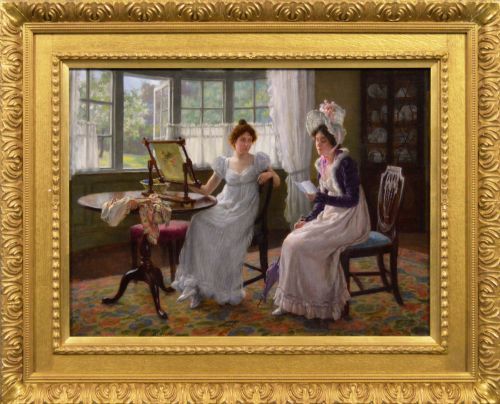
An english country house portrait captures landed families, gentrified gentlemen, prize livestock and sporting hounds within historic estates or rural landscapes. These works span the eighteenth and nineteenth centuries, taking the form of oil paintings on canvas or board, watercolours, and framed prints.
The subjects range from formal depictions of family members by named artists to naive representations of boundary collies, greyhounds and shorthorn bulls. Alongside traditional canvas portraits, folding screens and mezzotints appear, reflecting the diverse ways domestic spaces displayed these rural artworks.
Materials and Technique
Painters relied principally upon oil paint applied to canvas or wood panel, sometimes building rich layers of pigment to render horses, hunting dogs and human subjects. Watercolours on paper and monochrome ink with watercolour also record estate architecture and gentlemen.
Framing utilised giltwood or traditional wood surrounds, while decorative pieces incorporate paper prints and decoupage panels. Artists captured fine details of horses, sporting gear and garden walls through careful brushwork.
A three-panel decoupage screen brings unexpected papercraft into the lineup alongside grand oil paintings of horses and hounds.
What Varies in Quality
The skill of the hand defines the piece, distinguishing academic portraiture by documented artists from charming regional naive works. Anatomy in horses, hounds and human figures fluctuates according to the painter's training and observation.
Surface preservation affects the visual impact, from untouched nineteenth-century varnish layers to nineteenth-century relining and subsequent restoration. The integration of the subject within an identifiable estate landscape adds depth to the composition.
John Sargent Noble·C R Breytle·Robert Sayer·Charles Haigh Wood·Henry John Yeend King·Samuel Raven·Colin Graeme Roe·Samuel Spode·John Alfred Wheeler·Clifton Tomson·John Emms·W.A. Clark·Charles Philips·Charles Bilger Spalding·Michael Dahl·Sir Godfrey Kneller·John Verelst
The English Country House Portrait Glossary
- Oil on canvas
- Pigment mixed with drying oil applied to stretched woven fabric. This medium dominates eighteenth and nineteenth-century estate painting.
- Giltwood
- Wood carved and coated with gold leaf or a gold-coloured finish. This material forms the ornate frames typical of period art.
- Naive school
- Art produced by painters with little or no formal academic training. These works offer direct charm and regional character.
- Mezzotint
- A printmaking process of the intaglio family where the plate is roughened to achieve tonal graduation. This technique produced rich monochrome reproductions.
- Decoupage
- The art of decorating a surface by applying cut-out paper details. Folding screens on this page utilise this technique.
English Country House Portrait: Frequently Asked Questions
What subjects appear in an english country house portrait?
These artworks depict landed gentlemen, family groups, children with pets, and esteemed members of the household. Livestock such as shorthorn bulls and working animals like greyhounds, setters and terriers also feature prominently.
The settings shift between interior rooms, walled gardens, stables and expansive parkland grounds associated with country estates.
How do I date an english country house portrait?
Dating relies on costume details, hairstyles, painting techniques, and inscriptions or signatures left on the canvas or reverse. Georgian and Victorian clothing styles offer clear chronological markers for human subjects.
Framing materials and stretcher construction provide additional clues, though frames are frequently later replacements for the original artwork.
Where should I hang these paintings at home?
These works suit dining rooms, libraries, hallways and drawing rooms where traditional domestic aesthetics apply. Grouping animal portraits together creates a strong visual focus on country pursuits.
Direct sunlight and damp walls should be avoided to protect oil paint, canvas and paper components from deterioration over time.
What is the difference between fine art and naive school pieces?
Fine art pieces reflect the conventions of academic training, proportion, perspective and formal portraiture traditions. Painters working in these styles often exhibited or received commissions from landed families.
Naive works display simplified perspective and direct charm, created by regional painters focusing on local animals and farm owners without strict academic adherence.