

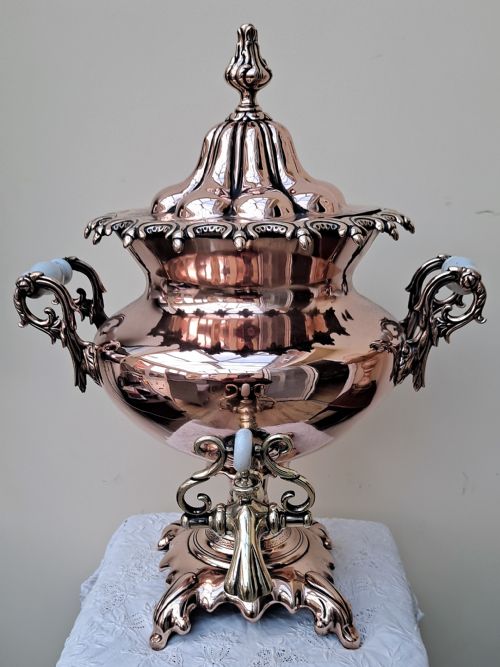


English Copper Tea Samovar
An english copper tea samovar brings the warmth of Georgian and Victorian hospitality directly to your sideboard with generous proportions and rich metalwork.
English Copper Tea Samovar
When you search for an english copper tea samovar, you are looking at substantial vessels designed for heating and dispensing water during large gatherings. These pieces combine utility with commanding presence, serving as the visual anchor of a traditional tea service.
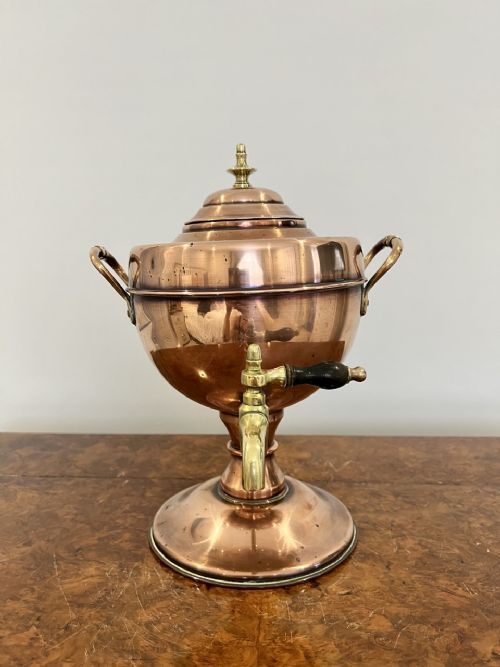
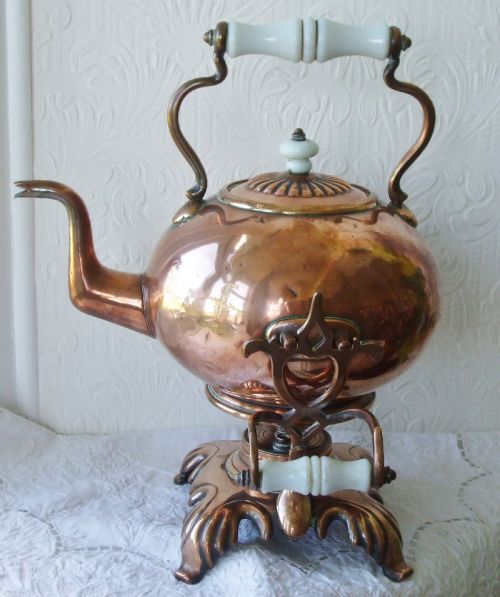
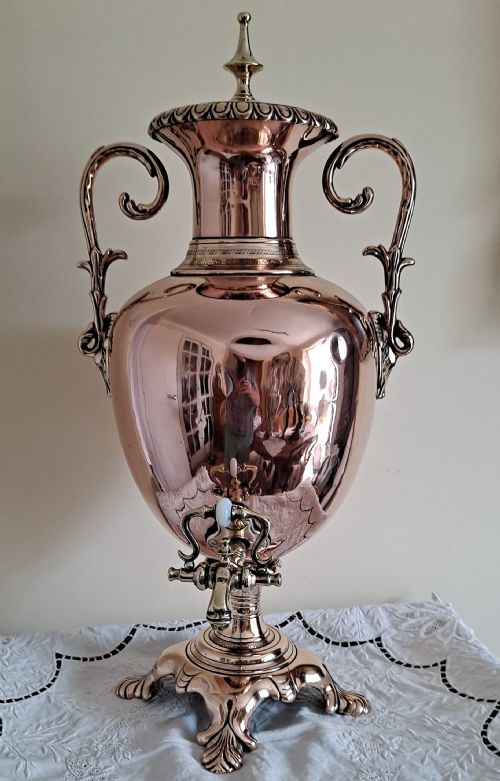
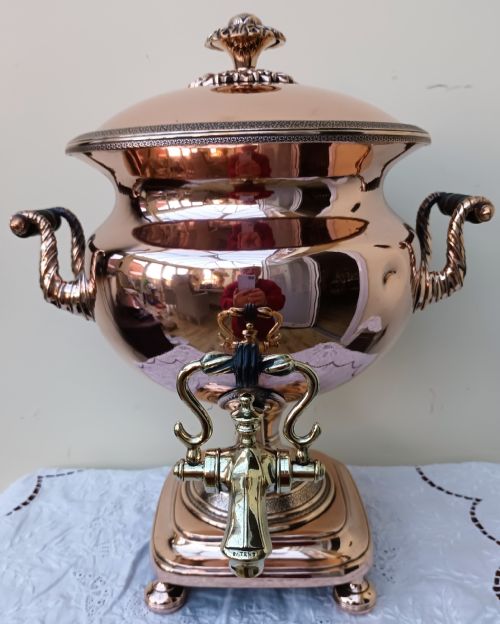
The versions you are most likely to meet on this page date from the Georgian, Regency, and Victorian periods. They take the form of tea urns, samovars, and spirit kettles, frequently shaped as classical urns or pedestal vessels.
Makers constructed these objects primarily from warm copper, often accented with contrasting brass handles, spigots, and feet. Surviving examples demonstrate the domestic ambitions of nineteenth-century households through their impressive scale and careful metalworking.
How they were made
Craftsmen shaped heavy copper sheets through hammering and joining, creating the deep bodies necessary to hold large volumes of hot water. They incorporated cast brass components for structural elements like handles, feet, and decorative mounts.
Details such as ebonised wood handles and bone insulators prevented heat transfer to the user during service. Internal heating elements, including central tubes for hot coals or spirit burners, required precise metal fabrication to function safely.
English Copper Tea Samovar Retail Price Guide 2026
Typical asking prices for english copper tea samovar among the pieces listed under this phrase on Sellingantiques today, from the lower quarter to the upper quarter. They describe what is for sale here now, not the wider market.
Materials recorded across the inventory include copper, brass, ceramic, ebonised wood, bone, and bell metal.
What varies in quality
The distinction between standard utility vessels and finer examples rests upon the integration of original fittings and the crispness of the metal casting. Pieces retaining their matching spigots, internal heating tubes, and bone or ebonised insulators demonstrate greater integrity.
Weight and gauge of the copper also determine the caliber of a piece, with thicker metal providing a more substantial heft and superior durability. Subtle design flourishes, such as classical proportions and refined brass chasing, elevate certain examples above simpler utilitarian models.
Mappin And Co
The English Copper Tea Samovar Glossary
- Samovar
- A heated metal container traditionally used to boil and heat water in Russia and adopted across Britain for tea service. These vessels feature a spigot at the base and often a central internal chimney.
- Tea urn
- A large pedestal-mounted vessel designed for holding and dispensing hot water during formal gatherings. They share a similar function to samovars but typically lack the internal charcoal cylinder.
- Bell metal
- A hard alloy of copper and tin used historically for casting bells and durable vessel components. It provides a resonant quality and strength to structural fittings.
- Spirit kettle
- A portable kettle mounted on a stand above a small spirit burner for maintaining water temperature at the table. These provide a smaller alternative to the grander floor-standing urns.
- Ebonised wood
- Timber treated to imitate ebony, providing a deep black finish resistant to wear. Makers utilised this material for cool-touch handles and finials.
English Copper Tea Samovar: Frequently Asked Questions
How did people use them?
Hosts used these vessels to provide a continuous supply of hot water during large gatherings and drawing room tea services. Internal cylinders held hot coals or spirit burners to keep the water boiling.
Peculiar to formal entertaining, guests drew water from the small spigot at the base into individual teapots.
How do I live with one?
Placing a samovar on a sideboard, side table, or open shelf allows the warm tones of the copper and brass to anchor a room. They require stable surfaces capable of supporting their substantial weight.
Polishing should be approached gently to preserve the historic patina that develops on nineteenth-century metal surfaces over decades.
How do I tell periods apart?
Georgian and Regency examples often display classical urn shapes with strict architectural symmetry and restrained neoclassical ornament. Victorian versions tend towards heavier proportions and more varied decorative revivals.
Examining the construction of handles, feet, and spigots helps reveal the stylistic shifts from the late eighteenth century into the nineteenth century.