


Antique Brass Tap Urn
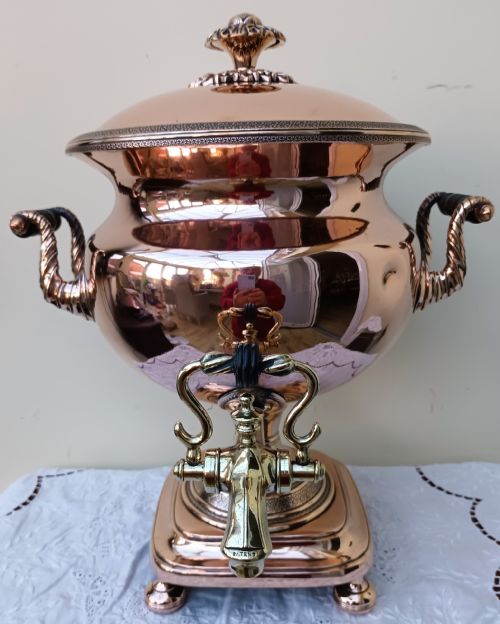
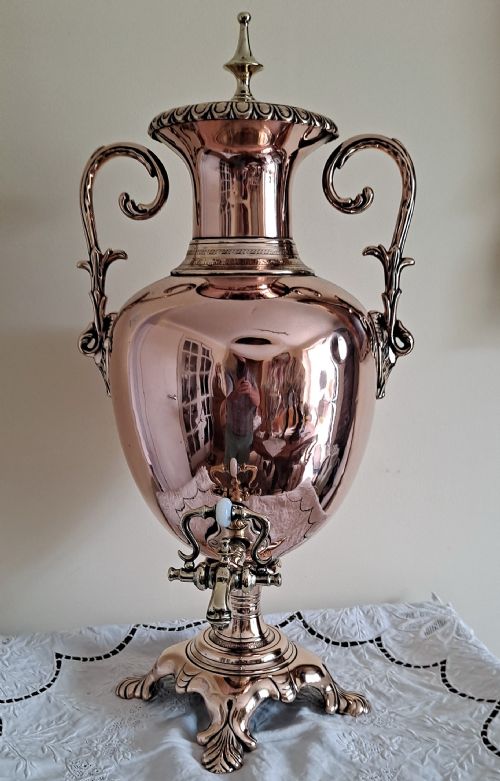
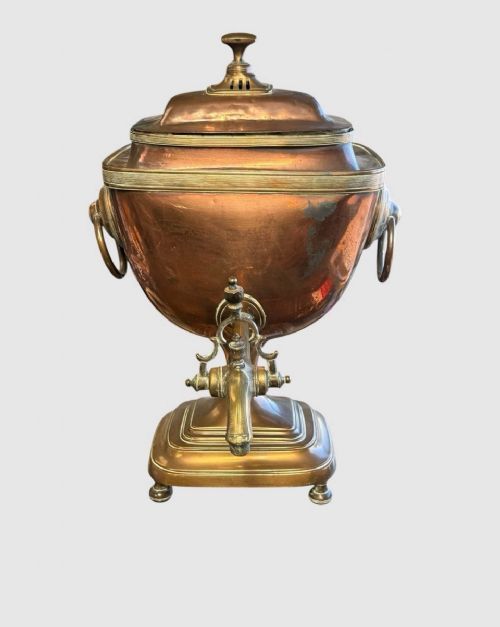
These antique brass tap urn pieces are substantial vessels designed for dispensing hot water or spirits, bringing period character and warm metallic lustre to a room.
Antique Brass Tap Urn
When you search for an antique brass tap urn, you encounter a variety of substantial vessels primarily designed for serving tea, water, or spirits. These pieces span the Georgian, Regency, and Victorian periods, showcasing forms such as samovars, coffee urns, and glass bar dispensers.
The most common versions met on this page are copper and brass samovars and tea urns dating from the nineteenth century. These objects combine functional metal spigots with decorative handles and mounts, reflecting domestic hospitality and beverage service of earlier centuries.
How they were made
Makers utilised heavy-gauge copper and brass, often combining both metals to create contrasting tones on bodies and mountings. Surfaces were shaped through metalworking techniques, sometimes enhanced with gold leaf, paint, or ebonised wood handles.
Glass dispensers integrated cut glass vessels with metal taps and mountings, while ceramic and tinplate components appeared in specific regional styles like Dutch toleware.
Keep an eye out for a giant brewery brandy fountain, ready to dispense spirits with nineteenth century brewing grandeur.
What varies in quality
The distinction between standard domestic items and superior pieces lies in the weight of the metal, the crispness of casting in handles and spigots, and the integration of decorative elements such as bronzed finishes. Higher quality samovars display balanced proportions and refined surface finishing.
The integrity of construction, from the fitting of the brass tap to the stability of the base and handles, determines the overall calibre of the vessel. Pieces attributed to specific Regency or George III periods often exhibit superior craftsmanship in their mounting and detailing.
The Antique Brass Tap Urn Glossary
- Samovar
- A heated metal container traditionally used to boil and heat water for tea. These vessels typically feature an internal heating tube and a spigot near the base.
- Toleware
- Metalware painted and lacquered, often in dark or black finishes with gilt decoration. This technique was widely applied to nineteenth century decorative containers.
- Regency
- A British design period spanning the early nineteenth century. Characterised by classical revival motifs and refined Regency styling.
- Bronzed
- A surface finish applied to base metals to simulate the appearance of bronze. This treatment was popular on nineteenth century copper and brass decorative objects.
Antique Brass Tap Urn: Frequently Asked Questions
What is an antique brass tap urn used for?
These vessels were historically used for heating and dispensing water for tea, or for serving spirits in domestic and commercial settings.
Today, they serve primarily as decorative focal points, bringing historic metalwork and period character into contemporary interiors.
How do I date an antique brass tap urn?
Dating relies on stylistic markers associated with periods such as the Georgian, Regency, and Victorian eras. Form, handle design, and metal composition provide key indicators of age.
Examining construction methods, such as joinery and the manufacturing of the tap mechanism, helps narrow down the decade of production.
What is the difference between a samovar and a tea urn?
A samovar traditionally includes an internal vertical tube for charcoal or a heating element, though many nineteenth century examples functioned simply as large heated water urns.
Tea urns often focused strictly on holding and dispensing pre-heated water or tea, sharing a similar spigot and handled form.
How do I care for antique brass and copper?
Maintain the metal surfaces by dusting gently with a soft cloth and avoiding harsh chemical cleaners that strip the historic patina. Preserving the natural aged finish is standard practice for antique metalware.
Keep the pieces away from excessive moisture and direct heat sources to protect any wooden handles, ebonised elements, or painted surfaces.