

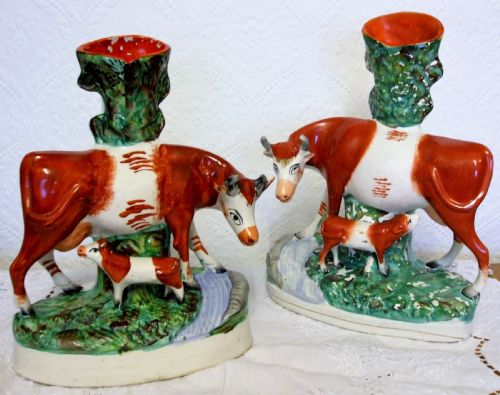


English Ceramic Vase Pair
An English ceramic vase pair brings symmetry and historical craft to a room, offering matching forms from periods spanning the eighteenth century to the twentieth.
English Ceramic Vase Pair
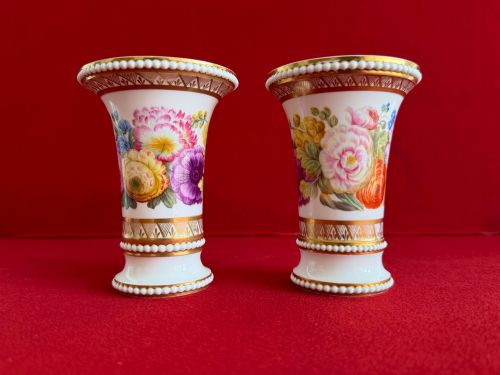
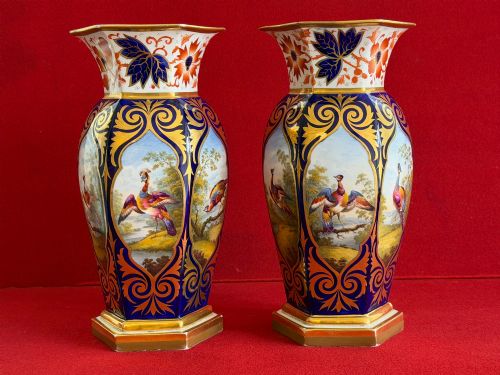
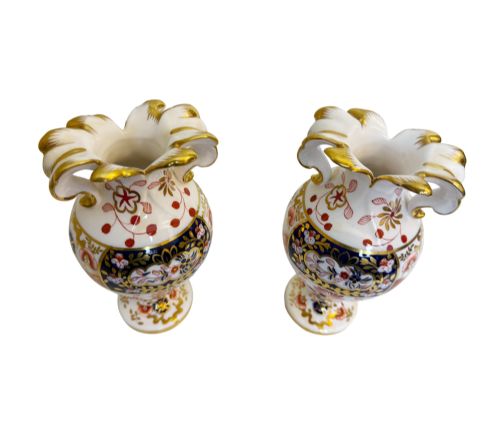
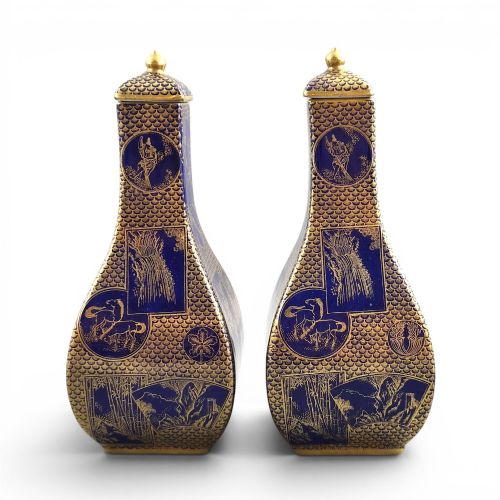
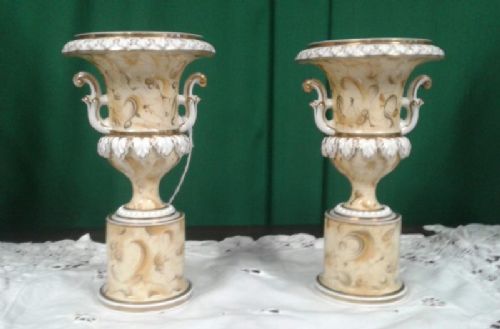
An English ceramic vase pair consists of two matching vessels designed for display, often taking the form of campana urns, posy holders, baluster shapes, or spill vases. These matched sets originate across the nineteenth and twentieth centuries, including Victorian, Edwardian, and Regency eras.
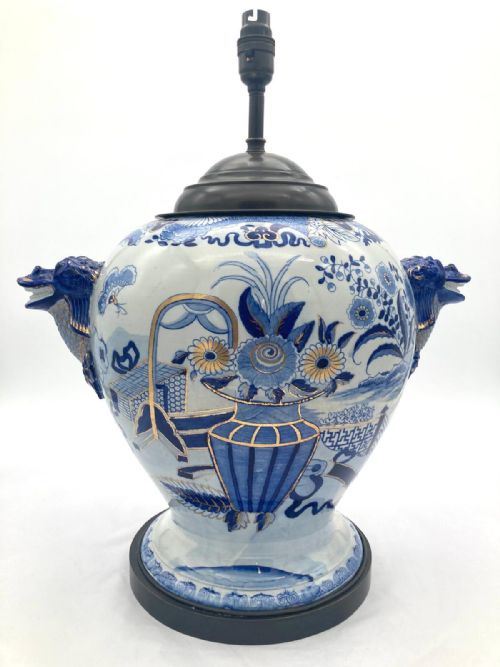
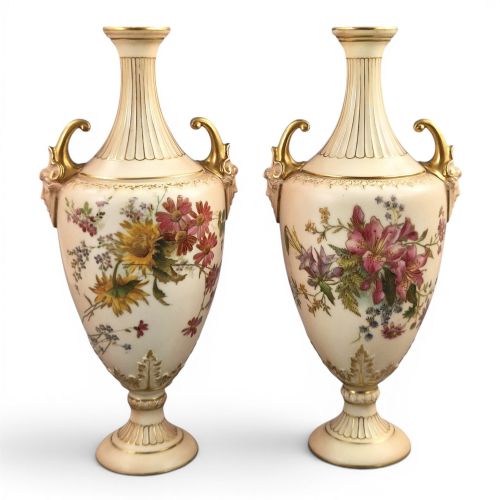
Buyers will frequently encounter porcelain and ironstone examples originating from prominent factories like Royal Worcester and Mason's. Forms range from miniature cabinet pieces to large lidded vessels and ewers.
Spill vases and figures with holders also appear within this group, serving functional roles on mantelpieces alongside purely decorative urns.
How they were made
Potters shaped these vessels using earthenware, ironstone, and porcelain pastes, often moulding them into twin-handled or beaker configurations. Glazes provided the primary vitreous coating before secondary decoration took place.
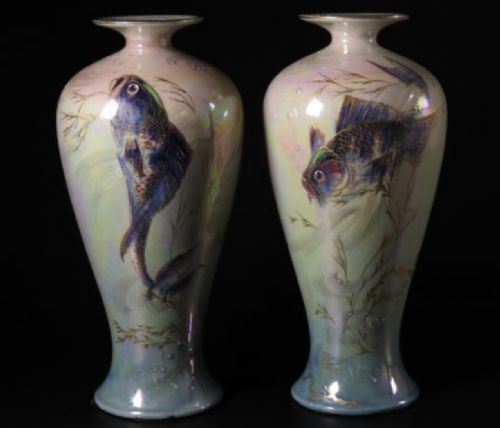
Artisans applied hand-painted pigments, enamels, and gold leaf to the ceramic bodies, sometimes incorporating lustre finishes or transfer-printed patterns. Kiln firings set these colours, with certain factories employing specialised techniques for blush ivory or mazarine blue grounds.
English Ceramic Vase Pair Retail Price Guide 2026
Typical asking prices for english ceramic vase pair among the pieces listed under this phrase on Sellingantiques today, from the lower quarter to the upper quarter. They describe what is for sale here now, not the wider market.
Certain nineteenth-century makers turned utilitarian fire- lighters into art, shaping ceramic cows and sheep into charming domestic spill vases.
What varies in quality
The standard of an English ceramic vase pair rests upon the crispness of the moulding and the skill of the hand-painting. Factory execution by named artists elevates certain examples well above standard commercial production.
The preservation of delicate gilding and enamels across both matching pieces determines desirability. Consistency between the pair in both glaze tone and decorative detail governs the overall visual balance.
Flight, Barr and Barr·Spode·Mason's·Shelley·Hicks and Meigh·Royal Worcester·Staffordshire Pottery·Ridgeways·Derby·Doulton Burslem·Royal Doulton·Royal Crown Derby·Poole Pottery·Pilkingtons Royal Lancastrian·Wedgwood·Charlotte Rhead
The English Ceramic Vase Pair Glossary
- Campana
- A bell-shaped vessel with an everted rim and a pedestal foot, frequently seen in Regency and Victorian designs. This classic neoclassical form suited both ironstone and porcelain manufacturing.
- Ironstone
- A dense, durable type of earthenware patented in the nineteenth century to imitate Chinese porcelain. Factories like Mason's utilised this heavy ceramic for robust, highly decorated vessels.
- Spill vase
- A tall, narrow receptacle designed to hold thin wooden spills used for lighting fires or candles. These domestic items often featured painted or modelled animal and human subjects.
- Lustre
- A metallic glaze film that produces an iridescent sheen on the ceramic surface. Potters achieved this effect by applying metallic salts before firing in a reduced oxygen atmosphere.
- Blush ivory
- A soft, creamy-tinted ceramic ground popularised by Royal Worcester in the late nineteenth century. It provided a matte background for delicate hand-painted floral motifs.
English Ceramic Vase Pair: Frequently Asked Questions
How should I display an English ceramic vase pair?
Place the two pieces symmetrically on a mantelpiece, sideboard, or table to preserve the intended balance of the set. Keeping them together ensures the matching decoration and form can be appreciated as a complete unit.
Avoid placing them in direct, harsh sunlight to protect hand-painted enamels and delicate gold leaf over time. Stable surfaces away from heavy foot traffic will safeguard these fragile ceramic items.
How do I identify the period of these vases?
Examine the base for factory stamps, pattern numbers, and registry marks that correspond to nineteenth or twentieth-century production records. Stylistic clues such as Regency neoclassical shapes or Art Nouveau lines also help date the ceramics.
Material composition provides further evidence, as dense ironstone and soft blush ivory bodies align with specific manufacturing eras. Comparing the painting style to known decorator signatures narrows down the active timeframe.
What is the difference between a vase and an urn?
Vases generally feature simpler vertical profiles designed primarily for holding flowers or standing as independent decorative objects. They span a wide variety of cylindrical and beaker forms.
Urns typically incorporate footed bases, classical bodies, and handles, often echoing ancient metal or stone vessels. Many include fitted covers and served grander decorative functions in period interiors.
Can these vases still hold water?
Many historical ceramic vessels remain watertight, but old glazes and hairline fractures can develop permeability over centuries. Testing them with water is generally discouraged to prevent moisture damage to the ceramic body.
For safety, use a discreet inner liner if you wish to display fresh stems inside antique pieces. Dry arrangements or empty display represent the safest approach for preserving the interior glaze.