



Antique Posy Vases
These antique posy vases bring small clusters of fresh stems to a table, spanning delicate silver trumpets to robust bronze vessels.
Antique Posy Vases
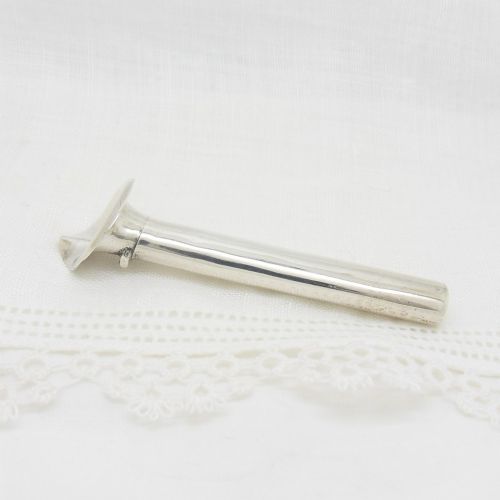
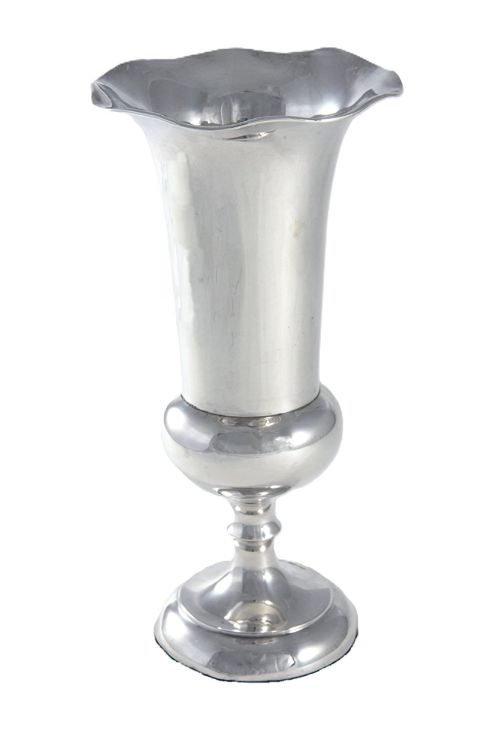
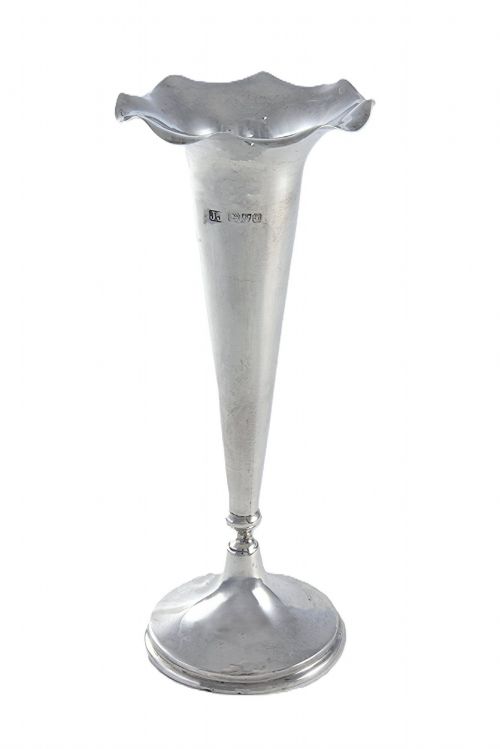
Antique posy vases appear in various forms across the Victorian and Edwardian periods, ranging from slender silver trumpets to ceramic figures and bronze urns designed for short stems.
Makers utilised ceramic, glass, and metal to create vessels suited for modest tables, mantelpieces, and display cabinets.
How they were made
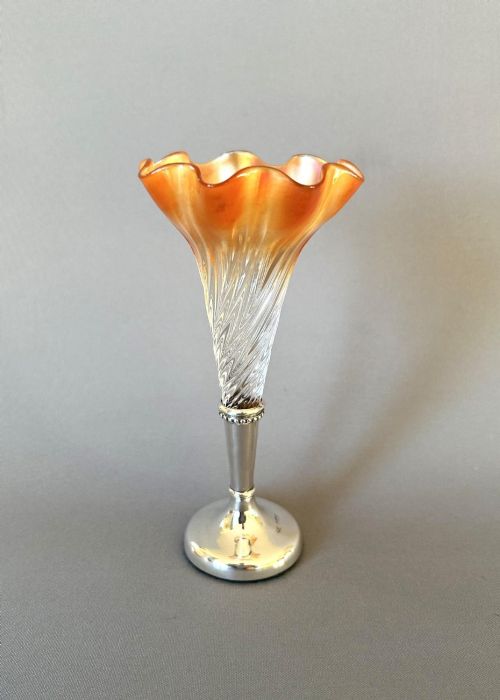
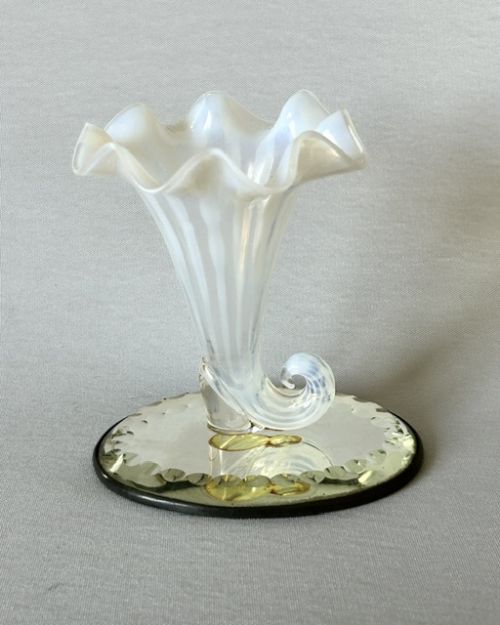
Silversmiths hammered and turned sterling silver into trumpet shapes, often weighted at the base for stability, while glassmakers blew vaseline and art glass into cornucopia and bowl forms.
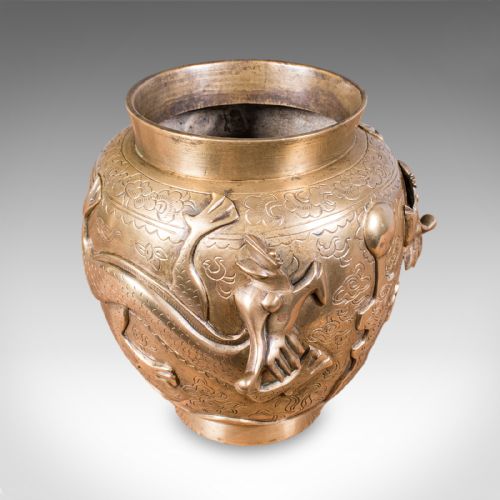
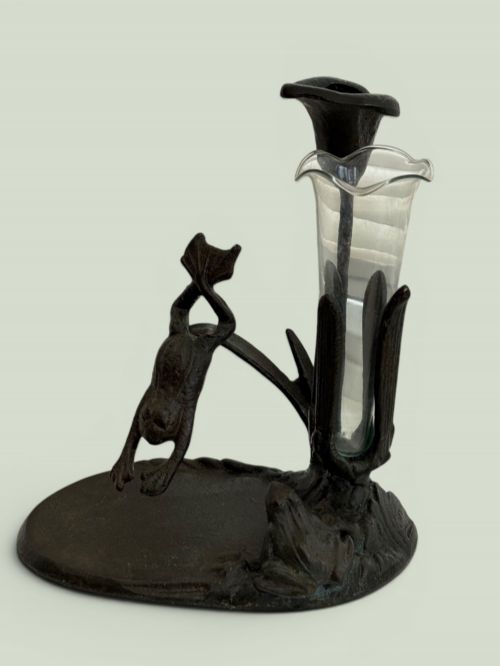
Potteries shaped ironstone and porcelain, applying hand-painted birds and florals before glazing, and foundries cast bronze into ritual vessels and Grand Tour urns.
Antique Posy Vases Retail Price Guide 2026
Typical asking prices for posy vases among the pieces listed under this phrase on Sellingantiques today, from the lower quarter to the upper quarter. They describe what is for sale here now, not the wider market.
Listings feature sterling silver, vaseline glass, ironstone, and bronze across the Victorian and Edwardian periods.
What varies in quality
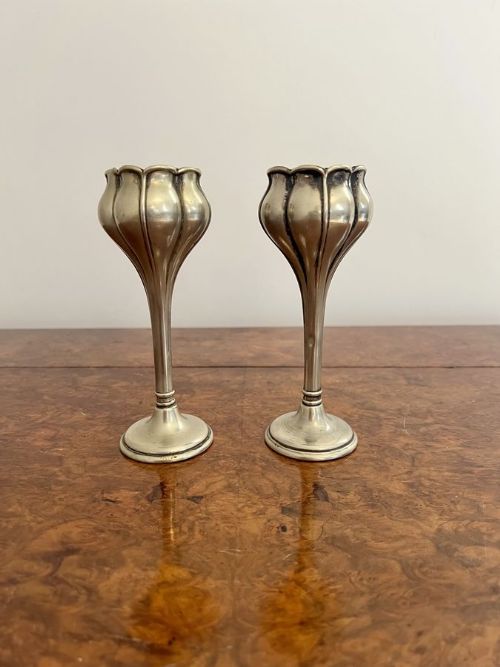
Quality rests in the crispness of the casting on bronze pieces, the depth of hand-painted detail on porcelain, and the weight of sterling silver used in the construction.
Design ambition separates standard domestic items from pieces featuring complex art nouveau curves, vaseline glass combinations, or imported ceramic bodies.
Thos. Webb & Sons·Royal Worcester·Krister KPM Waldenburg·Colen Hewer Cheshire
The Antique Posy Vases Glossary
- Vaseline glass
- A type of glass coloured with uranium oxide that exhibits a distinct yellow-green fluorescence under ultraviolet light. It often appears in Victorian cornucopia and posy designs.
- Ironstone
- A heavy, durable ceramic developed in the nineteenth century as an affordable alternative to porcelain. It frequently displays transfer-printed or hand-painted oriental motifs.
- Spill vase
- A tall, narrow vessel originally designed to hold wooden spills for lighting candles and fires. They double easily as holders for short flower stems.
- Grand Tour
- A term describing souvenir objects brought back by travellers from continental Europe during the nineteenth century. These often take the form of miniature bronze urns and classical vessels.
- Cornucopia
- A horn-shaped vessel traditionally symbolising abundance and plenty. In Victorian glasswork, this curving form serves as a decorative flower holder.
Antique Posy Vases: Frequently Asked Questions
What is an antique posy vase?
An antique posy vase is a small vessel designed to hold a modest bunch of flowers rather than a large bouquet. These pieces date primarily from the Victorian and Edwardian eras.
They appear in materials ranging from sterling silver and glass to bronze and porcelain, reflecting the changing interior styles of the nineteenth and twentieth centuries.
How were silver posy vases used?
Silver posy vases typically stood on dining tables, sideboards, or dressing tables to display fresh garden flowers. Their weighted bases kept them stable despite their slender proportions.
Many were produced as pairs or matched sets to create symmetrical arrangements across a room.
How do I care for antique glass?
Antique glass requires gentle hand washing in lukewarm water with mild soap. Avoid sudden temperature changes to prevent cracking the historic material.
Dry them softly with a lint-free cloth and keep them away from direct, harsh sunlight.
Can I use them for fresh flowers?
Most antique posy vases hold water safely and function well for fresh stems today. Ceramic, glass, and metal interiors handle moisture effectively when cleaned regularly.
Care should be taken with older silver linings or unglazed ceramics to prevent long-term staining.