

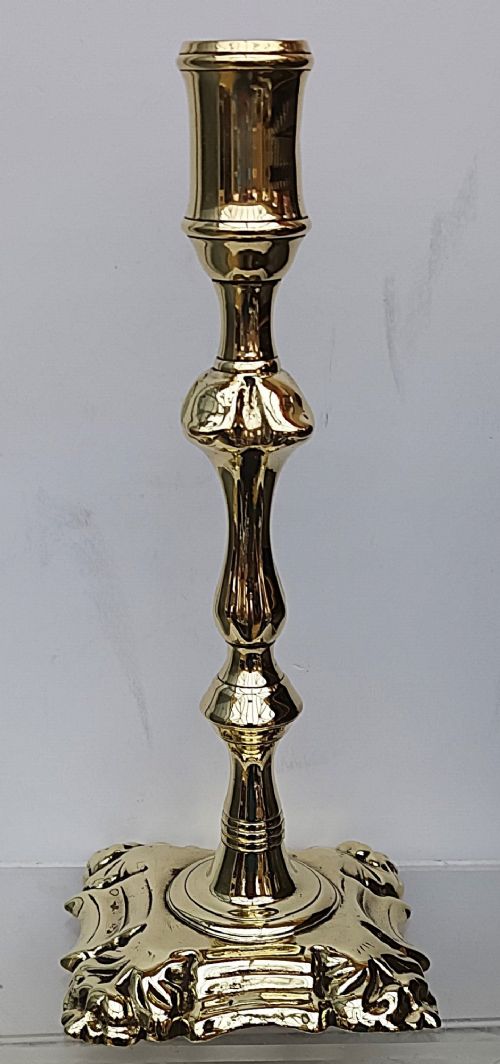


English Brass Candle Stick
An English brass candle stick brings centuries of warm metalwork and domestic history straight to a table.
English Brass Candle Stick
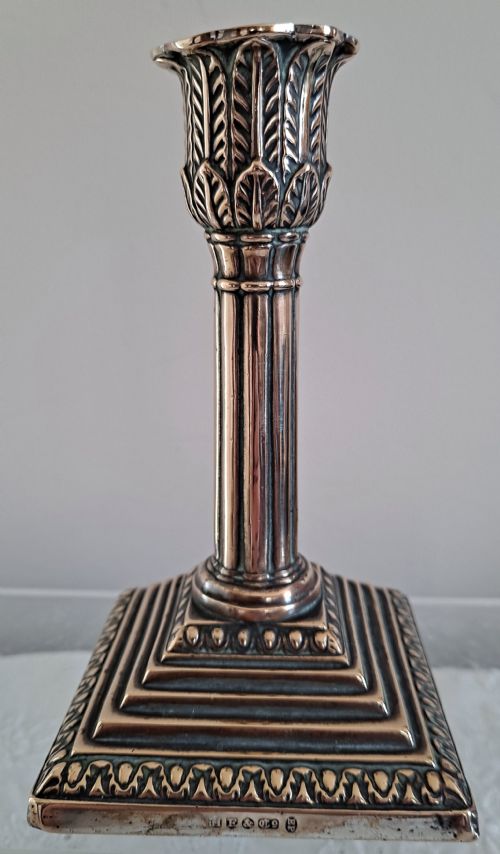
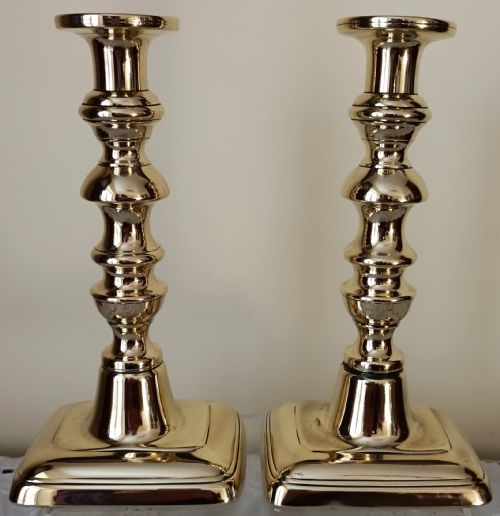
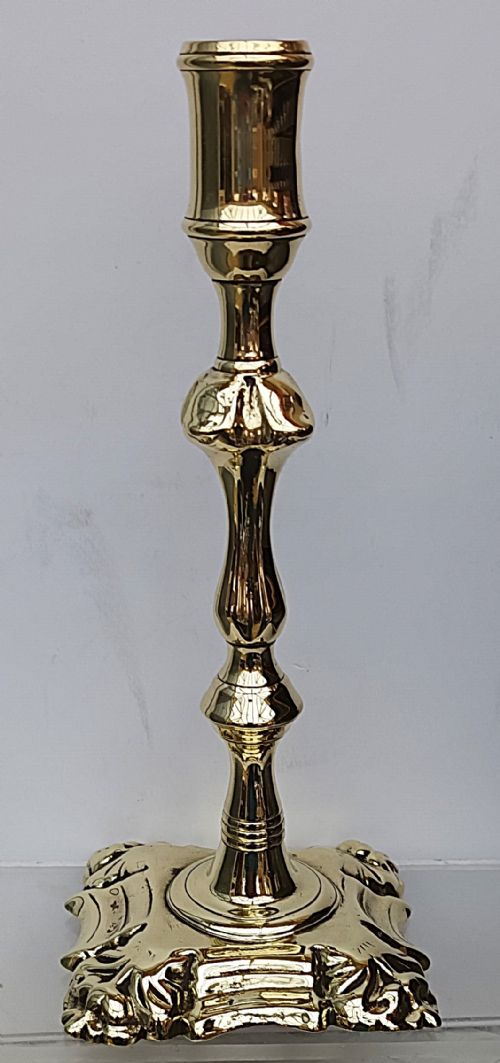
When you search for an english brass candle stick, you encounter domestic lighting spanning several centuries of metalworking tradition. The selection here leans heavily toward Georgian forms alongside Victorian and Edwardian examples.
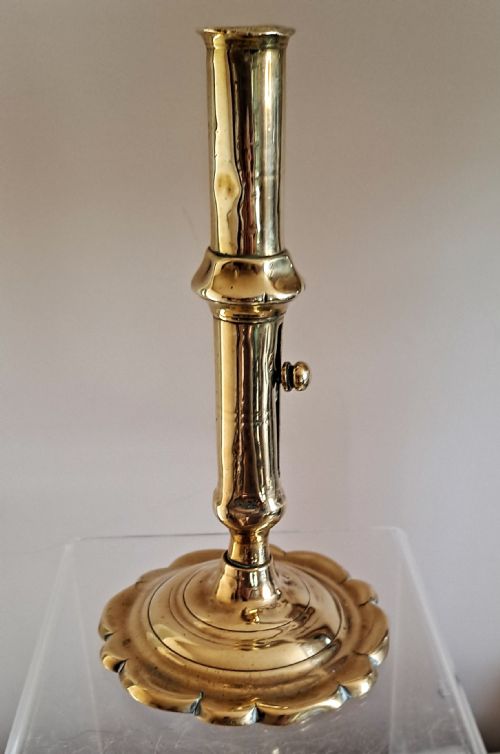
Most pieces survive as pairs, though single examples and desk models appear frequently. Collectors encounter distinct regional and period variations, from early hexagonal columns to petal-based designs.
Materials and Construction
The primary material is brass, supplemented occasionally by copper, paktong, and silver plate. Early examples often utilise seamed construction where components are joined and finished by hand.
Makers employed casting methods that created weighted bases and socket forms suited to daily use. Over time, techniques evolved to include telescopic mechanisms and screw-assembled components.
Some nineteenth-century examples incorporated hidden spring mechanisms so the candle remained at a constant height while burning.
Markers of Quality
Quality rests upon the crispness of casting detail and the integrity of the original construction. Sharp mouldings on bases and collars indicate superior craftsmanship during production.
The preservation of original surface patination and components such as detachable sconces distinguishes finer examples. Weight and balance also signal the standard of the original workshop.
J.T. & Co·J. Miller·Harrison Patent·Edward Kendrick
The English Brass Candle Stick Glossary
- Sconce
- The detachable drip pan or upper cup fitted into the top of a candlestick to catch melting wax. This component is often lost or replaced over centuries of use.
- Ejector
- A concealed internal mechanism operated by a thumb lever that pushes the remaining candle stump out of the socket. Such pieces incorporated moving parts to ease maintenance.
- Paktong
- A copper, nickel, and zinc alloy imported from China that mimics silver. Makers utilised this bright metal for high-status lighting pieces.
- Petal base
- A moulded foot shape resembling overlapping flower petals, popular during the early Georgian period. This design provides both visual weight and stability to the shaft.
- Seamed
- Formed from sheet metal bent and soldered along a vertical join. This technique preceded advanced mass-casting methods.
English Brass Candle Stick: Frequently Asked Questions
How do I identify an 18th-century piece?
Eighteenth-century examples often display seamed construction, heavy cast bases, and distinct profiles such as hexagonal or petal-shaped feet. The brass naturally develops a deep patination over generations of handling and cleaning.
Examining the construction joints and base interior reveals the older manufacturing methods distinct from later Victorian production.
Were these items used for dining tables?
These candlesticks served as primary domestic lighting sources across parlours, bedrooms, and dining rooms before the arrival of gas and electricity. Servants carried them or moved them between rooms as daylight faded.
Shorter desk versions provided focused illumination for writing and correspondence.
What does paktong mean?
Paktong is a traditional white metal alloy containing copper, nickel, and zinc, imported from Canton during the Georgian era. It possesses a bright appearance similar to silver but remains heavier and more durable.
Candlesticks cast in this material represent a distinct and collectible alternative to standard yellow brass.