

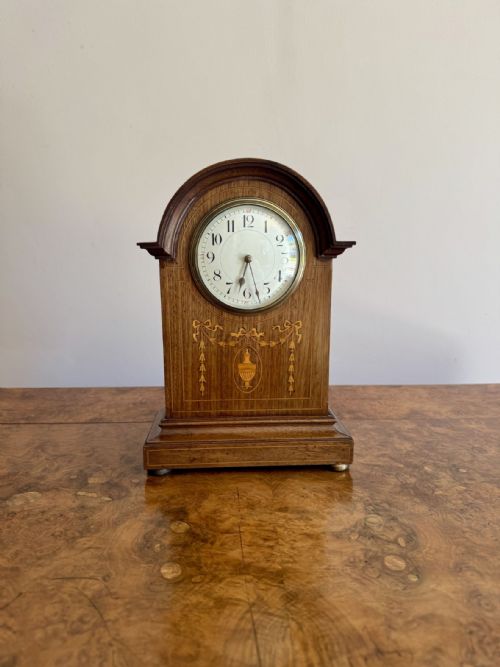


English Bracket Timepiece
An english bracket timepiece is a portable mechanical clock for a table, desk, or shelf, offering precision engineering housed in fine cabinet wood.
English Bracket Timepiece
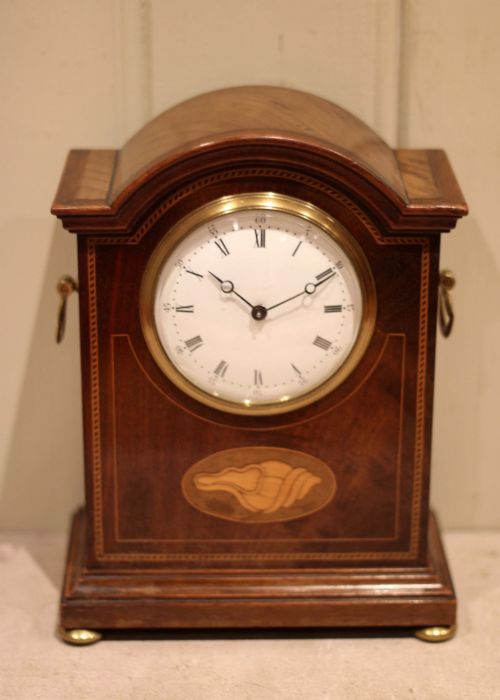
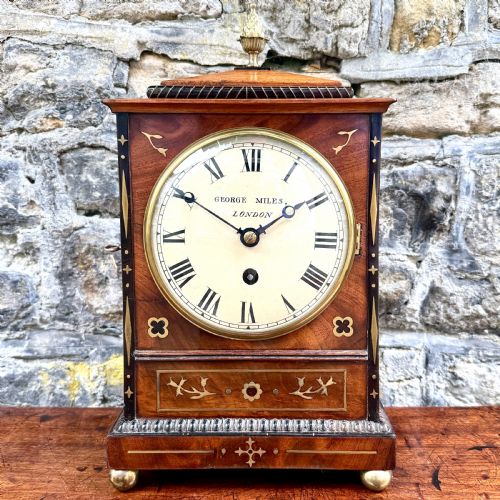
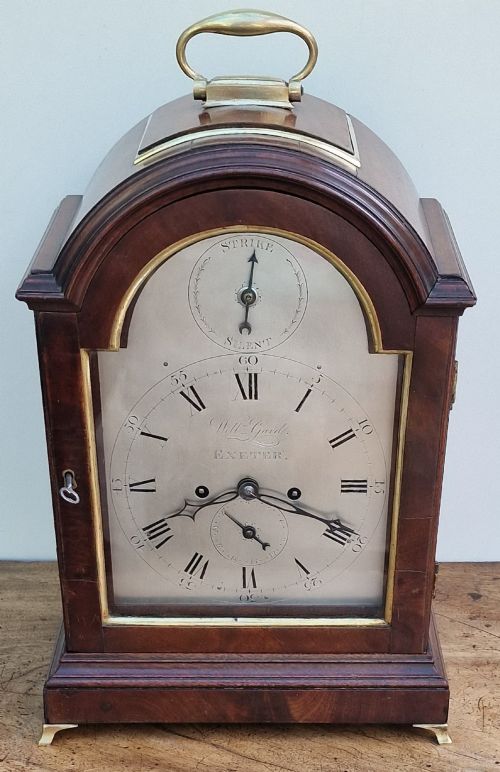
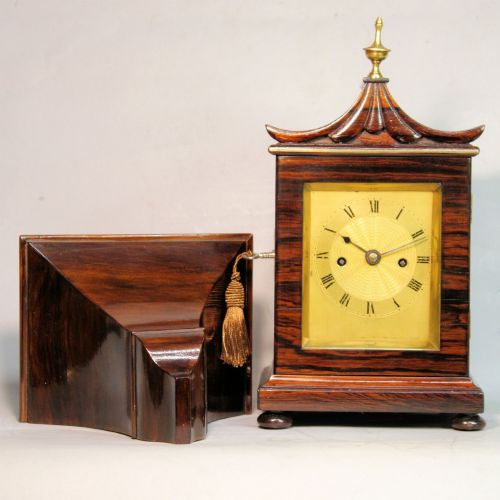
When you search for an english bracket timepiece, you encounter portable mechanical clocks produced across multiple centuries, including Georgian, Regency, Victorian, and Edwardian eras. These domestic timekeepers take various forms, such as library clocks, mantel pieces, lantern clocks, and table clocks designed to sit securely on flat surfaces or dedicated wall brackets.
The versions most common on this page appear in mahogany, rosewood, oak, or ebonised wood cases, often housing a fusee movement. Makers housed these mechanisms in compact table or mantel formats, sometimes featuring glass panels to expose the dial and internal mechanics.
The lineage spans from seventeenth-century brass lantern clocks and ebony table pieces to nineteenth-century fusee driven bracket clocks and five-glass library models. Provincial examples share space with signed pieces from London makers, reflecting a rich tradition of domestic horology.
Materials and construction
Cabinet makers utilised dense hardwoods like mahogany, rosewood, pollard oak, and ebonised timber to build the protective cases, frequently adding brass mounts, inlay, or silvered mounts. These enclosures house complex brass and steel mechanical movements driven by fusee or chain mechanisms.
Dials employ enamelled surfaces, painted metal, or brass plates with engraved detail, protected behind bevelled or flat glass panels. Many models incorporate verge escapements, platform escapements, or single and double fusee trains to regulate the timekeeping accurately.
Indicators of quality
The standard of an english bracket timepiece rests upon the crispness of the cabinet woodwork, the sophistication of the brass movement, and the signature of the maker. Finer examples display meticulous inlay, substantial brass mountings, and unblemished enamel or silvered dials.
The complexity of the internal train - such as twin fusee movements, quarter-striking capabilities, or platform escapements - separates standard timepieces from high-grade library and bracket clocks. The reputation of the maker inscribed on the dial or movement backplate adds historical weight to the piece.
William Gard·John Spershott·Bush of London·Webster Cornhill London·John Pepys London·John Bull of Bedford·Phillips Brothers·Arnold and Frodsham·Hyde of Salisbury·Taylor of London·Grimaldi and Johnson·McCabe·W&H·John Massey·Payne & Co·Baetens London·Payne of London
The English Bracket Timepiece Glossary
- Fusee
- A conical pulley used in mechanical clocks to maintain an even pull on the movement as the mainspring unwinds. This mechanism ensures consistent timekeeping power throughout the running cycle.
- Verge escapement
- An early type of clock escapement that controls the release of power from the gear train. It regulates the swinging of the pendulum or balance.
- Library clock
- A compact portable timepiece designed for use on a desk, table, or bookshelf in a private study. These often feature glass panels to view the movement.
- Lantern clock
- An early form of domestic brass clock intended to hang on a wall or stand on a bracket. They typically display a weight-driven or spring-driven brass movement beneath a bell.
- Platform escapement
- A self-contained escapement unit fitted to clocks that do not use a hanging pendulum. It allows accurate timekeeping in portable mantel and carriage formats.
English Bracket Timepiece: Frequently Asked Questions
What is a fusee clock?
A fusee clock uses a conical pulley connected to the mainspring by a chain or cord. This clever design compensates for the decreasing power of the spring as it unwinds.
The result is an even force delivered to the gear train, which greatly improves the accuracy of the timepiece over its running period.
How do I wind my bracket clock?
Most bracket and library clocks require a dedicated winding key inserted into holes on the dial face. You turn the key gently until you feel firm resistance, indicating the spring is fully tensioned.
Avoid overwinding, as this can strain the internal chain or mainspring and damage the delicate mechanical movement.
Where should I place a library clock?
Library clocks suit stable surfaces like mantelpieces, heavy sideboards, desks, or specialised wall brackets. The location must remain free from excessive vibrations and direct sunlight.
A level surface is particularly vital for models utilising sensitive verge or platform escapements to ensure the mechanical beat remains steady.
How do I date an english bracket timepiece?
Dating relies on stylistic clues in the wooden case, such as Regency brass mounts, Edwardian inlay, or Georgian chamfer tops. The construction methods of the dial and fusee movement also offer clear chronological markers.
Furthermore, many pieces bear the signature of the maker on the dial or backplate, allowing cross-reference with historical records of active watch and clockmakers.