





Brass Handle Clock
A brass handle clock brings together precise timekeeping and portable metalwork, spanning carriage clocks and heavy timber bracket pieces designed to move from room to room.
Brass Handle Clock
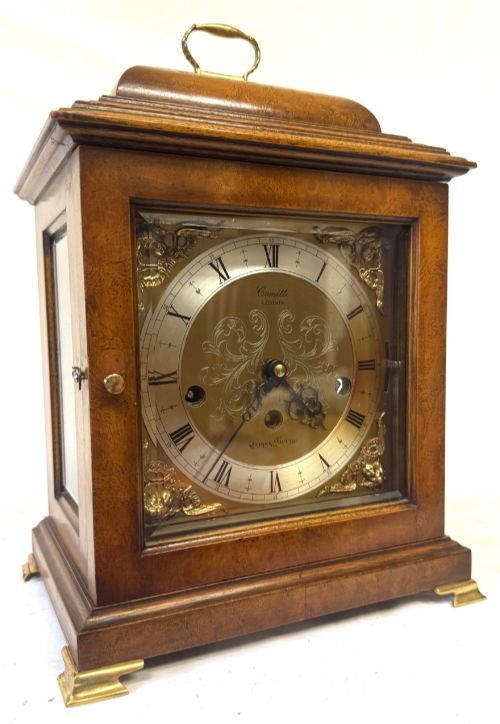
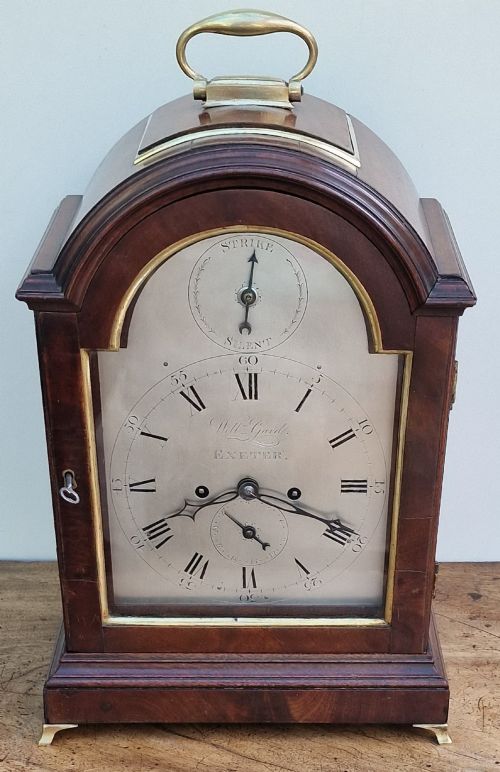
When you search for a brass handle clock, you encounter two distinct traditions: the heavy timber bracket or mantel clock designed for a table or shelf, and the glass-sided carriage clock built for travel.
The bracket and mantel pieces appear in mahogany, rosewood, burr walnut, and ebonised wood, often carrying architectural shapes like caddy tops, pad tops, or break-arches above their dials.
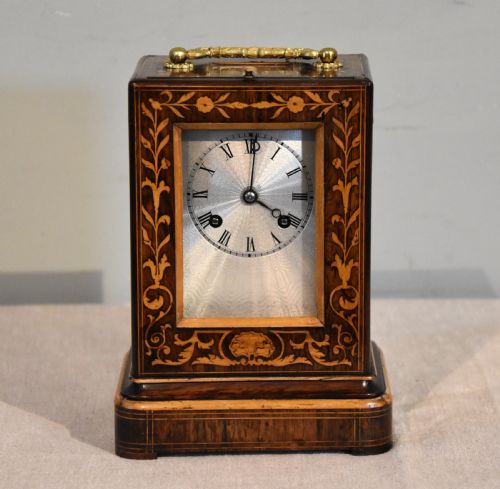
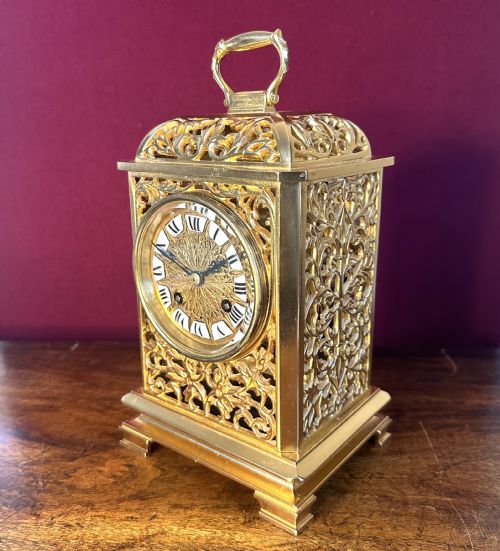
Carriage clocks utilise brass cases, sometimes incorporating gilt finishes, bronze panels, or multiple glass lights, topped with the sturdy handle that defines the category.
Materials and Construction
Clockmakers housed movements in robust timber chassis or cast brass frames, pairing silvered metal or enamel dials with fine steel hands and glass inspection panels.
Cases combined solid and veneered hardwoods like mahogany and rosewood with marquetry inlay, lacquer work, and cast brass mounts, hinges, and carrying handles.
Brass Handle Clock Retail Price Guide 2026
Typical asking prices for brass handle clock among the pieces listed under this phrase on Sellingantiques today, from the lower quarter to the upper quarter. They describe what is for sale here now, not the wider market.
Listings for this phrase include examples from the eighteenth, nineteenth, and twentieth centuries, utilising mahogany, rosewood, marble, and brass.
Judging Quality and Execution
The standard of a brass handle clock rests upon the sophistication of its movement, distinguishing simple timepieces from complex examples with repeat striking, alarm functions, or multiple tunes.
Case execution separates ordinary production from master work, visible in the crispness of brass casting, the depth of wood grain in mahogany and rosewood, and the integration of the handle mountings.
Comitti Of London·Mappin and Webb·Thomas Moss·Des Granges·Paul Garnier·Robert Higgs
The Brass Handle Clock Glossary
- Bracket clock
- A portable timekeeper originally built with a sturdy handle or bracket feet to sit upon a wall bracket or table.
- Carriage clock
- A small, spring-driven timekeeper enclosed in glass and brass with a folding handle, developed for travel.
- Fusee
- A conical pulley connected to the mainspring by a chain or cord, designed to equalise the power delivered to the movement as the spring unwinds.
- Verge escapement
- An early type of escapement mechanism that controls the release of power in pendulum or balance-wheel clocks.
- Platform escapement
- A self-contained balance and escapement assembly used in portable clocks to maintain accuracy regardless of tilt.
Brass Handle Clock: Frequently Asked Questions
What is a brass handle clock?
A brass handle clock is a portable timekeeper housed in wood or metal, fitted with a robust handle that allows it to be carried between rooms.
These pieces range from English mahogany bracket clocks to French glass-sided carriage clocks.
How do I wind a carriage clock?
Carriage clocks generally require a matching key inserted into the winding squares on the backplate, turning clockwise until firm resistance stops the motion.
Care must be taken not to overwind the mainspring, keeping track of whether the clock is an eight-day or a shorter duration movement.
What periods do these clocks come from?
The listings span multiple centuries, starting from the eighteenth century through the Regency and Victorian eras up to the mid-twentieth century.
Georgian and Regency examples typically feature dark timber cases, while later Victorian and Edwardian pieces often highlight brass and glass construction.
Where were these clocks placed?
Bracket and mantel clocks sat securely upon wooden shelves, tables, or mantelpieces within the home, relying on their flat bases for stability.
Carriage clocks were designed for mobility, originally accompanying travellers on journeys before finding permanent spots on desks and bedside tables.