




English Bedside Cabinet
When you search for an english antique bedside cabinet, you encounter timber pieces spanning Georgian elegance to Art Deco walnut forms built to hold night essentials.
English Bedside Cabinet
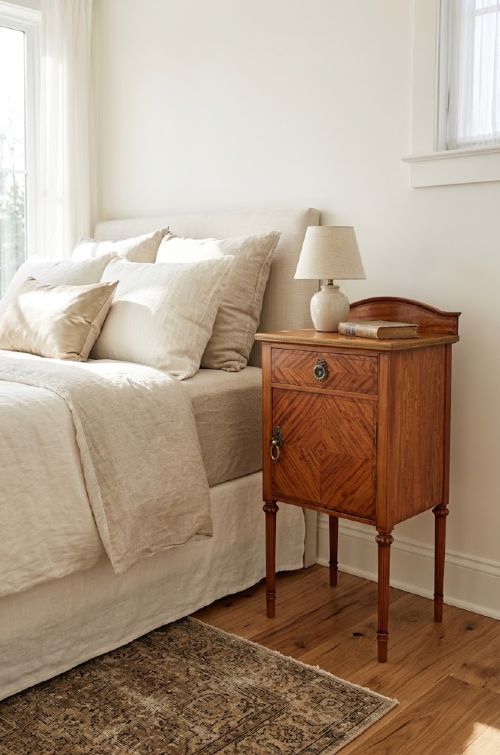
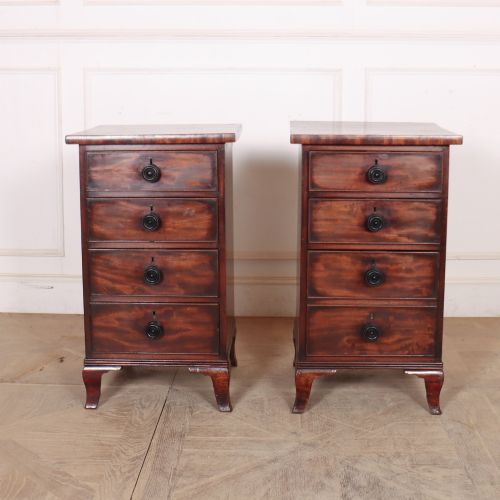
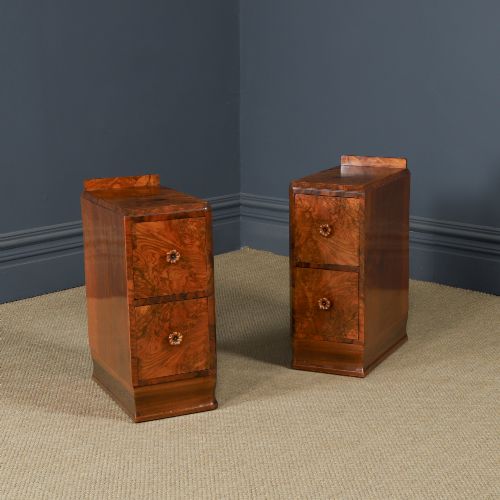
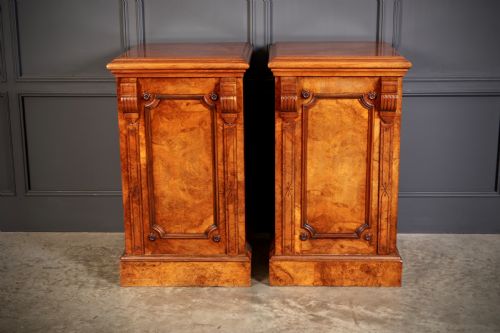
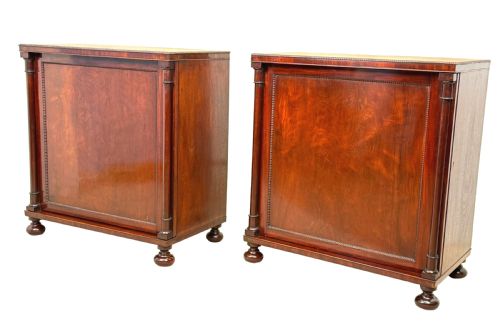
An english antique bedside cabinet covers a functional typology ranging from Victorian cylindrical pot cupboards to Georgian pedestal units and Art Deco walnut nightstands. These pieces provide concealed storage beside a bed, often featuring small cupboards, drawers, or open display areas.
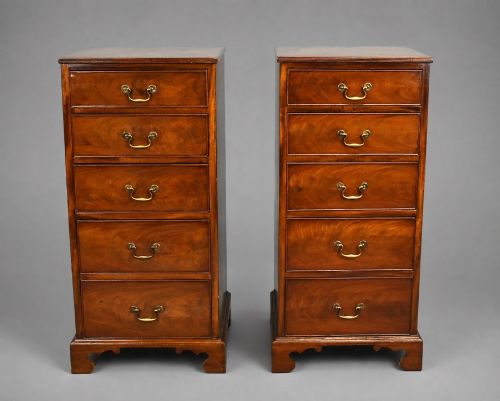
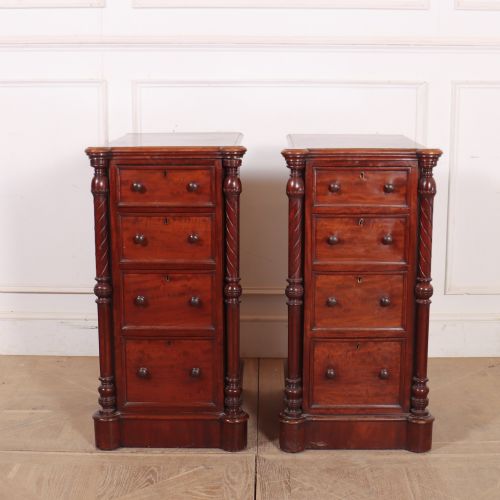
The selections span distinct historical eras, including eighteenth-century Georgian designs, nineteenth-century Victorian and Regency specimens, alongside twentieth-century Art Deco interpretations. Buyers encounter diverse timbers and proportions, from slender satinwood cupboards to substantial mahogany chests.
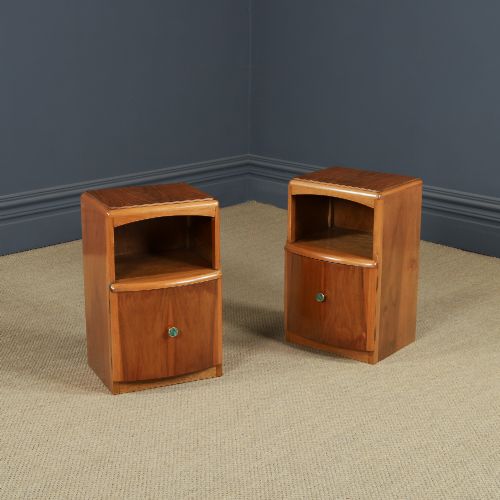
The most prevalent formats on this page include paired nightstands and single pedestal cabinets built for domestic bedrooms. Workshops of the nineteenth and early twentieth centuries dominated this output, shaping the varieties available to modern collectors.
Materials and Technique
Cabinet makers relied heavily on dense hardwoods such as mahogany and walnut, frequently selecting burr walnut or figured veneers for decorative surfaces. Secondary timbers like pine and oak appear in internal framing and drawer construction.
Construction techniques combined traditional joinery with figured wood matching, particularly visible on Art Deco and Georgian doors. Details like brass hardware, painted finishes, and inlaid satinwood complete the surface work recorded across these listings.
Some Victorian cylindrical cabinets open with curved doors that slide seamlessly around a circular wooden track.
Craftsmanship and Proportion
Quality separates pieces through the selection of timber veneers and the precision of the joinery rather than mere age. Superior examples demonstrate book-matched burr walnut or finely figured mahogany grain that wraps evenly across doors and drawer fronts.
Structural integrity and hardware refinement dictate the upper tier of the range. Original brass fittings, smoothly running drawers, and well-balanced proportions distinguish workshop pieces from simpler utility items.
Gillows of Lancaster·Maple and Co·Gillow and Co
The English Bedside Cabinet Glossary
- Pot cupboard
- A small bedside cabinet designed originally to house a chamber pot behind a single door. These units often feature a raised gallery top to prevent items from sliding off.
- Nightstand
- A low piece of furniture placed beside a bed for holding personal items, lamps, or books. They frequently incorporate a combination of a small drawer and an enclosed cupboard.
- Pedestal cabinet
- A tall, narrow piece of furniture constructed with a single column-like body. These cabinets maximise vertical storage space in compact bedroom settings.
- Book-matching
- A woodworking technique where two adjacent veneer surfaces are mirrored to create a symmetrical pattern. This method highlights the natural grain of walnut or mahogany.
- Gallery
- A raised wooden or brass border running along the edge of a table or cabinet top. It serves to secure objects placed on the upper surface.
English Bedside Cabinet: Frequently Asked Questions
What is a pot cupboard?
A pot cupboard is a compact nineteenth-century bedside cabinet designed to conceal a chamber pot behind a small door. These units typically feature enclosed shelving and a protective top gallery.
Over time, their internal purpose shifted away from sanitation to general bedside storage. Today, collectors value them for their restrained footprints and practical enclosed spaces.
How do I date an antique bedside cabinet?
Dating relies on examining the timber species, construction methods, and stylistic cues present in the piece. Georgian and Regency examples favour solid mahogany with hand-cut dovetails, while Victorian items introduce cylinder shapes and pitch pine.
Twentieth-century Art Deco specimens embrace figured walnut veneers and streamlined geometric profiles. Comparing the hardware and secondary woods helps confirm the manufacturing era.
Are bedside cabinets usually found in pairs?
While many nineteenth and twentieth-century cabinets were built as matched pairs for twin beds, single pieces are also common. Matched pairs often command greater interest among collectors seeking bedroom symmetry.
Single cabinets frequently originate from earlier Georgian or Victorian periods when bedroom furniture sets were less standardised.
How do I care for antique wood furniture?
Maintaining antique timber involves keeping pieces away from direct heat sources and sudden humidity changes. Regular dusting with a soft, dry cloth preserves the polished surface.
Application of traditional beeswax helps nourish old mahogany and walnut without building up synthetic residues. Avoid placing damp items directly onto antique table tops.