


Encrusted Porcelain Flowers
Encrusted porcelain flowers are sculptural ceramic arrangements that bring vibrant, tactile botanical detail into an interior space.
Encrusted Porcelain Flowers
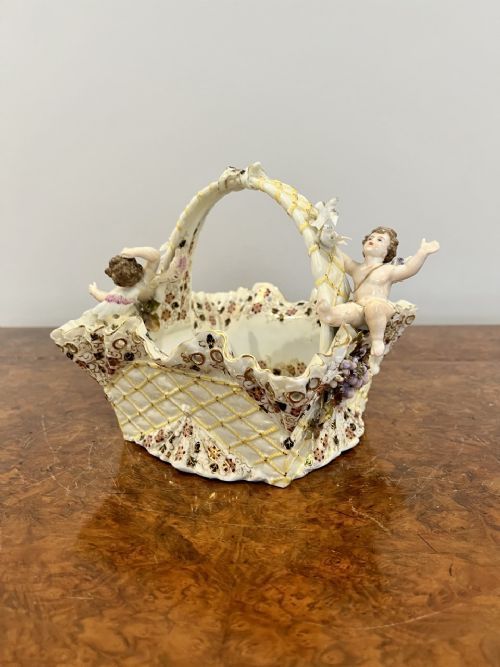
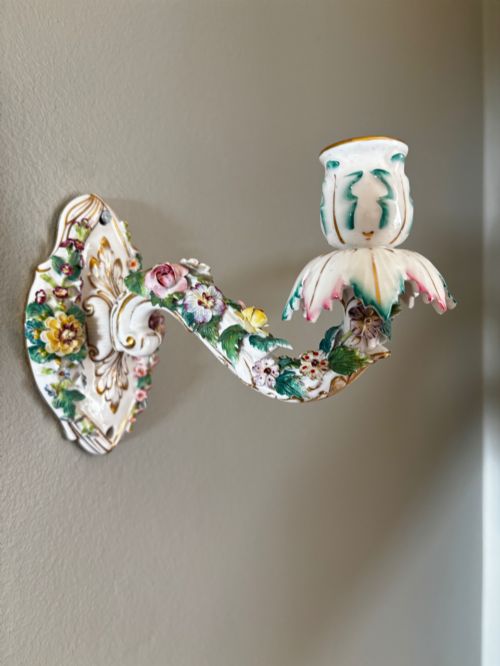
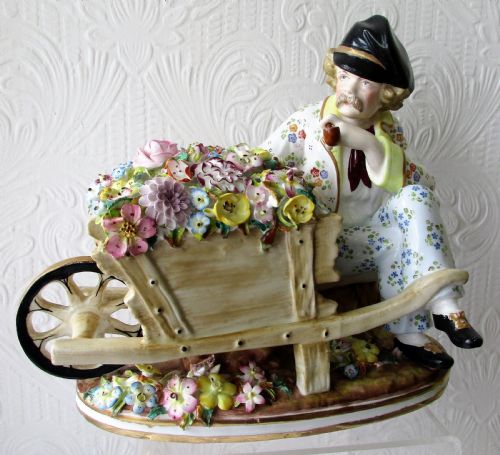
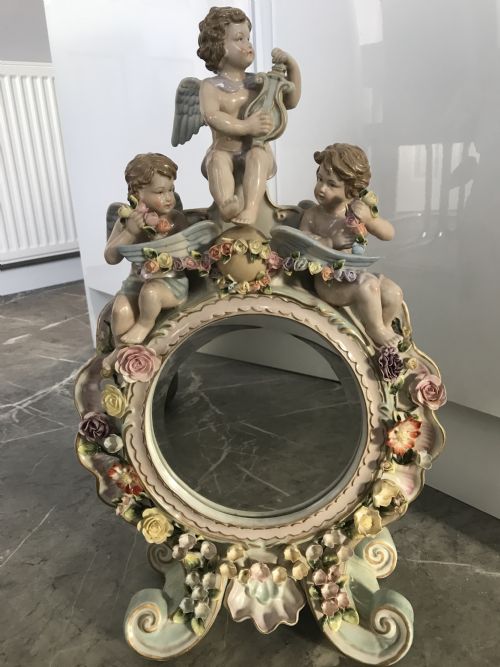
Encrusted porcelain flowers form intricate sculptural additions to decorative baskets, centrepieces, vases, and mirrors. Buyers searching this phrase encounter elaborate Victorian and nineteenth century pieces adorned with dense, applied botanical modelling.
English and continental factories produced these works across the eighteenth, nineteenth, and early twentieth centuries. Forms range from large Rococo Revival centrepieces to intimate scent bottles and figurines.
The aesthetic relies on accumulation, where individual petals and leaves build up to cover surfaces entirely. Pieces frequently integrate gilt accents, gold leaf, and enamel to enhance the decorative impact.
Materials and construction
Potters constructed these objects using hard-paste porcelain and ceramic bodies as a stable foundation for delicate work. Artisans modelled individual petals, leaves, and stems by hand before applying them individually to the surface.
Makers finished the pieces with enamel colours and gold leaf highlights, applying gilding to frame the botanical clusters. Firing required precise temperature control to ensure the tiny, protruding ceramic petals survived the kiln without distortion.
Listings feature hard-paste porcelain, enamel, and gold leaf applied to nineteenth century decorative baskets and centrepieces.
Judging the quality
Quality rests in the delicacy and botanical accuracy of the modelling. Superior examples display thin, translucent petal edges and varied leaf forms, whereas inferior pieces appear thick and uniform.
The density and placement of the floral application dictate the visual success of the piece. Master hands arranged flowers to create depth and naturalistic movement across baskets and vases, avoiding rigid symmetry.
John Bevington·Sitzendorf·Meissen·Derby·Rockingham·Minton·C.G. Schierholz and Sohn·Rudolstadt Volstedt·Worcester Dr Wall·Old Paris·Bloor Derby
The Encrusted Porcelain Flowers Glossary
- Hard-paste porcelain
- A durable ceramic composition fired at high temperatures. It contains kaolin and petuntse, producing a dense, vitreous body.
- Gilding
- The application of gold leaf or powdered gold to ceramic surfaces. This technique emphasises moulded details and structural edges.
- Centrepiece
- A large decorative object designed for the middle of a table. These often take the form of elaborate floral baskets or figural groups.
- Enamel
- Vitrified glass paste fused to porcelain during firing. It provides permanent, vibrant colour across petals and landscape views.
Encrusted Porcelain Flowers: Frequently Asked Questions
How were encrusted porcelain flower pieces used originally?
Owners displayed these decorative objects on mantelpieces, dining tables, and dressing furniture as symbols of refinement and wealth.
Larger centrepieces held fruit or served purely as visual focal points during formal dining occasions.
How do I clean encrusted porcelain flower items safely?
Dust accumulates within the intricate petals, requiring careful maintenance with a soft, dry artist brush.
Avoid immersion in water or harsh chemical cleaners, particularly where gold leaf and delicate enamel colours are present.
How do I distinguish eighteenth century pieces from Victorian copies?
Early pieces often exhibit softer paste bodies, understated painting, and hand-thrown potting techniques characteristic of eighteenth century factories.
Victorian revival items display heavier porcelain bodies, brighter enamel palettes, and more exuberant Rococo moulding.
Where were most encrusted porcelain flower pieces made?
Production centred on major European ceramic hubs, including German towns like Meissen, Sitzendorf, and Thuringia. English factories such as Derby, Worcester, and Minton also produced notable botanical wares.