


Enamelled Porcelain Ornament
An enamelled porcelain ornament brings colour and character to a room, offering finely painted details and historic charm across various periods.
Enamelled Porcelain Ornament
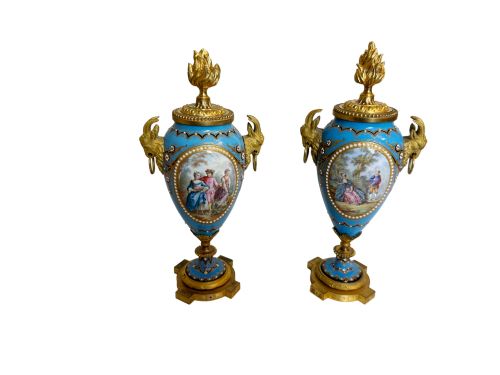
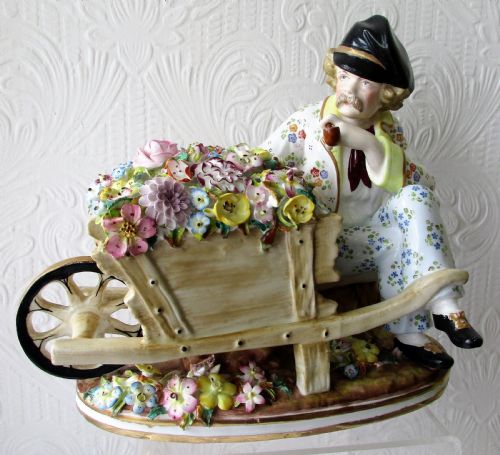
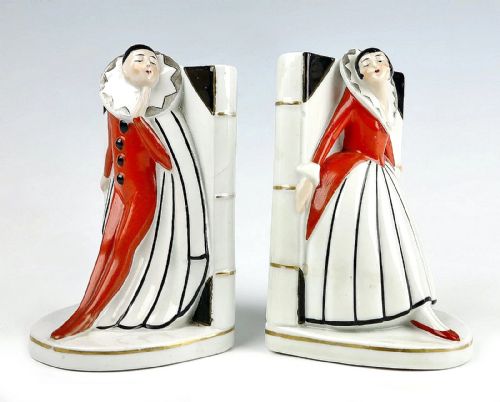
When you search for an enamelled porcelain ornament, you enter a diverse field of ceramic art spanning centuries and origins. These pieces range from eighteenth-century figures and cassolettes to later bookends and figurines produced in European factories and Asian workshops.
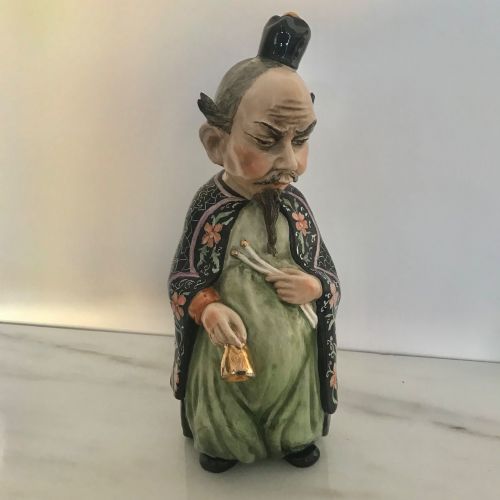
The most common examples encountered here are nineteenth-century figurines and decorative groups, often reflecting Georgian, Victorian, or continental tastes. They frequently depict human figures, allegorical subjects, or mythical deities modeled with expressive detail.
Makers and potteries from England, Germany, China, and Japan dominate the selection, each bringing distinct regional palettes and firing traditions to the surface. Buyers choose them to anchor a mantelpiece, adorn a cabinet, or introduce traditional craftsmanship to an interior.
How they were made
Makers shaped soft-paste or hard-paste porcelain before applying detailed overglaze enamel colours by hand. Many pieces integrate gilt bronze mounts, gold leaf, or metal components to frame the ceramic body.
Listings feature items spanning the eighteenth, nineteenth, and twentieth centuries, utilising porcelain, ceramic, enamel, and gilt bronze.
What varies in quality
The distinction between ordinary and exceptional pieces lies in the crispness of the modelling and the precision of the hand-enamel decoration. Finer examples display delicately rendered facial expressions, clean lines, and careful application of gold leaf or overglaze pigments.
Compositional complexity and the preservation of the original surface also set better items apart. Pieces that retain their full palette without excessive rubbing show superior initial firing and careful handling through their history.
John Bevington·Royal Dux·Volkstedt·Longton Hall·Derby
The Enamelled Porcelain Ornament Glossary
- Soft-paste porcelain
- A ceramic composition fired at lower temperatures than hard-paste, often showing a warmer, slightly softer glaze texture.
- Overglaze enamel
- Pigments painted onto the already fired and glazed surface, then fixed with a subsequent low-temperature firing.
- Cassolette
- A decorative vessel designed to serve as a perfume burner or vase, frequently fitted with metal mounts.
- Gilt bronze
- Metal mounts or bases treated with a gold wash or leaf to complement the decorated ceramic body.
- Meiji period
- The era in Japanese history spanning the late nineteenth and early twentieth centuries, known for intricate export ceramics.
Enamelled Porcelain Ornament: Frequently Asked Questions
Where should I place these pieces at home?
Position your items away from direct sunlight and areas of high humidity to protect the vibrant enamel colours and any metallic mounts. Mantelpieces, display cabinets, and sturdy console tables offer stable environments where the details remain visible.
Ensure they sit out of the way of foot traffic or swinging doors to prevent accidental knocks. Proper placement lets the craftsmanship be appreciated safely.
How can I tell eighteenth-century pieces apart?
Examine the base and paste characteristics, as early factories utilised specific clay mixtures and glazing techniques unique to their region. Eighteenth-century figures often feature hand-modelled details with characteristic crazing and softer glaze pooling around the foot rim.
Compare the style of the painting and the palette to known factory outputs from places like Derby or Longton Hall. Subtle variations in weight and translucency also offer clues to the period of manufacture.
What do allegorical figures represent?
Many historic figures symbolise broader concepts, such as the four continents or mythological virtues, reflecting popular decorative themes of their era. Understanding the iconography helps identify sets and companion pieces originally produced together.
Figures holding specific attributes, like water vessels or musical instruments, usually point to a traditional allegorical role. These symbolic representations were central to Georgian and Victorian decorative schemes.