
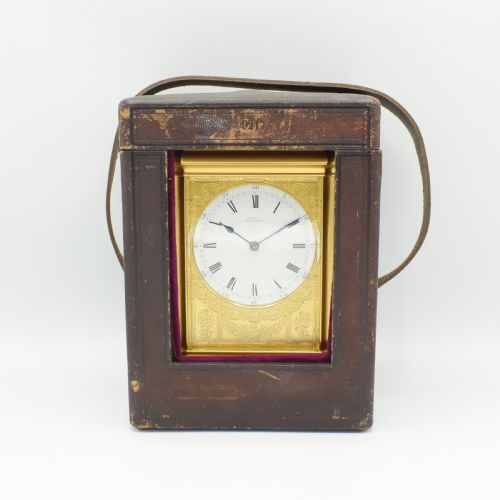
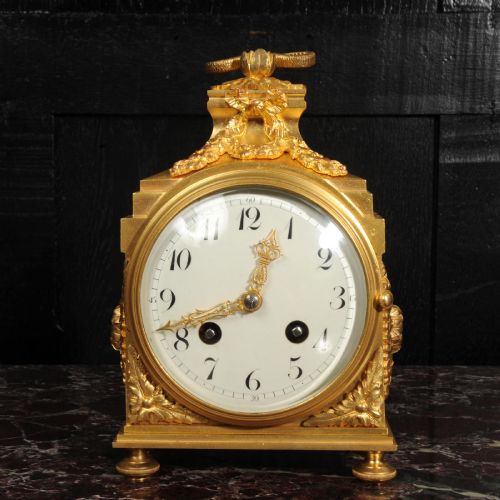
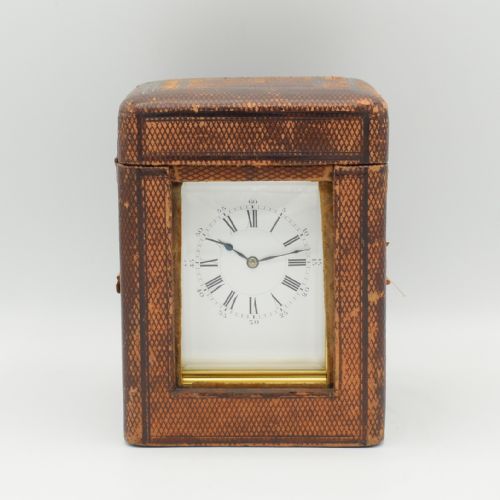
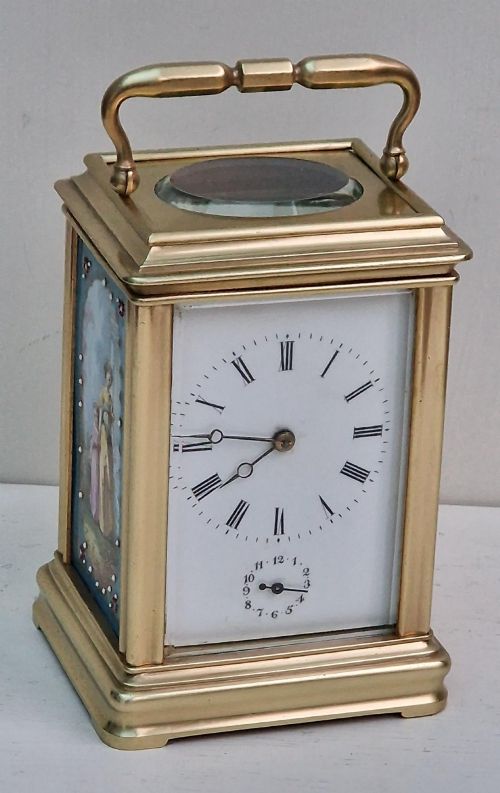
Enamel Mantel Clock
An enamel mantel clock brings weight, precision and colour to a room, offering the charm of nineteenth and twentieth-century timekeeping.
Enamel Mantel Clock
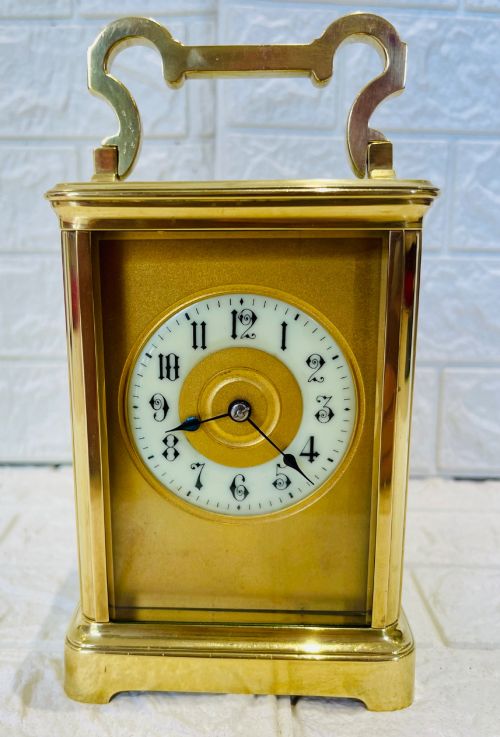
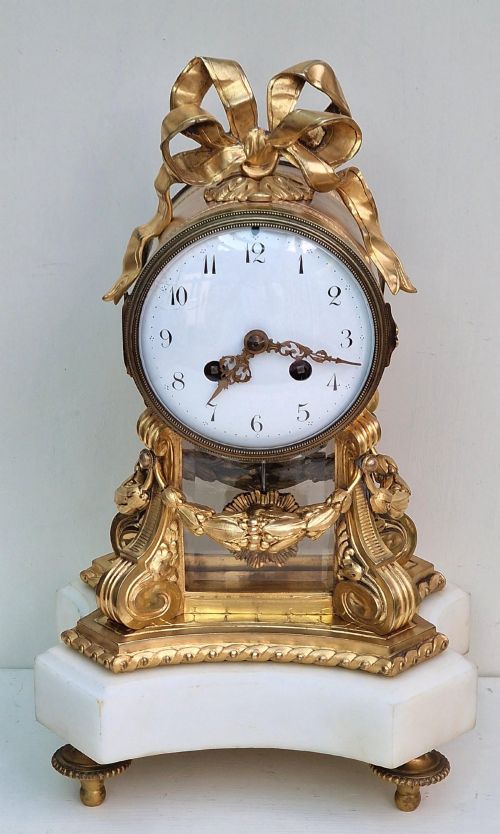
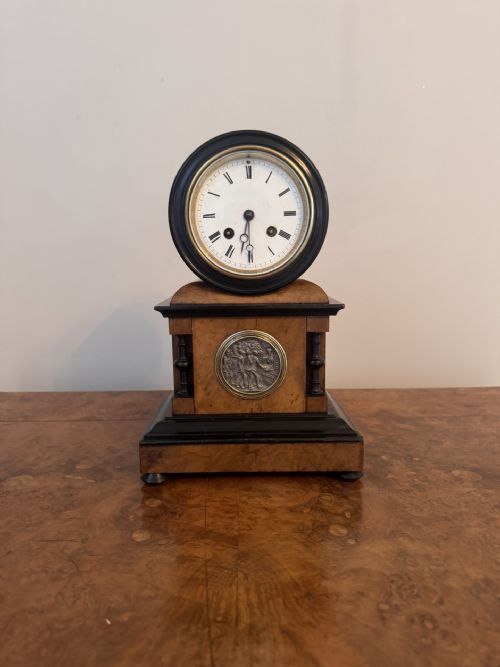
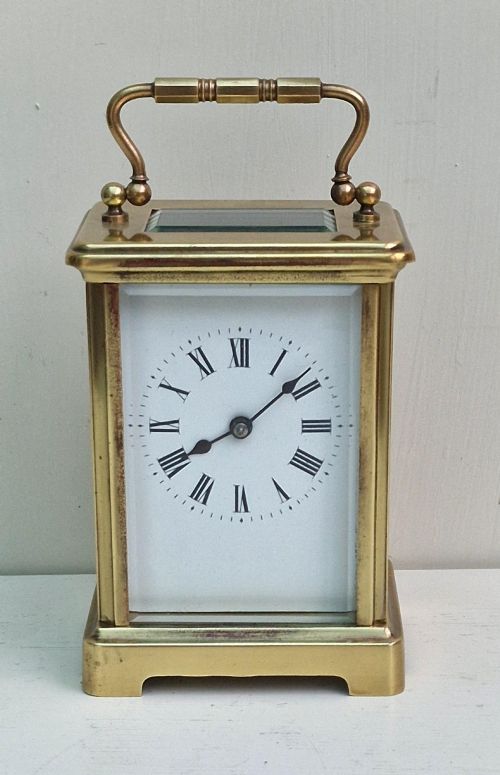
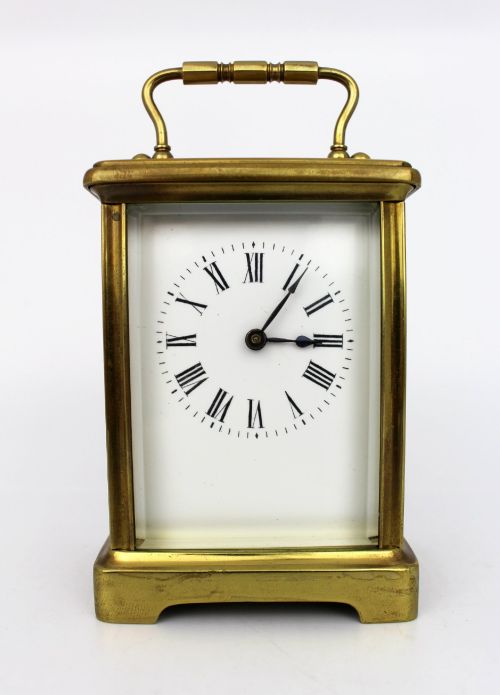
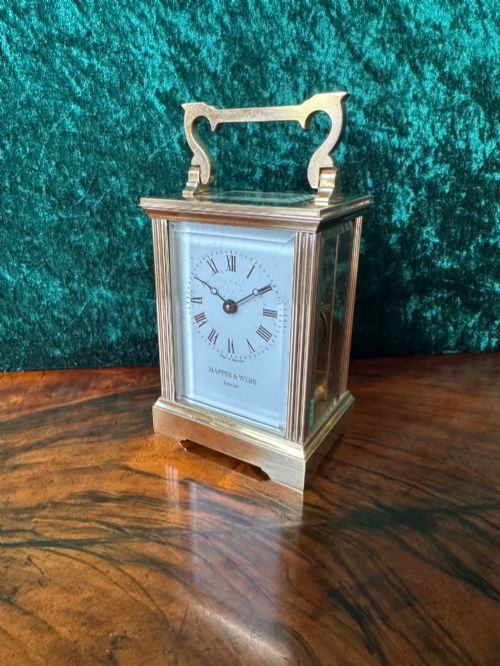
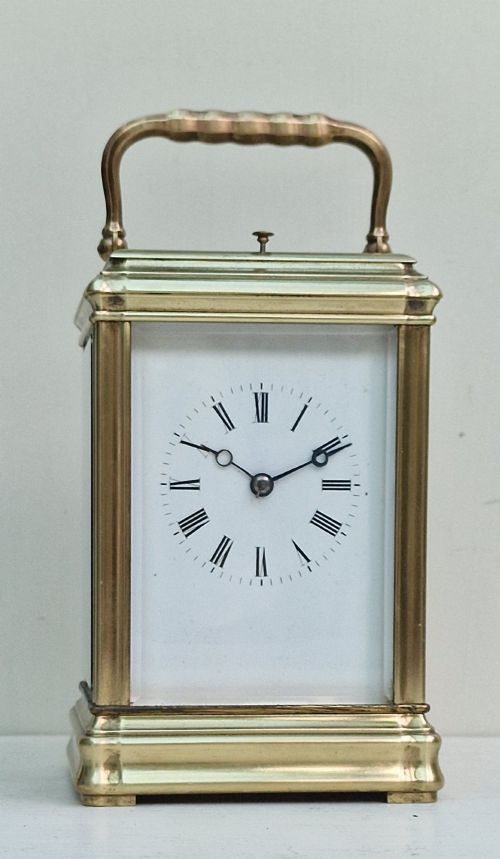
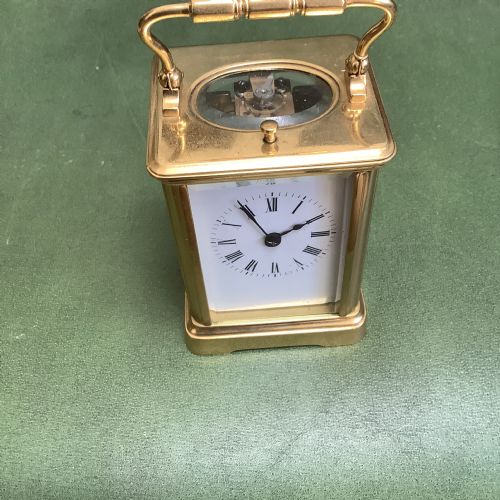
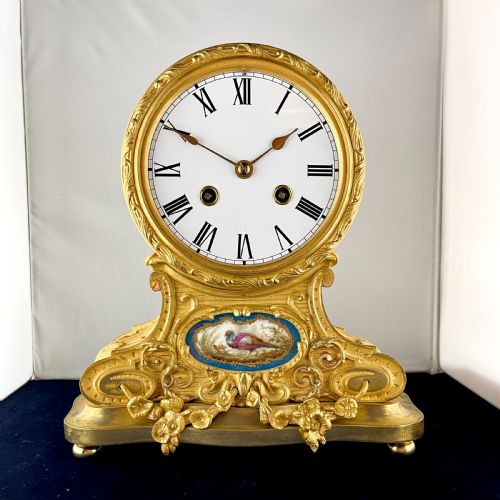
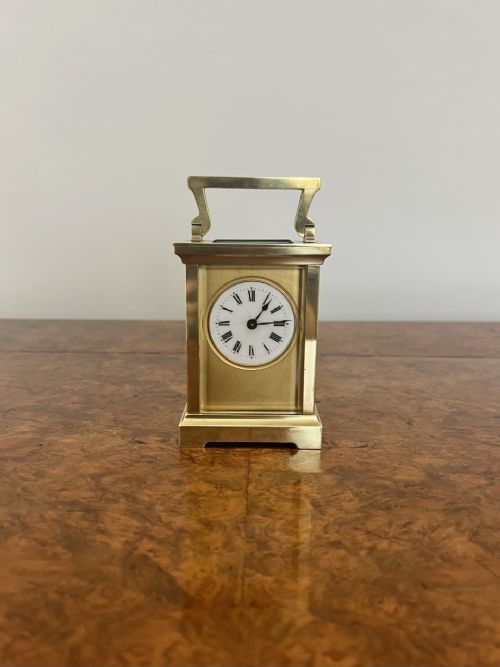
When you search for an enamel mantel clock, you encounter a varied group of timepieces spanning the nineteenth and twentieth centuries, originating predominantly from French workshops and British makers. The selection on this page leans heavily toward French carriage clocks and mantel clocks featuring visible enamel dials or decorative enamel panels.
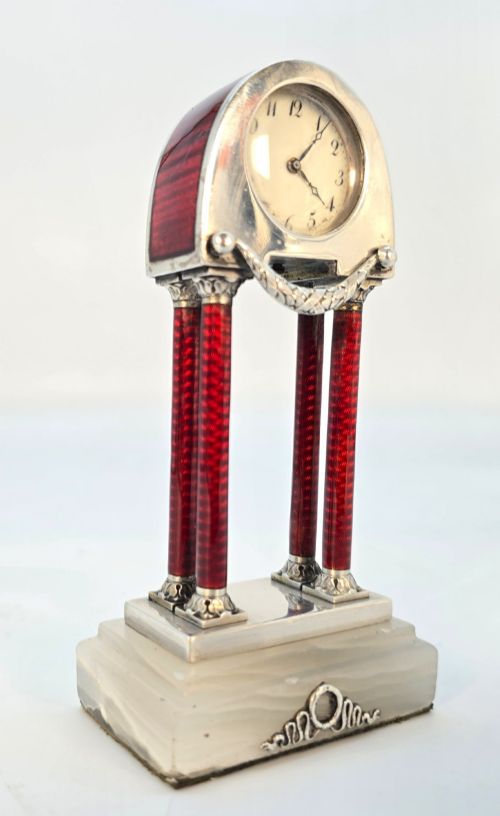
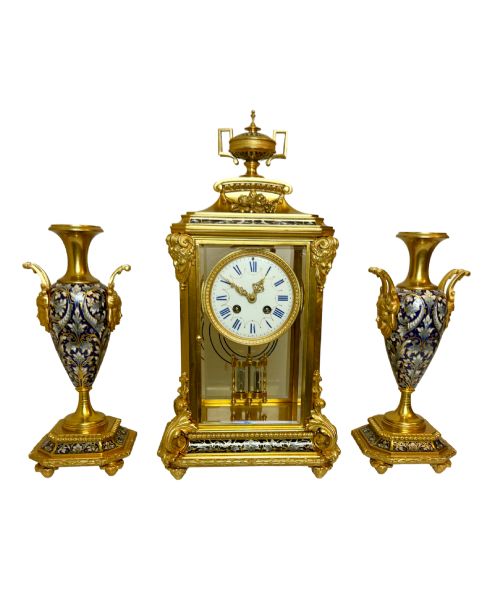
Forms range from brass-framed carriage clocks with glass panels to large nineteenth-century gilt bronze garnitures, portico desks and marble mantel clocks. Many incorporate champlevé enamel work or hand-painted miniature porcelain and enamel details set within architectural or gorge cases.
Materials and Construction
Makers constructed these clocks using heavy brass, gilt bronze, or ormolu as the structural foundation, housing mechanical eight-day movements with lever or cylinder escapements. Enamel was applied to copper dials and panels through firing processes, often accompanied by champlevé techniques where recessed cells held the coloured vitreous paste.
Glass panels allowed light to reach the internal escapement in carriage clocks, while marble, walnut, and pewter provided solid housing for larger mantel variations. Travel cases in leather frequently accompanied portable carriage pieces to protect the delicate gilt brass and glass housings during journeys.
Some carriage clocks travelled across Victorian Europe wrapped in velvet-lined leather cases, attending dinners and railway journeys without missing a tick.
Distinctions in Execution
Quality rests upon the crispness of the cast brass or gilt bronze work, the depth and complexity of the champlevé enamel patterns, and the fidelity of any hand-painted miniatures. Superior pieces display fully engraved cases, matching serial numbers on movements and keys, and signed plates from renowned makers.
The complexity of the movement also dictates the tier, separating basic timepieces from those featuring striking mechanisms, bell repeats, and alarm functions. Intact enamel free from hairline fractures and original travel cases elevate the standing of an individual clock.
Henri Jacot·Mappin and Web·Georg Adam Scheid·Pickford of London·Drocourt Paris·T. Martin and Co·Margaine Of France·David Veasey for Liberty and Co·Jaeger LeCoultre·Dwerrihouse
The Enamel Mantel Clock Glossary
- Champleve
- An enamelling technique where depressions are carved into a metal surface and filled with vitreous enamel before firing and polishing. This method creates vibrant, patterned borders around clock faces and case pillars.
- Gorge case
- A stepped, architectural brass carriage clock case style featuring a distinctive moulded cornice. It represents a standard housing configuration for late nineteenth-century portable timepieces.
- Pendule d'Officier
- A French military-style officer's clock, typically featuring a striking movement and a portable case. These pieces were designed for travel and military campaigns.
- Clock garniture
- A matching set consisting of a central clock flanked by decorative side ornaments such as urns or candelabra. They formed elaborate symmetrical mantel displays in Victorian interiors.
- Fusee
- A conical pulley used in clock movements to maintain equal driving force as the mainspring unwinds. This mechanism improves timekeeping accuracy across the power reserve.
Enamel Mantel Clock: Frequently Asked Questions
What is a striking movement?
A striking movement sounds the hours and sometimes the halves automatically on a small internal bell or gong. Many nineteenth-century examples feature a repeat button on top to sound the last hour on demand.
This acoustic feature allowed owners to check the time in darkness without striking matches or lighting candles.
How do I care for antique enamel dials?
Clean enamel surfaces with a dry, soft microfibre cloth to remove dust without disturbing delicate painted numerals or minute tracks. Avoid chemical cleaners and moisture, which can seep into hairline fractures and damage the underlying copper.
Keep mechanical clocks away from direct sunlight, damp walls and sources of artificial heat to protect both case metals and interior lubricants.
How do I distinguish French and British carriage clocks?
French carriage clocks often feature numbered back plates, platform escapements with visible balance wheels, and champlevé or engraved gilt brass cases. British variations frequently incorporate fusee movements and distinct retailer signatures on the dial.
Examining the internal movement layout and case construction methods usually reveals the origin workshop.